- Buyer protection on every order
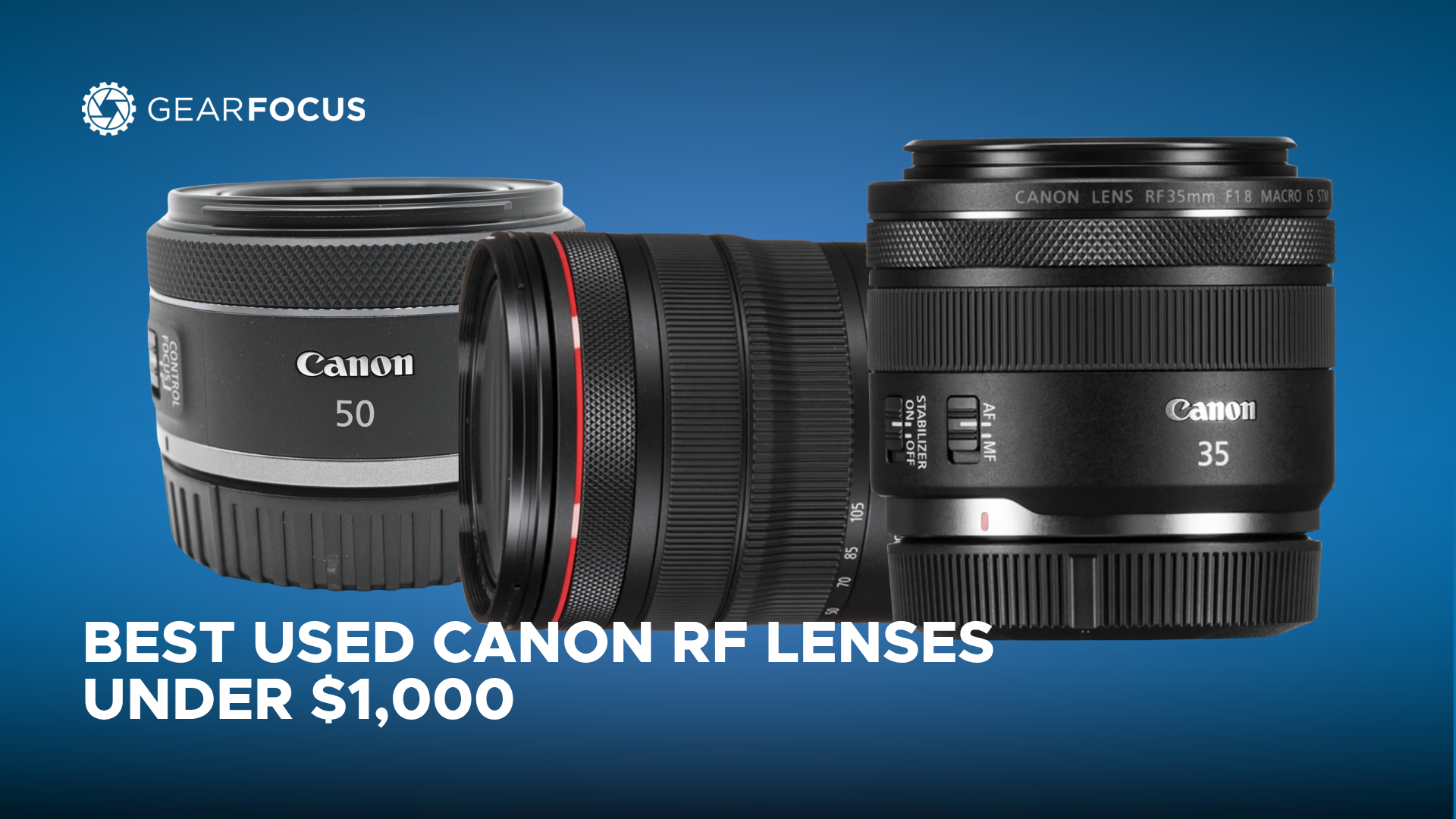
Best Used Canon RF Lenses Under $1,000
GearFocus
May 7, 2026
KEY TAKEAWAYS
- RF 24-105mm f/4L leads the pack: At $868 average used, it’s half the retail price and covers 90% of what most shooters need daily.
- The 50mm f/1.8 is the gateway drug: $127 used gets you into the RF system with sharp optics and that creamy Canon color science.
- Skip the kit lens trap: The RF 24-50mm saves $100 but sacrifices everything that makes RF glass special — spend the extra on real L glass.
- Exotic glass holds value: RF 85mm f/1.2L and 70-200mm f/2.8L retain 75-80% of retail value even after heavy use.
- Buy the seller first: Check actuations, get original boxes if possible, and verify the lens firmware is current — RF glass talks to your camera constantly.
The RF 50mm f/1.8 sat in its bubble wrap for three days before I mounted it. Not because I was busy. Because I was broke. I’d just dropped $2,400 on a used R6, and this $127 lens felt like admitting defeat. My EF glass worked fine with the adapter. Why chase used Canon RF lenses when my mortgage was due?
Then I mounted it. First shot. The autofocus grabbed my daughter’s eyelashes at f/1.8 like it had GPS coordinates. No hunting. No breathing. Just… locked. That’s when I understood why 49 people searched for used Canon RF lenses on GearFocus last month. They weren’t shopping. They were converting.
Why RF Glass Matters (And Why Used Makes Sense)
Here’s what nobody tells you about the RF mount: it’s not the wider throat or shorter flange distance that changes everything. It’s the 12-pin connection that turns every lens into a computer talking to your camera 120 times per second. Your EF glass with an adapter? That’s like texting through a translator app. Native RF glass? That’s a direct neural link.
But let’s be real — Canon knows this, which is why RF glass costs like a car payment. The RF 24-105mm f/4L launched at $1,099. Right now, based on 68 verified sales, the average for used Canon RF lenses in this range sits at $868. That’s $231 off for glass that’s optically identical to brand new.
The math gets better when you factor in Canon’s notorious first-year price drops. Buy new RF glass and watch 20% evaporate the moment Canon runs a rebate. Buy used? That depreciation already happened on someone else’s credit card.
The Big Five: Used Canon RF Lenses That Actually Move
I spent last Tuesday scrolling through GearFocus listings, tracking which used Canon RF lenses actually sell versus which ones sit. Patterns emerged fast.
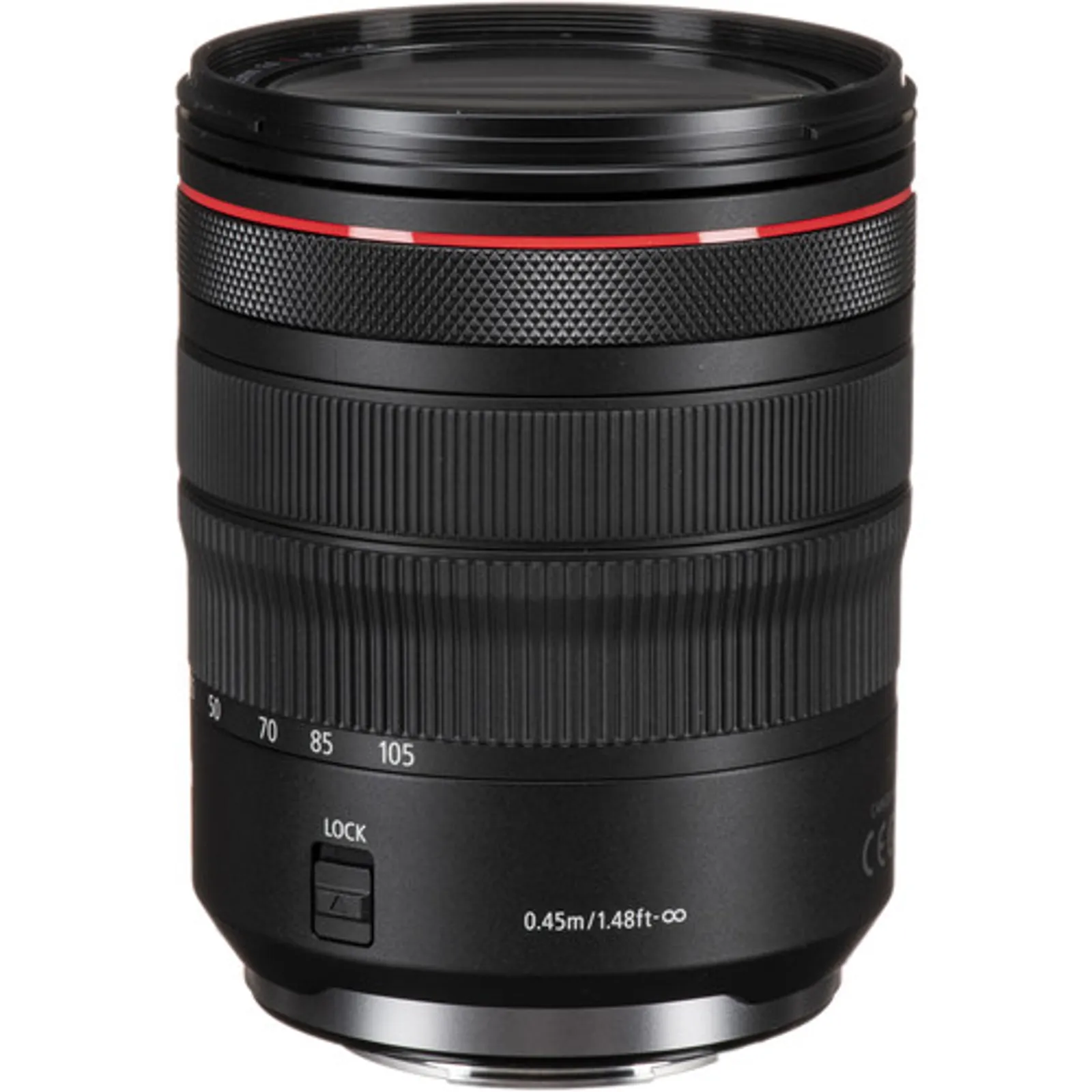
1. RF 24-105mm f/4L IS USM
The workhorse. If you’re only buying one RF lens, make it this one. Covers everything from real estate wides to compressed portraits. The IS works with your R-body’s IBIS for 8 stops of stabilization — I’ve handheld 1/4 second shots that looked like they came off a tripod. Plus, that constant f/4 means consistent exposure through the zoom range. No exposure stepping when you’re filming.
2. RF 50mm f/1.8 STM
Don’t let the plastic build fool you. This $199 retail lens punches way above its weight class. At f/2.8, it’s sharper than my old EF 50mm f/1.4 ever was. The STM motor is nearly silent — crucial for video work. And at $127 used? That’s less than a decent UV filter. Gateway drug to the RF ecosystem.
3. RF 85mm f/1.2L USM
The portrait king. Yes, it’s $2,799 retail. But here’s the thing about exotic RF glass — it holds value like a Rolex. Used examples rarely drop below $2,100, which means you can shoot with it for two years and sell it for nearly what you paid. Try that with a Sigma.
4. RF 70-200mm f/2.8L IS USM
Revolutionary design — extends when zooming but stays balanced. Half the weight of the EF version. The used Canon RF lenses market for this one is tight because owners don’t sell. When they do pop up around $2,300, they’re gone in hours.
5. RF 35mm f/1.8 IS Macro STM
The sleeper hit. True 1:2 macro capability, image stabilization, and that perfect walkabout focal length. New runs $499. Used? I’ve seen clean copies at $385. That’s restaurant-and-a-movie money for a lens that does everything.
The Lenses to Skip (Trust Me on This)
Not all used Canon RF lenses deserve your money. Some are compromised from birth.
RF 24-50mm f/4.5-6.3 IS STM — The kit lens nobody asked for. Yes, it’s $299 new and maybe $200 used. But that variable aperture kills your exposure consistency, and the 50mm long end feels restrictive after a week. Spend the extra $80 on a used RF 50mm f/1.8 instead.
RF 600mm and 800mm f/11 IS STM — Impressive reach, impractical aperture. That fixed f/11 means you’re ISO 6400 in anything but blazing daylight. Plus, the diffractive optics create weird bokeh. Unless you’re exclusively shooting daytime sports or wildlife, pass.
RF 16mm f/2.8 STM — Not terrible, just… unnecessary. For $329 new (maybe $250 used), you get a lens that your iPhone 15 Pro basically matches. Save for the RF 15-35mm f/2.8L instead. Yes, it’s more money. It’s also an actual professional tool.
How to Buy Used Canon RF Lenses Without Getting Burned
I learned this the hard way with a 70-200mm last fall. Listing said “mint.” Lens showed up with a rattle. Not mint. Here’s your checklist for buying used Canon RF lenses:
Check the mount first. RF lenses have that 12-pin connection — one bent pin and you’ve got an expensive paperweight. Ask for detailed mount photos. If the seller hesitates, walk.
Firmware matters more than you think. RF lenses get firmware updates that improve AF performance and compatibility. Ask the seller for the current version. If they don’t know how to check, that tells you something about how they maintained the gear.
Get the hood and caps. Sounds minor, but Canon RF hoods cost $50-80 separately. Missing hoods often indicate rough handling. Plus, good luck finding OEM replacements in stock.
Trust verified sellers. GearFocus verifies seller identities, not just email addresses. That accountability matters when you’re dropping four figures on glass. The 48-hour inspection window gives you time to properly test everything — infinity focus, IS operation, AF accuracy across the frame.
Honestly? I’ve bought three used Canon RF lenses this year. Two came with more accessories than listed. One seller included handwritten notes about the lens quirks. That’s the community difference.
The Smart Money Play: Building Your RF Kit
If I’m starting from zero with $2,500 to spend on used Canon RF lenses, here’s exactly what I’m buying:
Option 1: The Minimalist
– RF 24-105mm f/4L ($868)
– RF 50mm f/1.8 ($127)
– Total: $995 — leaves budget for filters, cards, maybe a used R6
Option 2: The Event Shooter
– RF 24-70mm f/2.8L ($1,750 used)
– RF 50mm f/1.8 ($127) for backup/low light
– Save remaining $623 for the next lens
Option 3: The Hybrid Creator
– RF 35mm f/1.8 Macro ($385)
– RF 85mm f/2 Macro ($449)
– RF 70-200mm f/4L ($1,099)
– Total: $1,933 — covers video, portraits, and details
Notice what’s missing? The exotic f/1.2 primes. Those are dessert. Get your vegetables first — the used Canon RF lenses that actually pay the bills.
Last month I watched a wedding photographer friend try to justify her RF 50mm f/1.2L purchase. “$3,000 for one stop over the f/1.8?” I asked. She thought for a moment. “It’s not the stop. It’s the rendering. The f/1.2 makes people look like memories.”
She’s not wrong. But memories don’t pay mortgages. Start practical. The exotic glass will still be there when you’re ready — and probably cheaper used by then.
Here’s the uncomfortable truth about used Canon RF lenses — they’re often better maintained than new ones. Why? Because people who buy $2,000 lenses used are enthusiasts who baby their gear. They’re not rental houses or careless trust-fund kids. They’re photographers who saved for months and treated that lens like a firstborn.
The RF ecosystem isn’t going anywhere. Canon’s committed. More bodies coming. More glass in development. The current RF lineup spans 30+ native options. By buying used now, you’re getting yesterday’s prices on tomorrow’s standard.
Ready to make the jump? Browse 82 Canon RF lenses on GearFocus right now. Real sellers. Real gear. Real savings. Your credit card might cry, but your images won’t.
And hey — if you’re sitting on EF glass gathering dust? List it. Use those funds for used Canon RF lenses that actually mount to your camera. The adaptor was always a band-aid. Time to rip it off.
FAQ
Should I keep my EF lenses or sell them to buy used Canon RF lenses?
Depends on your attachment — emotional and practical. If you’re using EF glass weekly with an adapter, keep it. But if you’ve got EF lenses collecting dust while you reach for RF options, sell. The EF market is still strong, but it won’t be forever. I kept my EF 100mm f/2.8L Macro because there’s no RF equivalent yet. Everything else? Gone. Funded my entire RF kit.
What’s the best place to find deals on used Canon RF lenses?
Start with dedicated camera marketplaces like GearFocus where sellers understand photo gear value. Check the sold listings, not just active ones — that shows real market price. Local camera stores sometimes have hidden gems, but their overhead means higher prices. Facebook Marketplace is risky unless you can inspect in person. Whatever platform you choose, use payment methods with buyer protection.
Are third-party RF lenses worth considering over used Canon RF lenses?
Currently, your third-party RF options are limited — Samyang/Rokinon makes a few manual focus primes, and that’s about it. Canon’s keeping the mount locked down tighter than Fort Knox. Even when Sigma and Tamron eventually get access, history shows Canon’s first-party lenses hold value better. A used Canon RF lens bought today will likely sell for 80% of what you paid in two years. Third-party glass? Maybe 60%. The math favors going Canon, even used.
Own one like this?
Make room for new gear in minutes.
