- Buyer protection on every order
Best Used Sony Cinema Cameras: FX3 vs FX30 vs FX6 Compared
GearFocus
Apr 7, 2026

KEY TAKEAWAYS
- FX3 dominates searches: 79 people searched for a used Sony cinema camera last month — most wanted the FX3. At $2,800-3,200 used, it’s the sweet spot for solo creators.
- FX6 holds value: Despite being older, used FX6 bodies still command $5,027 on average. That’s only $970 off retail — because pros know what they’re worth.
- FX30 dark horse: Everyone sleeps on the FX30, but at $1,300-1,600 used, it’s the best entry point into Sony’s cinema line. Same color science, same workflow, half the price.
- Supply is tight: GearFocus inventory tells the story — 2-4 FX3s, maybe 1 FX6, occasionally an FX30. These cameras move fast because sellers know where buyers are looking.
- Price gaps reveal opportunity: The $2,000 spread between FX30 and FX3 isn’t about image quality — it’s about full frame vs Super 35. Know which one you actually need.
The FX6 sat on my desk like a small tank. Matte black. Built like it could survive a war zone. Which, technically, it had — the previous owner shot documentaries in Alaska. I’d just paid $4,800 for their used Sony cinema camera through a GearFocus seller in Portland. Two days later, I was questioning everything I thought I knew about camera hierarchy.
Here’s what nobody tells you about buying used cinema cameras: the best one isn’t always the most expensive one. Or the newest. Or the one with the most YouTube reviews. The best used Sony cinema camera is the one that matches your actual workflow — not your aspirational one.
Last month, 262 people searched GearFocus for Sony’s cinema line. 54 of those searches came up empty. Not because these cameras don’t exist on the used market — but because they sell faster than sellers can list them. Let’s fix that knowledge gap.
The Trinity: FX3, FX6, and FX30
Sony’s cinema lineup reads like a pricing ladder, but that’s missing the point. Each used Sony cinema camera serves a different creator entirely.
The FX3 leads our search data with 79 queries last month. Makes sense — it’s the Goldilocks camera. Not too big (looking at you, FX6). Not too limited (sorry, FX30). Full frame sensor, compact body, and that beautiful 4K 120fps that made every wedding filmmaker collectively lose their minds in 2021.
Used FX3 prices on GearFocus hover between $2,800 and $3,200. That’s $900-1,400 off retail. But here’s the thing — availability is brutal. We typically see 2-4 listings at any given time. They last about as long as free pizza at a film school.
The FX6 plays a different game entirely. Where the FX3 whispers, the FX6 roars. Variable ND built in. SDI outputs. Four-channel audio. It’s not a hybrid camera pretending to be cinema — it’s cinema gear that happens to be mirrorless.
Average used Sony cinema camera prices tell the FX6 story: $5,027 based on 24 verified GearFocus sales. That’s only $970 off the $5,998 retail. Why so little depreciation? Because professionals who need an FX6 NEED an FX6. There’s no substitute.
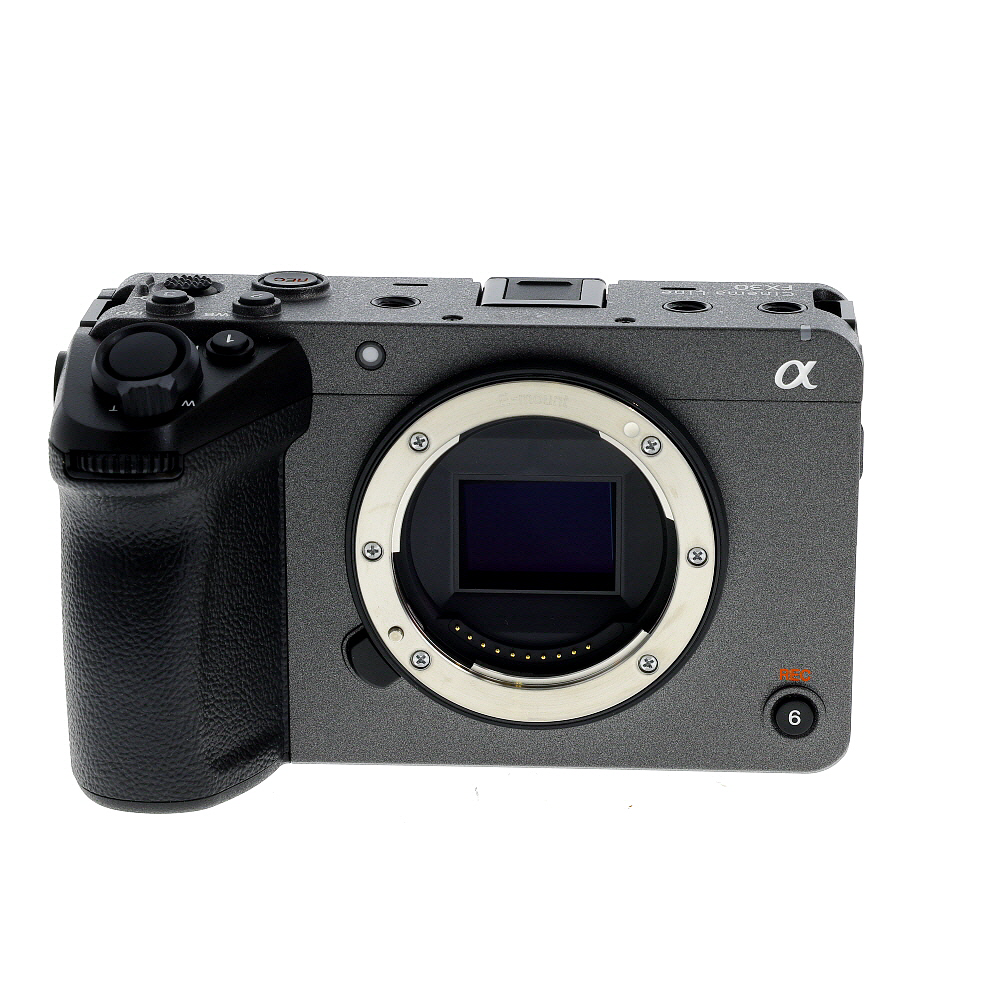
Then there’s the FX30. The forgotten middle child. Super 35 instead of full frame. $1,798 retail. But don’t let the crop sensor fool you — this thing shares the same color science, same menu system, same workflow as its bigger siblings. Just wrapped in a smaller package with a smaller price tag.
Real-World Performance (Or: What The Spec Sheets Won’t Tell You)
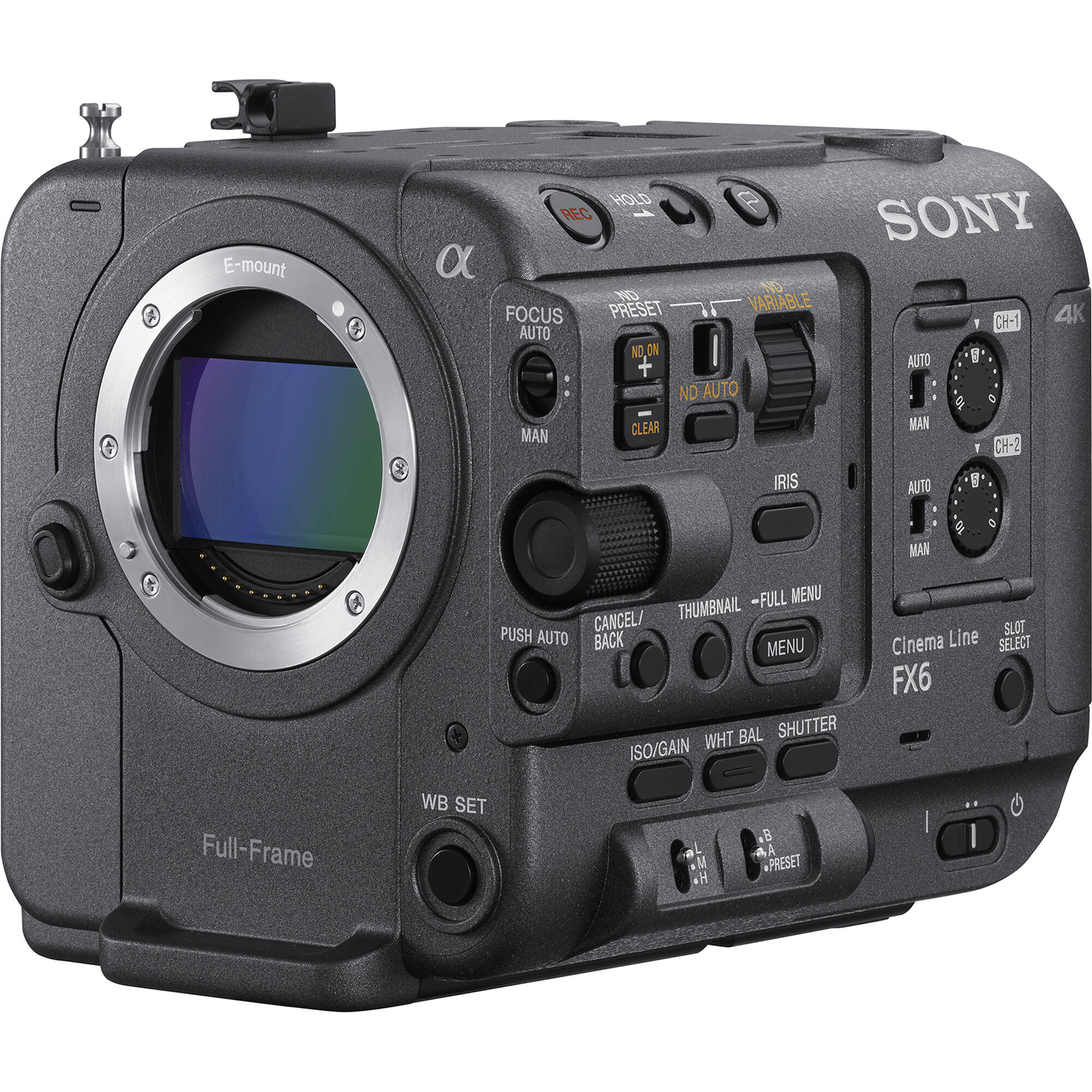
I learned something painful last summer. Spent three days shooting interviews with that used FX6 I mentioned. Beautiful footage. Cinema-grade color. One problem — my back was destroyed. The FX6 with a 24-70 GM and a monitor? That’s a 6-pound rig minimum. All day. Every day.
The FX3 fixes that. Same sensor as the A7S III, but with cinema-focused firmware. It weighs nothing. Fits in a jacket pocket with a pancake lens. But here’s what CineD’s lab tests revealed — you’re giving up about half a stop of dynamic range compared to the FX6. In practice? Only matters if you’re seriously pushing grades.
A colorist friend put it best: “FX3 footage looks 95% as good as FX6 footage, but takes 50% less effort to shoot.” That’s not a compromise. That’s strategy.
The FX30 throws a curveball. Super 35 crop means your 24mm lens becomes a 36mm equivalent. Deal breaker? Depends. If you’re shooting talking heads and B-roll, who cares? If you’re trying to match A-cam/B-cam with a full-frame camera, you’ll be doing math all day.
But that used Sony cinema camera at $1,300? It’s democratizing professional video. Same 4K 120fps. Same color profiles. Same 10-bit 4:2:2 internal. Just reframe your shots and pocket the $1,500 you saved.
The Market Reality Check
Let’s talk money. Not MSRP fairytales — actual transaction data from GearFocus.
FX3 used pricing clusters tight: $2,800 to $3,200. That’s a $400 spread, which tells you the market knows exactly what these are worth. Condition barely moves the needle — a few scratches might knock off $100-150, max. These aren’t collector cameras. They’re tools.
The FX6 market behaves differently. Our data shows a wider spread: $4,500 to $5,500 for most units. Why? Because FX6 buyers evaluate the full package. Hours on the sensor. Included accessories. Whether it comes with the top handle and XLR module. A naked FX6 body versus a fully-rigged setup can swing $800-1,000.
FX30 inventory remains spotty. We might see one listing every few weeks. When they do appear? $1,300 to $1,600, depending on shutter count. That’s 11-28% off retail — healthy depreciation for a camera barely two years old.
Here’s what kills me: 54 zero-result searches last month. People actively hunting for a used Sony cinema camera who found nothing. If you’re sitting on one of these cameras collecting dust, you’re literally leaving money on the table. List that FX30. Someone’s looking for it right now.
Choosing Your Fighter
Alright. You’ve got the data. You’ve got the context. Now you need to choose. Here’s how I’d break it down:
Buy the FX3 if: You’re a solo operator who values flexibility over everything. Wedding filmmakers, content creators, documentary shooters who need to move fast and light. The used Sony cinema camera market loves the FX3 because it’s the Swiss Army knife that actually cuts.
Buy the FX6 if: You have crew, clients, and a clear workflow. The built-in variable ND alone will save you hours in the field. The ergonomics make sense when you’re rigged up with monitors, wireless video, and external recorders. It’s not for everyone — it’s for professionals who bill by the day.
Buy the FX30 if: Your ego can handle a crop sensor. Seriously, that’s the only real barrier. The image quality is there. The features are there. The price is absolutely there. If you’re building a multi-camera setup or just starting your cinema journey, this used Sony cinema camera makes more sense than stretching for an FX3.
One pattern I’ve noticed browsing FX3 listings on GearFocus — sellers often bundle these with GM glass. Smart move. The camera is only half the equation. Budget another $1,500-3,000 for quality glass if you’re starting from scratch.
The Elephant in the Room: Why Not FX9?
You might have noticed I’m ignoring Sony’s flagship. The FX9 is absolutely brilliant. Also $11,000 used. Also requires a completely different workflow, storage solution, and probably a van to haul it around. It’s a different conversation entirely.
The beauty of the FX3/FX6/FX30 trilogy? They’re accessible. You can shoot a Netflix-approved documentary with an FX30 and no one would know. Try saying that five years ago.
Actually, scratch that. A friend of mine did exactly that. Shot a feature doc on two used Sony cinema camera bodies — both FX30s. Total camera investment: $2,600. The film sold to a streamer for mid-five figures. The cameras paid for themselves before post-production even started.
That’s the real revolution here. Not the specs. Not the sensor size. It’s that professional cinema tools now exist at prices that don’t require selling organs.
Last thought — and this comes from painful experience. Whatever used Sony cinema camera you choose, budget for two bodies. Nothing kills a production faster than your only camera dying at call time. The used market makes this actually feasible. Two FX30s cost less than one new FX3. Two FX3s cost less than one new FX6. Do the math that works for your workflow.
The market’s tight right now. FX6 inventory barely exists. FX3s disappear within days. But if you’re patient, if you know what you’re looking for, if you’ve got your GearFocus alerts set up — you’ll find exactly what you need. Probably from someone who’s upgrading, downsizing, or finally admitting they don’t need 4K 120fps to shoot their dog.
Their loss. Your gain. The used Sony cinema camera market rewards the prepared. Now you’re prepared.
FAQ
What’s the best used Sony cinema camera for beginners?
The FX30 at $1,300-1,600 used offers the most value for newcomers. You get Sony’s professional color science, 4K 120fps capability, and the same workflow as the premium models. The Super 35 sensor is actually an advantage for beginners — more forgiving focus and cheaper lens options. Plus, you can always upgrade to full frame later and keep the FX30 as a B-camera.
How much should I pay for a used Sony FX3?
Based on recent GearFocus sales data, expect to pay $2,800-3,200 for a used FX3 in good condition. That’s roughly $900-1,400 off retail. Prices stay remarkably consistent regardless of minor cosmetic wear, since buyers treat these as working tools, not display pieces. If you see one priced below $2,700, check the shutter count and verify it includes all original accessories.
Is buying a used cinema camera risky compared to new?
Less risky than you’d think with the right marketplace. Sony’s cinema cameras are built for professional abuse — they’re designed to work in harsh conditions for years. On GearFocus, you’re buying from verified sellers who typically include detailed photos and shutter counts. Plus, the 48-hour inspection period means you can verify everything works before committing. The biggest risk is missing out because you hesitated — these cameras move fast on the used market.
Own one like this?
Make room for new gear in minutes.
