- Buyer protection on every order
On Stage, Backstage, and on the Sidelines with David Bergman
GearFocus
Aug 18, 2026
KEY TAKEAWAYS
- David Bergman shoots for both Luke Combs and Bon Jovi, is a Canon Explorer of Light, and the holder of 13 Sports Illustrated covers across a 35-year career
- He has a shop on GearFocus carrying gear directly from his own working kit
- Five pieces are listed now: a flagship Canon body, three L-series lenses, and one of Canon’s classic fast fifties
- Prices run from $139 to $2,395
- All of it has been used on assignment, most of it on stage, backstage, and on the sidelines at the biggest events in the world
- Five other pieces from the same kit have already sold on GearFocus, and more of his gear is on the way
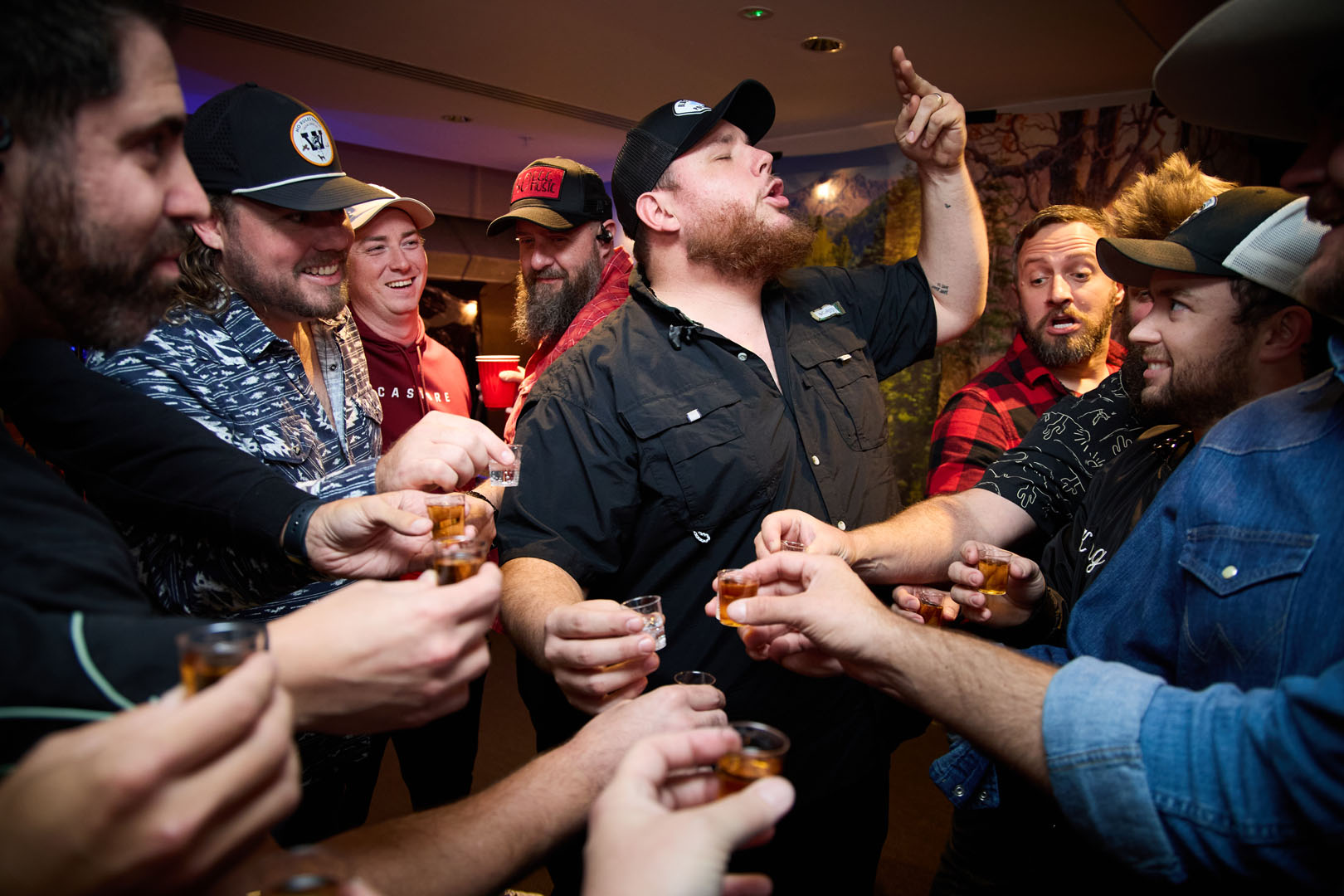
There is a particular kind of pressure that lives in the photo pit. You have roughly three songs. Sometimes less. The lighting is working against you, the crowd noise is shaking the floor beneath your feet, and the moment you have been waiting for, the one that justifies the whole night, is going to last about half a second. You either get it or you don’t.
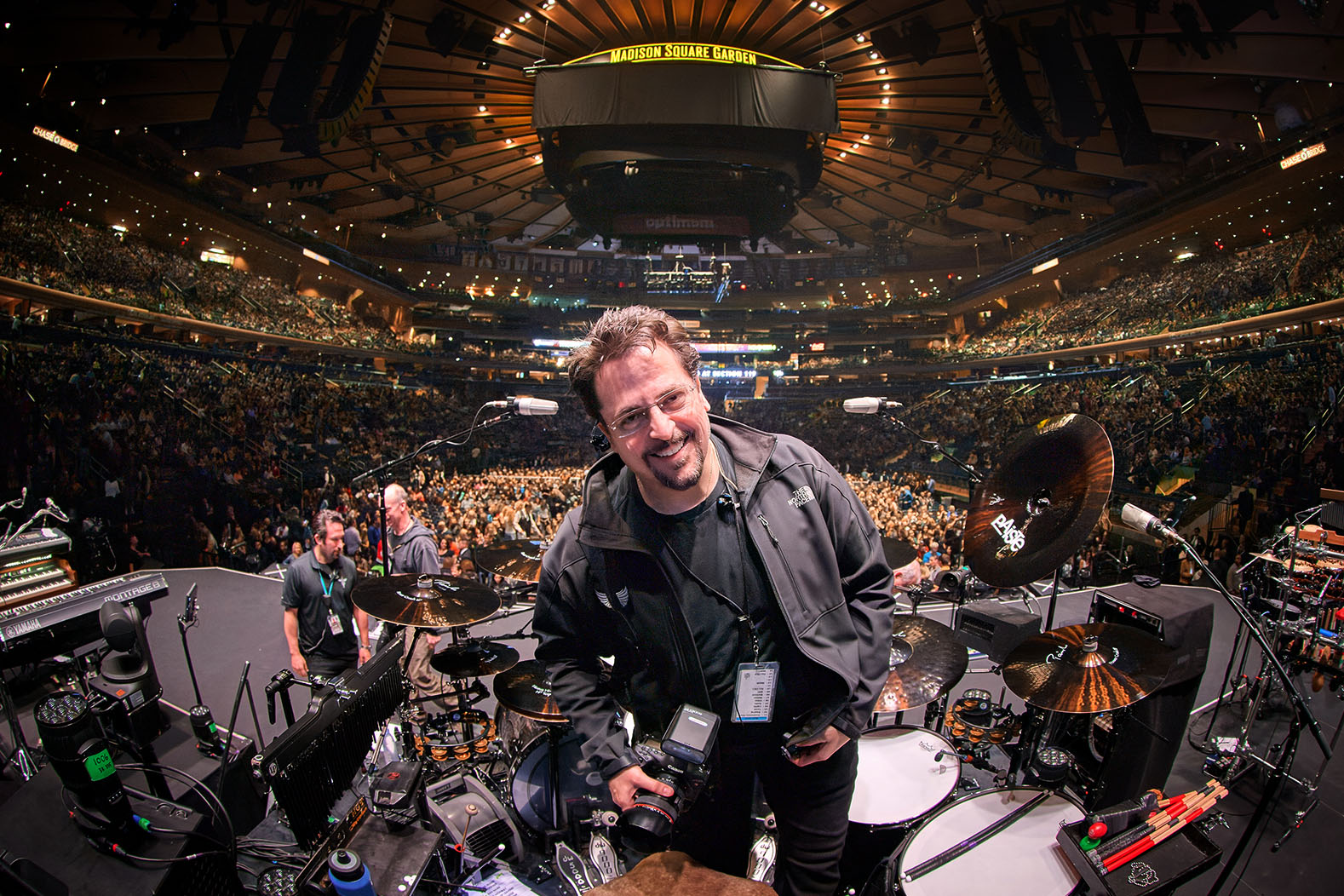
David Bergman has been getting it for 35 years.
He is best known today as the official tour photographer for Luke Combs, but that is only part of it. He tours with Bon Jovi, as he has for nearly a decade, and has worked with Barenaked Ladies, Sarah McLachlan, and Gloria Estefan. He started as a freelance photojournalist and then joined The Miami Herald as a staff photographer, covering local stories, international news, sports, and more than a few rides in the Presidential motorcade. After moving to New York in 2001 he covered the Olympics, Super Bowls, and World Series games, and earned 13 Sports Illustrated covers along the way. If you ever zoomed around inside that gigapixel panorama of Barack Obama’s 2009 inauguration, the one that went viral on Gizmodo and TechCrunch and basically every corner of the early internet, that was him too.

Canon named him an Explorer of Light in 2015, one of the highest honors a working photographer can receive. He has taken the Professional Photographer Achievement Award from the International Photographic Council at the United Nations, three iHeartRadio Music Awards nominations for Favorite Tour Photographer, and two CMA Touring Awards nominations for Tour Photographer of the Year. He runs “Shoot From the Pit,” which he describes as the only live concert photography workshop of its kind, putting aspiring music photographers inside real arena shows, and he hosts a long-running video series answering questions from photographers at every level.
But none of that is what makes his GearFocus shop interesting.
What this gear has actually done
We asked Bergman for the history of each piece. His answer:
“All of my gear has been used, by me, at various times and locations. Most of it has been on stage, backstage, and on the sidelines at the biggest events in the world. The rest of it stays in my NYC studio for portraits and educational videos. I have a lot of gear and change it out regularly, so I’ve always got the best cameras and lenses for the job at hand.”
David Bergman
That last sentence is the one worth reading twice. Gear leaves a kit like this because the job moved, not because anything failed, and a photographer working at this level is always cycling toward whatever the next assignment needs. Which means what reaches the used market from someone like Bergman is not the equipment that broke. It is the equipment that got replaced.
Five pieces from this kit have already sold on GearFocus, all of them since late July, including a 600mm f/4 super-telephoto that went in mid-August. Five remain, and more of his kit is on the way.
Canon EOS-1D X Mark III
$2,395 · Good condition
The 1D X Mark III was Canon’s final word on what a flagship DSLR could be. Launched in early 2020 ahead of the Tokyo Olympics, it was purpose-built for one thing: professional photographers who could not afford to miss.
The 20.1-megapixel full-frame sensor pairs with the DIGIC X processor for an ISO ceiling of 102,400, expandable to 819,200 for situations most people will never encounter. Burst speed hits 16fps through the viewfinder and 20fps in live view, backed by Canon’s deep learning autofocus with 191-point coverage and face and head detection that tracks through chaos. The buffer handles the volume. The magnesium alloy body with full weather sealing handles the rest.
This is a body built for precisely the conditions he describes, on stage and backstage and on the sidelines. It sat in them, absorbed what those assignments asked of it, and kept delivering. At $2,395 it represents serious capability at a fraction of what it cost new, which is exactly the gap the used market exists to close.
Canon EF 70-200mm f/2.8L IS III USM
$1,416 · Good condition, with LZ1326 case
If the 1D X III is the flagship, the 70-200mm f/2.8L is the workhorse. This is the lens that lives on your shoulder. The one you reach for when you need range and speed and do not know exactly what the next 20 minutes will look like.
The IS III generation improved on an already excellent image stabilizer and refined autofocus performance while keeping the weatherproof L-series build quality Canon’s professional zooms are known for. At f/2.8 it handles low light the way a concert pit demands: fast enough to freeze motion, bright enough to keep ISO in check, and consistent across the full zoom range.
This is the focal length that photographs a frontman mid-song from ten meters away, then pivots to a portrait backstage without a lens change. The included LZ1326 case means it comes protected and ready for transport. At $1,416, this is arguably the strongest value-to-utility ratio in the shop.
Canon EF 11-24mm f/4L USM
$925 · Good condition
Canon’s widest rectilinear full-frame zoom keeps straight lines straight, which is the technical achievement that makes this lens genuinely difficult to engineer and genuinely valuable in practice. At 11mm on a full-frame body you are seeing the world at a field of view that forces creativity, because there is simply no other way to describe what this lens does to a scene.
For architecture, interiors, events, or any situation where the space itself is the subject, the 11-24mm f/4L is a lens you use once and then start rearranging your priorities to own. At $925, the math becomes reasonable.
Canon EF 35mm f/1.4L II USM
$838 · Good condition
The 35mm f/1.4L II is one of Canon’s best primes, full stop. The Blue Spectrum Refractive optics introduced in this generation addressed chromatic aberration in a way that made the upgrade from the original immediately visible. At f/1.4 it isolates subjects in ways zoom lenses cannot. The field of view is just wide enough to tell a story, just tight enough to stay focused on one.
For photographers who shoot in available light, who work events without flash, who want a single lens that can carry an entire shoot, this focal length at this aperture is a very particular kind of freedom. It is listed well under $1,000.

Canon EF 50mm f/1.4 USM
$139 · Good condition · The studio side of the kit
And then there is this one.
A 50mm f/1.4 is the most essential lens in photography. It sees the way you see. It does not compress or distort. It just renders. At f/1.4 it separates subject from background with a softness that still feels natural rather than artificial. The USM autofocus is fast enough for most shooting conditions.
By his own description, part of his kit stays in the New York studio for portraits and educational video rather than going out on the road. A fast fifty is exactly what that work asks for: the environment is controlled and the subject is the entire point. At $139, it is the easiest decision in the shop, and exactly the kind of thing the used market exists for.
Why this matters
GearFocus exists because gear has a life beyond its original owner. Because a lens that covered stadiums and arenas does not become a lesser lens just because it is ready for its next chapter. Because a 1D X Mark III that delivered images across thousands of professional frames still has a body full of professional performance left in it.
When working photographers sell their kit, they are not offloading problems. They are passing on the tools that got the job done, to buyers who want to do the same.
David Bergman’s shop is on GearFocus now, and more of his kit is on the way. Browse what is listed at gearfocus.com/shop-seller/davidbergman, and follow the shop while you are there. Following a seller means we tell you the moment they list something new, and on a shop that sold three pieces in five days, that is the difference between seeing a lens and missing it.
You can see all his links at TheDavidBergman.com, and follow him on Instagram at @davidbergman.
All photographs by David Bergman, used with permission.
Own one like this?
Make room for new gear in minutes.
