- Buyer protection on every order
Insta360 Luna Ultra vs DJI Pocket 4P: Should You Buy Used DJI Pocket 3 Instead?
Ysa Canlas
Sep 11, 2026
KEY TAKEAWAYS
- The short answer: Buying a DJI Pocket 3 used makes more sense than a new Insta360 Luna Ultra or DJI Pocket 4P for most creators shooting social video, vlogs, and run-and-gun B-roll. The core three-axis gimbal, flip screen, and 1-inch sensor formula hasn’t changed. The discount has.
- What the new bodies actually add: Newer gimbal cameras compete on processing, battery, and ecosystem features. Those matter to a narrow slice of shooters and almost nobody else.
- Why prices are moving now: Every high-profile new-model comparison pushes previous-gen owners to list. More listings, softer prices, better window for anyone shopping a DJI Pocket 3 used.
- The Insta360 Flow angle: A phone gimbal is a different tool than a gimbal camera. Comparing them on price alone leads people to buy the wrong thing.
- If you already own one: Selling into a rising-supply market punishes waiting. Timing matters more than condition on gear this new.
The Decision Nobody Frames Honestly
Two new gimbal cameras. One aging champ. A pile of forum threads arguing past each other.
Here’s the deal. In September 2026, the actual choice facing a creator with a gimbal-camera-shaped hole in their kit is not “Insta360 Luna Ultra or DJI Pocket 4P.” It’s “new flagship, or a DJI Pocket 3 used at a meaningful discount, or an Insta360 Flow if what you really needed was a phone stabilizer all along.”
Three very different purchases. Reviewers rarely put all three on the same table, because comparison content gets built around whatever launched last week.
Tony and Chelsea Northrup ran their Luna Ultra versus Pocket 4P comparison at the start of September 2026, and that kind of coverage does something predictable to the secondhand market: current owners watch it, decide they want the new thing, and list what they have. Supply goes up. Prices go down. Which is exactly why the DJI Pocket 3 used conversation got interesting this month.
I’ve owned a pocket gimbal for years and I’ll admit the thing I use it for most is not cinematic. It’s walking-and-talking product demos in bad light. That’s it. That’s the job. Knowing what the job actually is changes which of these three you should buy.
Insta360 Luna Ultra vs DJI Pocket 4P vs a DJI Pocket 3 Used: The Table
Specs first, arguing second. This table sticks to the category-level differences that actually drive the buying decision, because inventing spec numbers for gear the brief didn’t supply data on would be worse than useless.
| Consideration | Insta360 Luna Ultra (new) | DJI Pocket 4P (new) | DJI Pocket 3 used |
|---|---|---|---|
| Price position | Current-gen flagship pricing | Current-gen flagship pricing | Discounted, and softening as supply rises |
| Core format | Standalone gimbal camera | Standalone gimbal camera | Standalone gimbal camera |
| Rotating screen | Yes | Yes | Yes, the feature that made the line famous |
| Ecosystem lock-in | Insta360 app and accessories | DJI app, mics, and accessories | DJI app, mics, and accessories |
| Accessory availability | New-generation mounts and cages | New-generation mounts and cages | Huge existing secondhand accessory pool |
| Depreciation risk | Highest, first-year curve | Highest, first-year curve | Already absorbed by the first owner |
| Warranty | Full manufacturer coverage | Full manufacturer coverage | Depends on age and seller |
Look at that last column honestly. The thing a DJI Pocket 3 used gives up is warranty and the newest processing. The thing it gives back is money, and a depreciation curve somebody else already ate.
For a creator whose deliverable is a vertical video on a phone screen, that’s a lopsided trade in favor of the older body. For a creator delivering to a client who specified a codec or a frame rate only the new bodies hit, it isn’t.
What the New Flagships Genuinely Do Better
I don’t want to be the guy who tells everyone to buy old gear. Sometimes new is the right call, and pretending otherwise is how blogs lose trust.
Both the Insta360 Luna Ultra and the DJI Pocket 4P sit at the front of a category that iterates fast. Generational gains in gimbal cameras tend to cluster in the same places: subject tracking that holds on better when the subject turns away, low-light processing that keeps grain from smearing, longer runtime per charge, and tighter integration with the manufacturer’s wireless mics.
Tracking is the one that actually changes workflows. If you shoot alone, and the camera is on a tripod while you move, tracking reliability is the difference between one take and six. That’s a real productivity argument.
Ecosystem matters too. Insta360’s strength has historically been the software side, the reframing tools and the app-driven editing. DJI’s strength has been hardware polish and the mic system. Choosing a new flagship is partly choosing which company’s app you want to live inside for the next three years.
None of that is nothing. It’s just not worth flagship money to someone whose footage ends up compressed to death on a social platform anyway.
Why a DJI Pocket 3 Used Still Wins for Most Creators
Here’s the part reviewers skip because it doesn’t generate launch-week traffic.
The Pocket 3 was the model that got this category right. Full-size rotating touchscreen, one-inch sensor, three-axis mechanical stabilization, small enough to actually live in a jacket pocket. That combination is why the line matters. And every one of those things is present in a DJI Pocket 3 used body bought today.
The stabilization does not degrade because a newer model exists. The sensor doesn’t shrink. The screen still rotates. A DJI Pocket 3 used in good condition shoots the same footage in September 2026 that it shot the day it launched.
What you’re buying when you buy new is an increment on top of a formula that was already finished. Increments are worth paying for when they unlock something you couldn’t do before. Most of these don’t.
My honest mistake with this category: I spent a year thinking I needed better tracking when what I actually needed was to stop shooting handheld while talking. The gear wasn’t the bottleneck. My blocking was. New body would not have fixed that.
So the test is simple. Write down the specific shot you couldn’t get last month. If a newer processor solves it, buy new. If the answer is “I just want the newer one,” a DJI Pocket 3 used gets you the same footage with cash left over for a mic, a light, and an extra card.
Where the Insta360 Flow Fits, and Where It Doesn’t
The Insta360 Flow gets grouped into these conversations constantly, and it shouldn’t be, because it isn’t the same product.
The Flow is a phone gimbal. It stabilizes a phone you already own. It has no sensor of its own. Its image quality is entirely your phone’s image quality, which on a recent flagship phone is genuinely good in daylight and genuinely mediocre when the sun goes down.
A DJI Pocket 3 used is a camera. Dedicated sensor, dedicated lens, dedicated processing, and it doesn’t drain the phone you need for maps and calls and the client texting about the schedule change.
The practical split looks like this. If your shooting is daylight, casual, and phone-native anyway, a used Flow at a discount is the cheapest possible entry into stabilized video and it will make you happy. If you shoot indoors, at events, at dusk, or you need the phone free while recording, the Flow will frustrate you and a DJI Pocket 3 used will not.
Buying a Flow when you needed a Pocket is the most common expensive mistake in this whole category. It’s not that the Flow is bad. It’s that it solves a different problem, and the price similarity on the secondhand market tricks people into thinking the products are interchangeable.
How the Northrup Video Moves Used Prices This Month
Secondhand gimbal camera prices behave in a pattern. A new generation launches, prices soften a bit. Then the big comparison videos land, and the softening accelerates, because that’s when fence-sitting owners finally decide.
The Northrup comparison went up on September 1, 2026. Within a few weeks of coverage like that, listings for the previous generation typically climb. More sellers, same buyers, prices drift down. It’s not dramatic and it’s not a crash. It’s a window.
That window is the reason to be shopping a DJI Pocket 3 used right now rather than in January. Gifting season tightens supply on small, giftable cameras every single year, and a pocket gimbal is about as giftable as camera gear gets. Prices that soften in September tend to firm back up by late November.
Which cuts both ways. If you’re buying a DJI Pocket 3 used, autumn is your friend. If you’re selling one, the calculus is different and I’ll get to it below.
Used Pocket 3 bodies come up on GearFocus regularly, and this is a sensible stretch to be watching listings if the discount is what’s holding you back. Worth a look before the holiday squeeze.
What to Check Before You Buy a DJI Pocket 3 Used
Gimbal cameras have a failure profile unlike other used gear. There’s no shutter count to read. The wear lives in the motors and the mount.
Ask the seller these things, in this order:
- Does the gimbal self-center cleanly on startup? A motor that hunts, stutters, or drifts on power-up is the single most expensive problem on a DJI Pocket 3 used and the hardest to fix.
- Any drops? Gimbal arms bend. A body that landed on the gimbal end can look perfect and track crooked forever after.
- Does the screen rotate through its full travel without grinding? That mechanism is the signature feature and a real wear point.
- What’s the battery runtime like now? Batteries in these are not user-swappable in the way a mirrorless body’s is, so degradation is permanent.
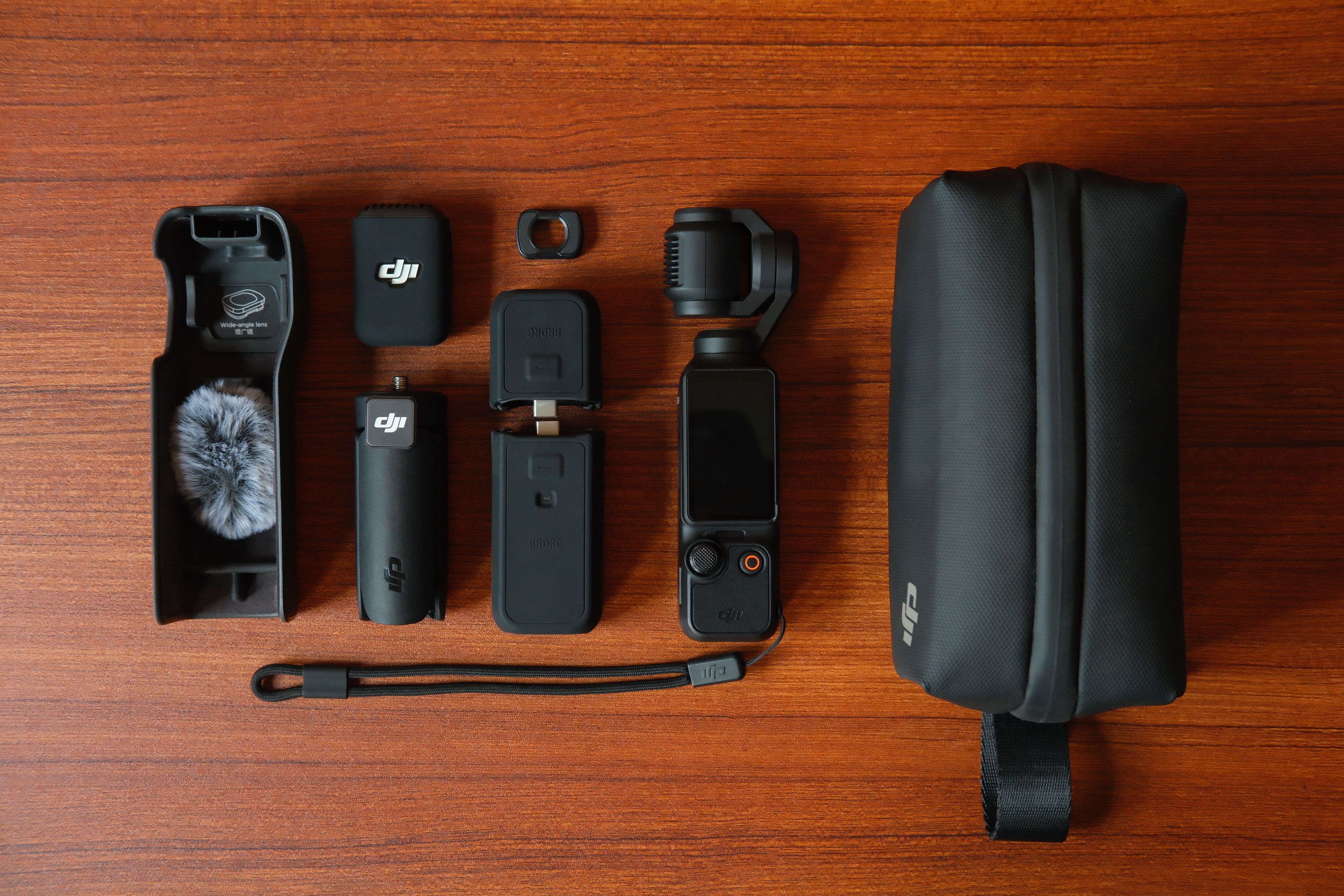
- What’s included? The case, the cover, the wrist strap, and any DJI mic that came bundled. Accessories are where a DJI Pocket 3 used purchase quietly gains or loses a hundred dollars of value.
On GearFocus, seller identities are verified, which is the part that matters most on gear this compact and this easy to misrepresent in photos. Every purchase also carries the standard 48-hour verification window after delivery: if a DJI Pocket 3 used arrives and it isn’t as described, you return it at no charge and the seller covers return shipping. Some sellers offer a 14-day no-questions-asked window on top of that, but it’s seller-by-seller, not platform-wide.
Most orders ship within one to three business days, so you’re not waiting weeks to find out whether the gimbal is healthy.
Already Own One? The Selling Side of This
Flip the whole article around for a second.
If you own a Pocket 3 and you’ve been eyeing the Luna Ultra or the Pocket 4P, the supply wave described above is working directly against you. Every week you wait during a coverage cycle is a week more competing listings appear.
The counterweight is the holiday window. Small, giftable cameras get a demand bump in November and December, which pulls prices back up. So the seller’s question is whether you’d rather beat the listing wave now or ride the gift-season demand later.
Neither is wrong. But drifting through both without deciding is how people end up selling in February at the worst price of the year.
Worth reading if you’re on this side of the trade: our breakdown of selling your DJI Osmo Pocket 3 now that prices hit an all-time low covers the timing question in more depth, and the Osmo Pocket 3 value guide walks through what condition and included accessories actually do to the number. If the new-model launch is what’s prompting you, selling now that the Osmo Pocket 4 Pro is here is the closer fit.
One more thing for sellers. Sellers keep 91.5% of the sale price on GearFocus, an 8.5% total fee, which is meaningfully more than generalist marketplaces leave you with. On a compact camera that’s not a rounding error.
Which One Should You Actually Buy?
Decision tree, no hedging.
Buy a new Insta360 Luna Ultra or DJI Pocket 4P if you shoot solo with tracking doing the camera-operator job, you deliver to clients with format requirements, or you need warranty coverage because this camera earns money and downtime costs more than the price gap.
Buy a DJI Pocket 3 used if your output is social video, travel footage, vlogs, product demos, or B-roll that lives alongside footage from a bigger camera. This covers most people reading this. The formula was already finished at the Pocket 3, and the discount is the whole point.
Buy a used Insta360 Flow only if you genuinely shoot phone-first in decent light and you understand you’re buying stabilization, not a camera. Cheapest good answer to a narrower question.
If you’re torn between the first two, ask what the extra money buys in your actual workflow. If the honest answer is a feature you’d use twice a year, the DJI Pocket 3 used route is the disciplined call, and the money saved buys a wireless mic that will improve every single video you make more than any sensor upgrade will.
Used Pocket 3 bodies and their accessories turn up on GearFocus steadily. If the discount is what’s been holding you back from the category entirely, this is a reasonable month to be watching.
BOTTOM LINE
- Most creators: A DJI Pocket 3 used delivers the same rotating screen, one-inch sensor, and three-axis stabilization that defined the category, at a price the first owner already depreciated.
- New flagship buyers: Luna Ultra and Pocket 4P justify their price on tracking reliability, runtime, ecosystem integration, and warranty, not on raw image quality gains most viewers will notice.
- Flow shoppers: It’s a phone gimbal, not a camera. Great in daylight, frustrating after dark, and not a substitute for a DJI Pocket 3 used.
- Timing: September 2026 is a soft-price window driven by launch coverage. Gift season tightens supply on compact cameras every year.
- Inspection priorities on any DJI Pocket 3 used: clean gimbal self-centering, no drop history, full screen rotation travel, honest battery runtime, and included accessories.
- Protection: Standard 48-hour verification after delivery on every GearFocus purchase, with the seller covering return shipping if it’s not as described.
Conclusion
Category launches are loud. They’re supposed to be. But the loudest month for a new gimbal camera is also the quietest month for the previous one’s price, and that asymmetry is where the value lives.
The Insta360 Luna Ultra and DJI Pocket 4P are real upgrades for people with real reasons. Tracking-dependent solo shooters, client work with format specs, anyone who needs warranty coverage on a working tool. If that’s you, buy new and don’t look back.
Everyone else is looking at a finished product available at a discount. A DJI Pocket 3 used still shoots the footage you’d post, and the money you don’t spend on the newest processor buys audio and lighting that will visibly improve everything you make. Check the gimbal, check the battery, buy from a verified seller, and go shoot something.
FAQ
Is a DJI Pocket 3 used still worth buying in 2026?
Yes, for most creators. A DJI Pocket 3 used keeps the rotating screen, one-inch sensor, and three-axis gimbal that defined the category. Newer models add tracking and processing refinements, not a different class of image.
Should I buy the DJI Pocket 4P or a DJI Pocket 3 used?
Buy the Pocket 4P if you need warranty coverage, the newest subject tracking, or a client-specified format. Buy a DJI Pocket 3 used if your output is social video, travel, or vlogs where the discount matters more.
Is the Insta360 Flow a good alternative to a DJI Pocket 3 used?
Only if you shoot phone-first in good light. The Flow stabilizes your phone but has no sensor of its own, so low-light quality and battery drain are worse than a dedicated gimbal camera.
What should I check when buying a used gimbal camera?
Confirm the gimbal self-centers cleanly at startup with no hunting, ask about drop history, test the screen’s full rotation travel, verify current battery runtime, and confirm which case and accessories are included.
Will used gimbal camera prices drop further this year?
Launch coverage typically raises listing supply and softens prices for a few weeks. Compact, giftable cameras then tighten again through November and December as holiday demand picks up.
Photo: Paul De Vota
Own one like this?
Make room for new gear in minutes.
