- Buyer protection on every order
The Gear Behind the Shot: How Photographers Are Documenting the 2025 Cultural Moment
Ysa Canlas
Mar 13, 2026
Key Takeaways
- How photographers are documenting the 2025 most resonant images aren’t coming from press corps photographers with $10K rigs — they’re coming from creators embedded in the communities they actually belong to.
- Camera gear doesn’t define the document. Proximity, trust, and persistence do. A well-maintained used body handles everything a cultural moment demands.
- Documentary photography has always been democratized by accessible gear. That tradition is alive and accelerating.
- Shooting cultural moments isn’t reserved for photojournalists. It requires intention, restraint, and the willingness to stay in the room longer than anyone else.
- The camera sitting in someone’s closet right now — or available from a fellow creator for under $500 — is more than enough. The moment is already happening.
There’s a photograph making the rounds in photography circles lately. Shot somewhere in the American Southeast, late 2024. A woman in her sixties, front porch, afternoon light knifing through pine trees. She’s looking slightly off-frame — not at the camera, not at anything in particular. Just out.
The photo isn’t technically flawless. There’s grain. The exposure runs a half-stop warm. But it stops you cold, because that gaze carries weight. Real, unperformable weight.
The camera? A used Canon 5D Mark III. Bought secondhand from a wedding photographer who had upgraded. Total cost: under $500.
That image is the cultural document of 2025 in miniature. Not a rally. Not a protest. Not a trending moment — just a real person, seen clearly, by someone who showed up with the right intention and a camera they could actually afford.
The Cameras That Are Actually in the Room
For years, the photography industry quietly perpetuated a myth: that important images require expensive equipment. The press badge. The 600mm lens. The $8,000 mirrorless system. Gear as credential. The implicit message being that if you couldn’t afford the tools, the story wasn’t yours to tell.
That myth is collapsing in real time.
The photographers documenting 2025 — the climate migrations, the rural economic shifts, the cultural reckonings playing out in small towns and city blocks that never make cable news — are largely working with mid-tier bodies, fast primes, and a willingness to show up consistently. They’re not on assignment. They’re just paying attention.
Wired covered a version of this in 2023, when photojournalists started openly discussing how smartphone cameras were reshaping what “professional image” even meant. But the more interesting shift isn’t phones versus cameras — it’s the rise of the informed hobbyist carrying real glass into spaces that traditional media never enters.
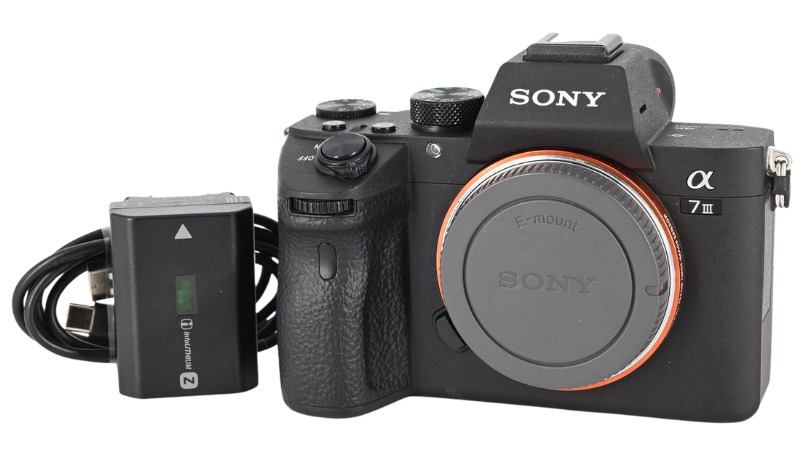
A Sony a7 III. A Fujifilm X-T4. A Nikon D750 that’s been through five owners and still meters perfectly. These are the cameras writing 2025’s visual history.
Why Used Gear and Documentary Photography Were Always Made for Each Other
This isn’t a new relationship.
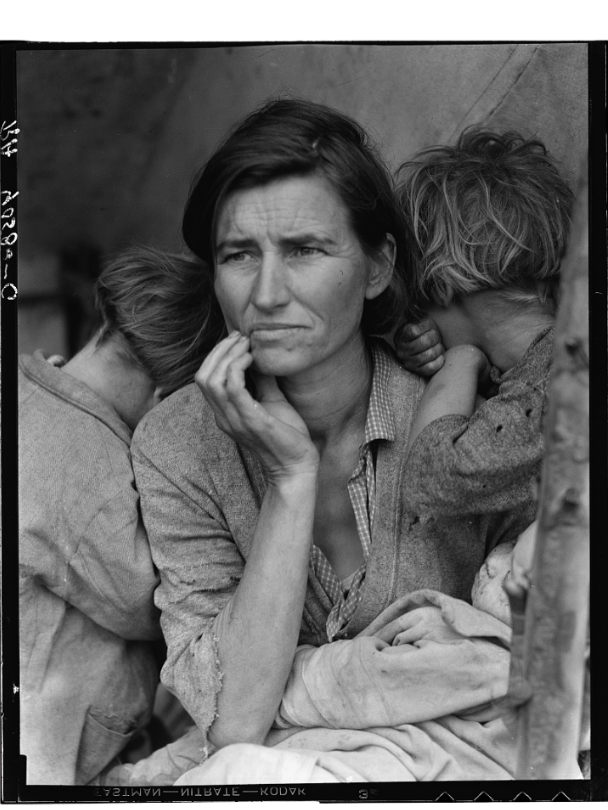
Think about the photographers whose work actually defined cultural moments. Dorothea Lange shooting the Dust Bowl. Gordon Parks documenting segregation. Mary Ellen Mark in psychiatric wards. None of them were waiting on the next gear release. They were present. That was the whole job.
Lange’s “Migrant Mother” — one of the most recognized photographs in American history — was shot on a Graflex 4×5, a government-issued camera, by a woman on a government stipend. She almost didn’t stop. It was raining. She was on her way home. She turned around because something told her to. The Library of Congress notes there are no restrictions on publication of Lange’s FSA work — the government paid for it, which meant it belonged to everyone.
That’s the throughline. The accessible tool, in the right hands, pointed at the right thing.
Documentary photography demands mobility, discretion, and durability. A $4,500 flagship mirrorless announces itself. It creates distance. It signals media in rooms where media is unwelcome.
A scuffed, well-worn camera body does something different — it disappears. It signals someone who’s been at this a while, who isn’t precious about their equipment, who belongs here. That’s not a small thing. Access is everything in documentary work.
There’s also a practical argument. Documentary photography means showing up repeatedly, in conditions that aren’t kind to gear. Rain. Dust. Crowded rooms. Long days. The photographer who bought a used Fujifilm X-Pro2 for $600 doesn’t think twice about pulling it out in a downpour. The photographer who financed a new body at $2,800 is quietly calculating risk every time conditions get rough.
Skin in the game changes creative decisions. Usually not for the better.
The Camera as Weapon Against Inequality
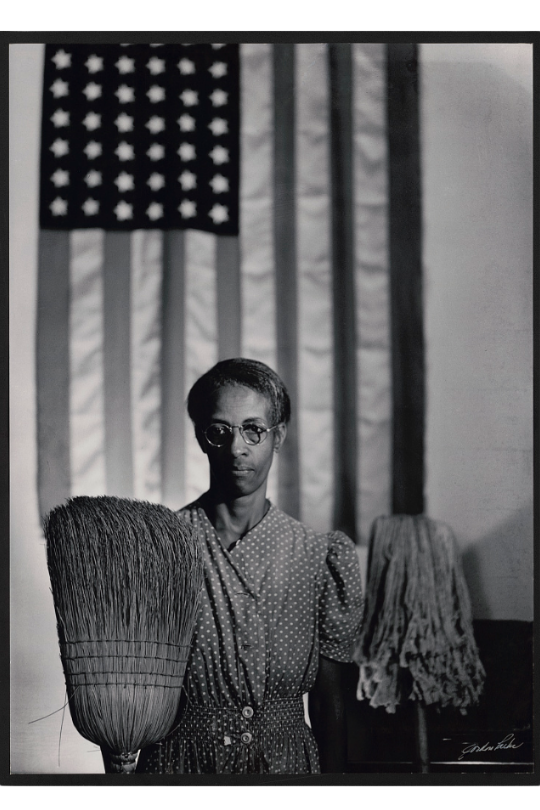
Gordon Parks said it better than anyone: “I picked up a camera because it was my choice of weapons against what I hated most about the world — racism, intolerance, poverty.”
He wasn’t speaking metaphorically.
Parks took “American Gothic” in 1942, on his first assignment for the Farm Security Administration. He had just been turned away from restaurants, theaters, and department stores in Washington, D.C. He went back to his office and found a Black cleaning woman, Ella Watson, and made one of the most quietly devastating images in American history. Time magazine considers it one of the 100 most influential photographs ever taken.
The camera he used cost nothing extra. What cost something was the decision to use it the way he did. To point it not at the spectacle of power, but at the person standing in front of the flag — invisible to everyone who walked past her every day.
That instinct — to find the person standing in the periphery of the headline — is exactly what separates documentary photography that matters from documentation that merely exists. It’s also what the National Gallery of Art’s 2024–2025 exhibition The ’70s Lens: Reimagining Documentary Photography explores: the photographers who pointed their cameras at communities overlooked by mainstream media, creating records that would outlast any news cycle.
What 2025 Is Actually Worth Documenting
Here’s an uncomfortable truth about documenting a cultural moment — most photographers aim for the obvious target and miss the real story entirely.
The obvious target is the spectacle. The crowd, the march, the event. Those images exist in the thousands. They’re important. They’re also largely redundant, because everyone with a camera showed up to the same place at the same time, pointed their lens in the same direction.
The real story of 2025 is the texture around the spectacle. The coffee shop that’s been the organizing hub for three years, walls plastered with flyers for events that never made the news. The mechanic who’s been photographing his neighborhood every Sunday for a decade and has a visual record no journalist will ever replicate. The high school auditorium where a community is deciding, loudly and messily, what kind of place it wants to be.
That’s exactly what the 2025 World Press Photo Contest winners understood. The winning images ranged from a reunion between an adoptee and her birth father in Seoul, to workers riding through flooding at a nickel smelting plant in Indonesia, to protesters clashing with police in Nairobi. None of those shots happened because someone bought the right camera. They happened because someone was already in the room.
The 2025 World Press Photo of the Year was taken by Palestinian photographer Samar Abu Elouf for The New York Times — a quiet portrait of a young boy, Mahmoud Ajjour, severely injured while fleeing an Israeli attack in Gaza. Not a battlefield panorama. A quiet photograph. Of one child. That stopped the world. See the full 2025 World Press Photo winners at PetaPixel →
The World Press Photo jury put it plainly: this is a quiet photo that speaks loudly. It tells the story of one boy, but also of a wider war that will have an impact for generations.
That’s what documentary photography does. It makes one face stand for everything.
There’s a documentary photographer in the Midwest — shoots with a Leica M6 and a 35mm Summicron bought used — who’s been quietly photographing the same twelve square blocks of her city for four years. No publication, no assignment, no Instagram strategy. Just consistent presence. Her archive is going to matter in ways she probably can’t fully predict yet. That’s how documentary work actually functions. Slow. Unglamorous. Shockingly modest budget.
The Technical Case for the Mid-Tier Body
Alright, let’s get specific — because “gear doesn’t matter” is only half true, and the half-truth version leads people to bad decisions.
Gear matters in specific, definable ways. Dynamic range matters when shooting in challenging mixed light — interiors with bright windows, night scenes with artificial sources, faces in heavy shade. Modern sensors, even from 2018-era bodies, resolve tonal information that would have seemed miraculous fifteen years ago. A used Sony a7 III handles more dynamic range than the top-of-the-line Canon 5D Mark II that shot some of the most celebrated documentary work of the 2010s — a camera DPReview praised as a landmark for its era.
Autofocus matters for candid work. Eye-tracking, which felt like a gimmick at launch, turns out to be genuinely transformative for street and documentary photography — keeping subjects sharp while the photographer focuses entirely on timing and composition. Bodies that offered this in 2021 are available used for under $1,500 now.
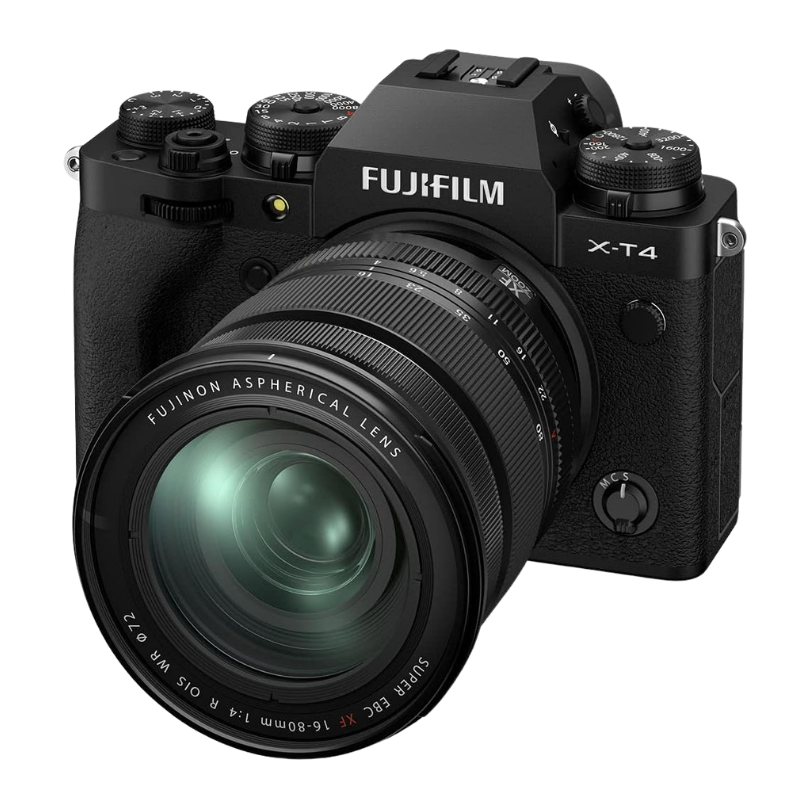
High ISO performance matters. Documentary work happens in available light, and available light is frequently terrible. Dim community centers. Fluorescent-lit back rooms. Overcast afternoons in the middle of nowhere. The Fujifilm X-T4 — widely reviewed as one of the best hybrid stills and video cameras available — delivers clean ISO 6400 performance that puts environments that once demanded press credentials or dedicated lighting fully within reach of any photographer paying attention.
None of this requires a new camera. It requires a smart used one. The GearFocus guide to buying used cameras in 2025 breaks down exactly what to look for.
The Community Angle Nobody Talks About
There’s something worth naming about where photographers are sourcing gear for this kind of work. The GearFocus community isn’t a liquidation channel — it’s photographers selling to photographers. Every seller is verified. Listings are specific. Wear patterns are documented honestly. The history of the gear is real.
When a wedding photographer lists their backup Canon 5D Mark III, they’re not moving inventory. They’re handing off something they trusted at real moments — ceremonies, receptions, people in the middle of their most emotionally significant days. That matters for documentary photographers in particular, because they’re not buying a spec sheet — they’re buying a tool they need to trust in unpredictable situations. Knowing a body has been through thousands of frames of professional event work tells a story about how it performs under pressure.
Gear with provenance carries something that new gear, fresh from a retail box, simply doesn’t.
Show Up With What You Have
The photographers worth watching in 2025 aren’t the ones who waited for the right moment to upgrade. They’re the ones who grabbed what was available — a used mirrorless, a fast prime, a couple of charged batteries — and went somewhere worth going.
The cultural record doesn’t pause for equipment decisions.
Dorothea Lange emerged during the Great Depression as part of the Farm Security Administration project, using accessible tools to create work that still defines how Americans understand that era. Lewis Hine documented child labor and changed federal law. Gordon Parks made one of the most powerful images of the 20th century with a government-issued camera on his first day of work.
Each time, the accessible tool won. Not because it was technically superior — but because it put cameras in the right hands, in the right rooms, at the right moments. As this year’s World Press Photo contest demonstrated, the most powerful images emerge from photographers who build trust with communities over time — not from whoever had the most expensive gear on the scene.
2025’s version of that tool is a well-maintained mirrorless body or DSLR, bought from someone in the community who actually used it, priced at what a thoughtful photographer can manage without compromising their ability to keep shooting.
The moment is already happening. The only question is whether there’s someone in the room with a camera, paying attention.
Own one like this?
Make room for new gear in minutes.
