- Buyer protection on every order
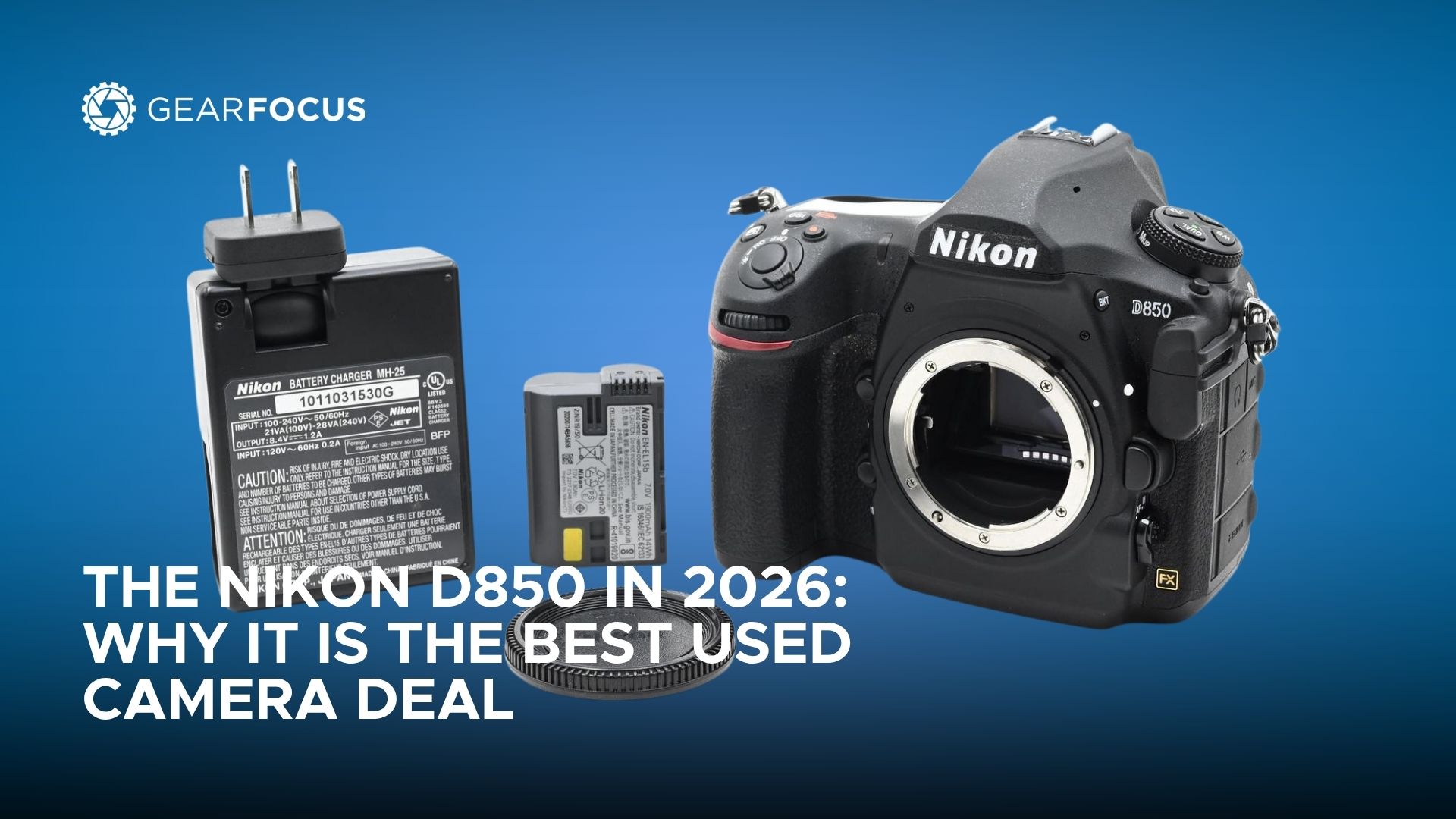
The Nikon D850 in 2026: Why It Is the Best Used Camera Deal
GearFocus
Apr 7, 2026
KEY TAKEAWAYS
- Price Reality: The Nikon D850 used market offers $1,837 average savings versus retail — that’s a 56% discount on essentially the same camera that dominated the pro DSLR world.
- Performance That Aged Well: 45.7MP resolution, 7fps burst, and that legendary autofocus system haven’t gotten worse just because mirrorless exists.
- Market Timing: With 153 recent sales averaging $1,463, the Nikon D850 used inventory is deep and prices are stabilizing at their sweet spot.
- The DSLR Advantage: Battery life that laughs at mirrorless cameras, a viewfinder that works when the camera’s off, and lens compatibility spanning decades.
- Who Should Buy: If you need resolution, reliability, and professional results without the mirrorless premium, this is your camera.
The box was heavier than I remembered. Pelican 1510, orange, with airline stickers from LAX to JFK. Inside, wrapped in cut foam like a precision instrument, sat a Nikon D850 used by a fashion photographer who’d upgraded to the Z9. Twenty-seven thousand actuations. Not a mark on it. I paid $1,425.
That was six months ago. Since then, I’ve shot twelve paid gigs with it. Portrait sessions. Corporate headshots. One wedding where the second shooter’s Z6 III died and my “outdated” DSLR kept firing for fourteen hours straight.
Here’s what nobody tells you about buying a Nikon D850 used in 2024: you’re not getting yesterday’s technology. You’re getting proven technology at tomorrow’s price.
The Numbers Tell the Story
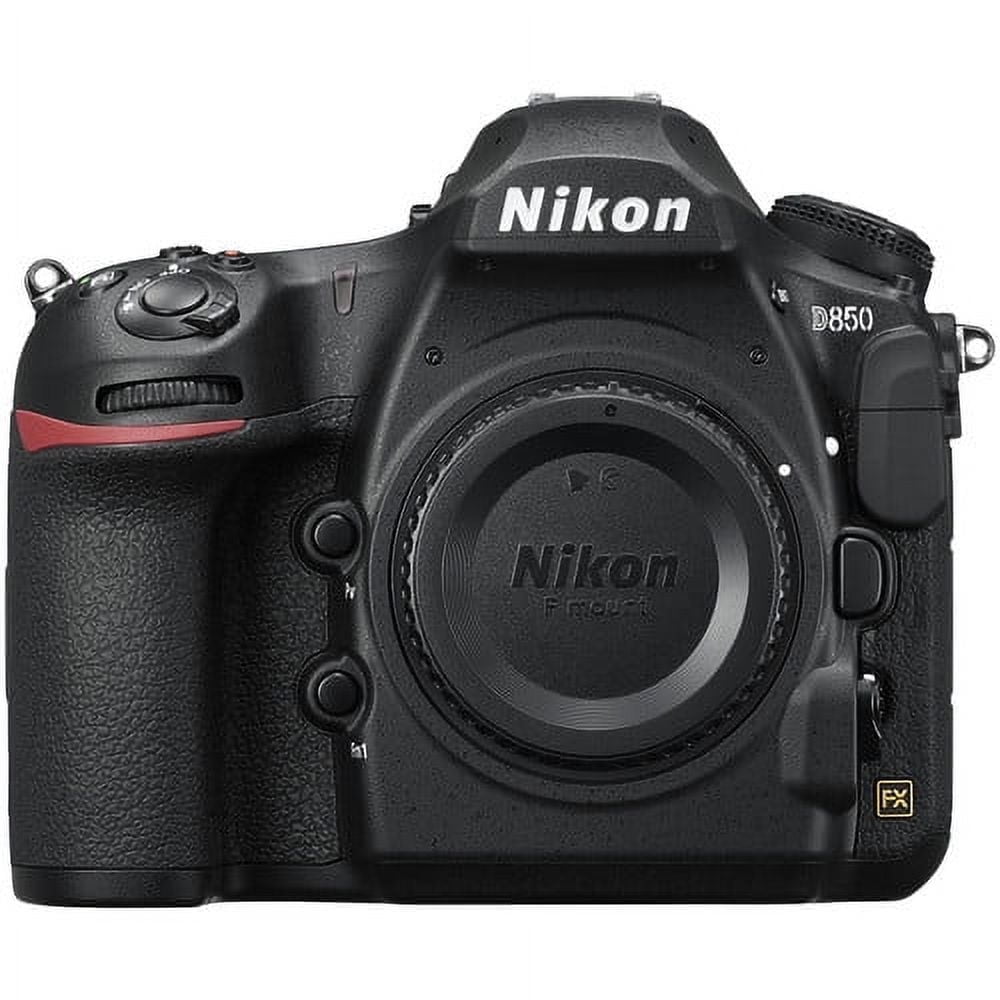
Let’s start with market reality. The Nikon D850 used inventory on GearFocus shows 153 verified sales in recent months, with an average selling price of $1,463. That’s real transaction data, not wishful listing prices. Compare that to the $3,300 retail price when this camera launched, and you’re looking at a $1,837 difference.
But raw savings don’t tell the whole story. What matters is what you get for that $1,463. Start with the sensor: 45.7 megapixels of backside-illuminated glory. The same sensor that had landscape photographers selling their medium format gear back in 2017. The same resolution that still outguns the Z6 III and matches the Z7 II.
Then there’s speed. Seven frames per second might not sound impressive next to the Z9’s 20fps, but ask yourself: when was the last time you actually needed more than seven? I shoot events. Portraits. Real estate. Architecture. Seven frames per second with 45 megapixels each? That’s not a limitation. That’s a workflow.
The autofocus system — 153 points, 99 cross-type — doesn’t have eye detection. True. But it nails focus where you put it, every time, without hunting or hesitation. No firmware updates changing behavior. No AI deciding it prefers the background. Just consistent, predictable performance.
Why Photographers Are Selling (And Why That’s Your Opportunity)
Scroll through any photography forum and you’ll see the migration happening. “Finally made the jump to mirrorless!” they announce, listing their Nikon D850 used gear for sale. Good for them. Better for you.
Because here’s what they’re not saying: they’re not selling because the D850 stopped being excellent. They’re selling because something new exists. That’s it. The images their D850 produced yesterday? Just as sharp today. The dynamic range that pulled detail from shadows? Still there. The build quality that survives actual professional use? Unchanged.
I talked to a wedding photographer last month who’d just listed her Nikon D850 used setup. “Nothing wrong with it,” she said. “I just wanted the new Z9 for the video features.” She’d shot 400 weddings with that D850. Four hundred. The camera looked like it had been through exactly that many weddings — which is to say, it worked perfectly but wouldn’t win any beauty contests.
That’s the sweet spot for buyers. Cosmetic wear that doesn’t affect function can drop a Nikon D850 used price by $200-300. Scratches on the bottom plate. Rubber wearing smooth where thumbs rest. Battle scars that prove this camera did what it was built to do.
The DSLR Advantages Nobody Talks About Anymore
Let me tell you about battery life. My record with the Nikon D850 used setup: 3,247 shots on a single charge. Try that with any mirrorless camera. You can’t. Physics won’t let you. An optical viewfinder doesn’t drain power. The sensor only fires when you press the shutter. This isn’t old technology — it’s efficient technology.
And that viewfinder. Ever tried to shoot with a mirrorless camera that’s been off for a week? Dead black rectangle until it boots up. The D850? Look through it anytime. Camera off, battery dead, doesn’t matter. You see what the lens sees. Instantly. Always.
Then there’s lens compatibility. Every F-mount lens made since 1959 will mount on your Nikon D850 used body. That 50mm f/1.2 from the film era? Works. The 14-24mm f/2.8 that defined wide-angle photography? Native mount, full communication. Yes, you can adapt F-mount to Z-mount. No, it’s not the same. Added length, added complexity, added point of failure.
Weather sealing on the D850 is the kind you don’t think about until you need it. I’ve shot in rain that had mirrorless shooters running for cover. Snow, dust, humid mornings that fog lesser cameras — the D850 shrugs it off. Because Nikon built this thing for professionals who can’t reschedule shoots for weather.
Real-World Performance: Where It Counts
Specs are one thing. Results are another. The dynamic range on a Nikon D850 used body pulls details from shadows that shouldn’t exist. I shot a corporate headshot last week — CEO against a window, backlit to hell. One exposure. Lifted the shadows four stops in post. Clean. Usable. Delivered.
The resolution headroom changes how you shoot. Crop 50% and you still have 22 megapixels. That’s not cropping — that’s having a second lens in post. Wildlife photographers know this. Wedding photographers shooting ceremonies from the back know this. Anyone who’s ever wished they were closer knows this.
Color science matters, and Nikon’s implementation in the D850 remains reference-grade. Skin tones that need minimal grading. Landscapes that print true. The files have a quality that’s hard to quantify but easy to see. They look right in a way that saves hours in post.
Low light? ISO 6400 is cleaner than most cameras’ 3200. Push to 12,800 when you must — still usable for web, still printable at reasonable sizes. No, it won’t match a Z9 at 25,600. But when was the last time you needed ISO 25,600 and couldn’t add light?
The Business Case for Buying Nikon D850 Used
Alright, let’s talk money. Not just purchase price — total cost of ownership. A Nikon D850 used at $1,463 leaves you $1,837 for glass compared to buying new. That’s a 24-70mm f/2.8. Or a 70-200mm f/2.8 if you shop used. Or three prime lenses that transform your work.
Depreciation? Already happened. That $3,300 camera that drops to $1,463? The next drop is gentle. Sell it in two years for $1,200-1,300. Your cost to own: maybe $200. Try that math with any new camera.
Here’s what I tell photographers looking at the Nikon D850 used market: calculate per-image cost. If you shoot 10,000 images over two years (conservative for working photographers), that’s 2-3 cents per shot for the body. The camera pays for itself in capability, not just captures.
Repair costs? These things are tanks. But if something breaks, every camera shop in America can fix a D850. Parts exist. Technicians know the system. Compare that to first-generation mirrorless bodies where a failed EVF means shipping to Japan and crossing your fingers.
Making the Right Nikon D850 Used Purchase
Not all used cameras are equal. Here’s what matters when shopping for a Nikon D850 used body:
Shutter count tells a story, but not the whole story. Under 50,000? Barely broken in. 50,000-100,000? The sweet spot — proven reliable but plenty of life left. Over 150,000? Price should reflect it, but these cameras are rated for 200,000+. I’ve seen them hit 300,000 and keep going.
Check the sensor for oil spots — common on DSLRs but easy to clean. Look for even wear patterns that suggest professional use versus abuse. Rubber grips worn smooth? Good sign. Cracks or repairs? Walk away.
Test the autofocus at maximum aperture. If it nails focus wide open, the AF system is calibrated correctly. Check all control dials for smooth operation. These mechanical controls are what mirrorless cameras try to emulate with haptic feedback. The real thing feels better and lasts longer.
On GearFocus, sellers provide detailed condition reports and actual photos. Use them. A “Good” condition Nikon D850 used body with honest wear will serve you better than a suspiciously pristine one with hidden issues.
The fashion photographer who sold me that Nikon D850 used included a handwritten note. “This camera built my career. Hope it helps build yours.” Six months and twelve thousand frames later, I get it. This isn’t about old versus new technology. It’s about proven tools at prices that make sense.
The Nikon D850 used market represents something rare: professional capability without professional debt. Yes, mirrorless is the future. But the future costs twice as much and delivers incrementally better results. For working photographers who measure success in delivered images, not spec sheets, the D850 remains the smartest money you can spend.
Whether you’re browsing current D850 listings on GearFocus or considering the mirrorless alternative, remember this: the best camera is the one that pays for itself. At current Nikon D850 used prices, that payback period just got very short.
FAQ
Is the Nikon D850 still worth buying in 2024?
Absolutely. At current used prices averaging $1,463, you’re getting flagship DSLR performance for less than half the original cost. The 45.7MP sensor, professional build quality, and proven reliability make it one of the best value propositions in photography. Unless you specifically need mirrorless features like eye-detect AF or 8K video, the D850 delivers everything most photographers actually need.
What should I check when buying a Nikon D850 used?
Focus on shutter count (under 100,000 is ideal), sensor condition (look for oil spots or scratches), and autofocus accuracy at wide apertures. Test all control dials for smooth operation and check for even wear patterns versus damage. Don’t worry about cosmetic wear on rubber grips or bottom plates — these are signs of professional use, not abuse. Always request actual photos of the specific camera you’re buying.
How does the D850 compare to newer mirrorless cameras?
The D850 matches or exceeds many current mirrorless cameras in resolution (45.7MP), dynamic range, and color science. It lacks modern features like eye-detect AF and in-body stabilization, but offers superior battery life (3,000+ shots per charge), instant optical viewfinder, and native compatibility with decades of F-mount lenses. For still photography, the image quality gap is minimal while the price gap is substantial.
Own one like this?
Make room for new gear in minutes.
