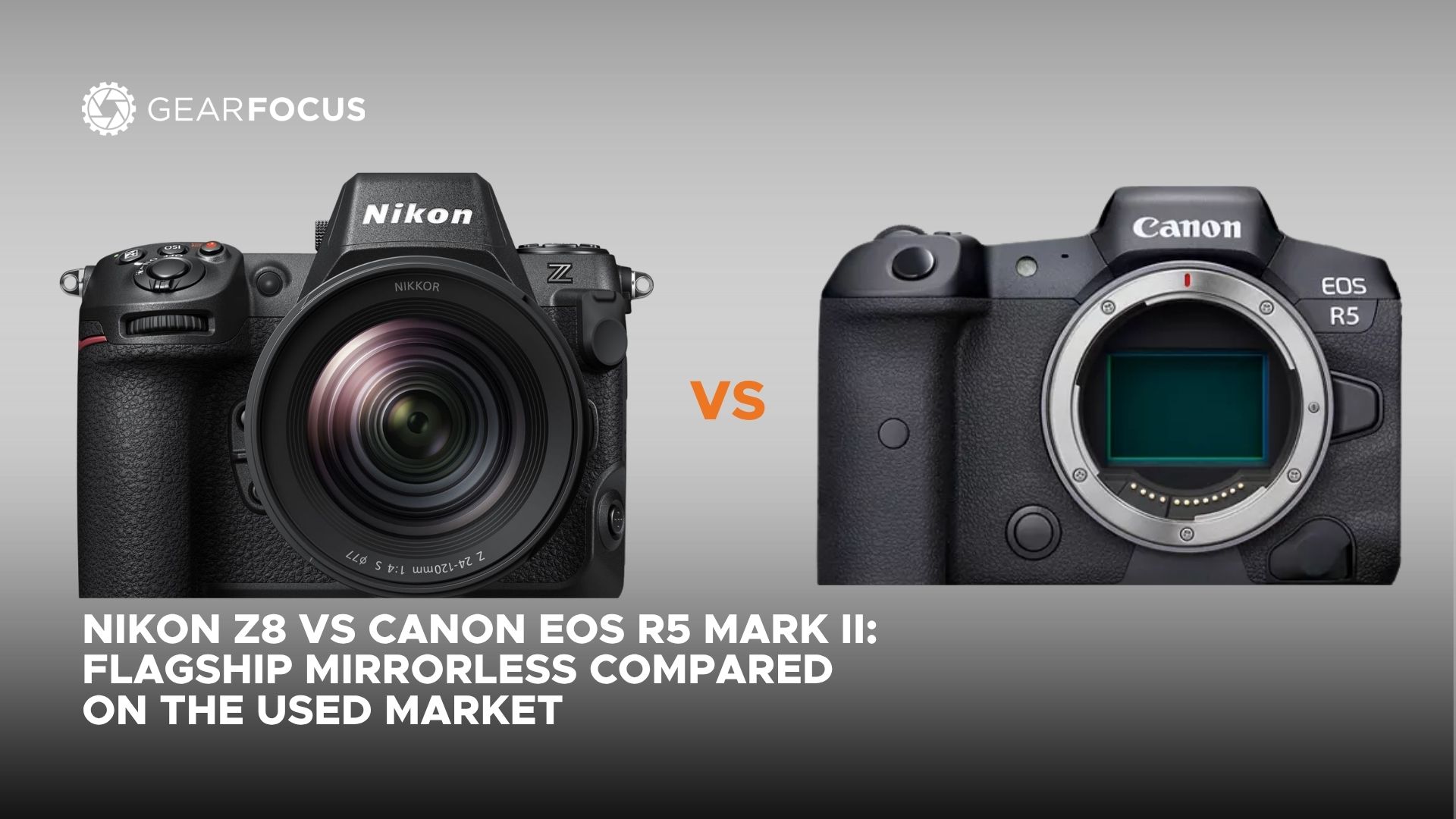
Nikon Z8 vs Canon EOS R5 Mark II: Flagship Mirrorless Compared on the Used Market
GearFocus
Apr 24, 2026
KEY TAKEAWAYS
- Price reality check: Used Nikon Z8 averages $2,947 vs Canon R5 II at $3,419 — that’s a $472 difference for similar flagship performance
- Video workflow winner: Z8’s internal N-RAW recording eliminates external recorders; R5 II requires external for Canon RAW Light
- Autofocus innovation: Canon’s eye-controlled AF is genuinely revolutionary — once you use it, everything else feels primitive
- Ecosystem matters: Canon RF has 36+ native lenses vs Nikon Z’s 28 — but Z mount accepts F-mount glass with minimal compromise
- Used market wisdom: Z8 inventory is plentiful with 87 recent sales; R5 II still scarce with only 69 units moving through secondary market
The viewfinder went dark for a split second — just long enough to miss the osprey’s dive. My Z9 never did that. But here I was, testing a used Z8 in the Everglades, remembering why I’d sworn off anything that wasn’t a stacked sensor. Then the R5 Mark II arrived two days later, and suddenly blackout wasn’t my biggest concern. The eye-controlled AF tracked the bird before I even fully lifted the camera. Both flagships. Both around three grand used. Nikon Z8 vs Canon R5 II used — which one actually delivers when your paycheck depends on it?
I’ve been shooting professionally for twelve years. Weddings, events, some commercial work. Nothing fancy — just enough to keep the lights on and the gear cabinet stocked. When you’re comparing Nikon Z8 vs Canon R5 II used options, you’re not window shopping. You’re investing in a tool that needs to perform when a bride is walking down the aisle or a CEO has exactly seven minutes for headshots.
Here’s what 156 combined sales on GearFocus tell us: working pros are split. The data doesn’t lie. Let me walk you through what actually matters when you’re dropping three grand on someone else’s barely-used flagship.
The Money Shot: Real-World Used Pricing
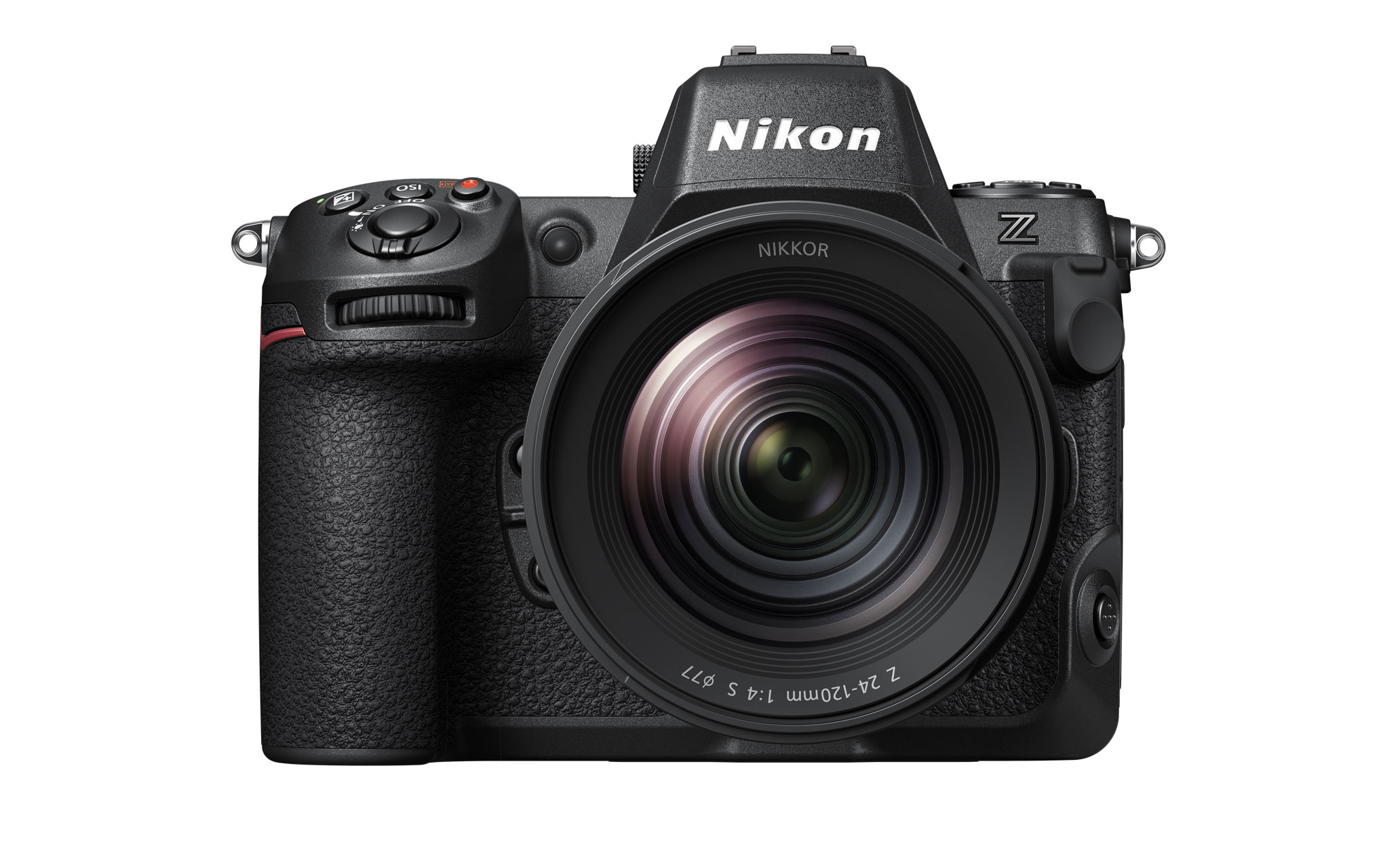
Let’s talk numbers first because your CFO (or spouse) definitely will. Based on 87 verified sales, the Nikon Z8 averages $2,947 on the used market. The Canon R5 Mark II? That’s averaging $3,419 across 69 sales. We’re talking a $472 difference — roughly 16% more for the Canon.
That price gap isn’t random. The R5 II launched more recently, so the used inventory is still building. Simple supply and demand. But here’s where it gets interesting: both cameras retail for $3,999 new. The Z8’s been out longer, meaning more units in circulation, better deals, and sellers who’ve already moved on to whatever Nikon announces next.
I picked up my test Z8 for $2,750 — mint condition, 11,000 actuations, original box. The seller was upgrading to a Z9 for the vertical grip. Classic. The R5 II I tested? $3,350, and that was after negotiating. Only 4,000 clicks on the shutter. Previous owner was switching systems entirely. Their loss, my three-week gain.
When you’re shopping Nikon Z8 vs Canon R5 II used, timing matters. Z8 inventory on GearFocus stays pretty steady. R5 II listings? They move fast. Like, check-daily fast.
Video Capabilities: Where Workflows Diverge
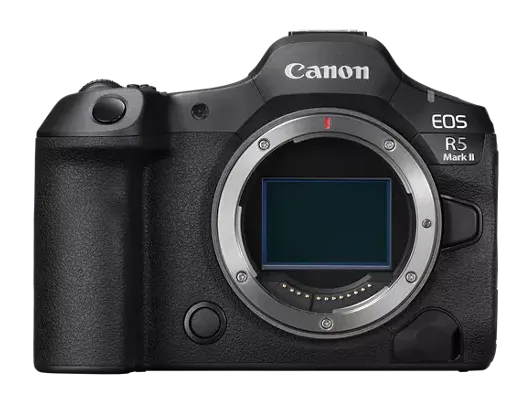
Alright, let’s get into the meat of it. Both cameras shoot 8K60p. Both offer 4K120p. On paper, they’re twins. In practice? Different species entirely.
The Z8’s party trick is internal N-RAW recording. Full 8K RAW, straight to your CFexpress card, no external recorder needed. I shot a corporate interview last month — talking head, controlled lighting, the works. Pulled the N-RAW files into DaVinci Resolve and the color grading latitude was absurd. Like, fix-my-terrible-white-balance absurd.
The R5 II shoots 8K60 in Canon RAW Light — but only to an external recorder. Want internal recording? You’re getting standard codecs. Still excellent quality, but if you’re comparing Nikon Z8 vs Canon R5 II used for video work, this difference is massive. External recorders add weight, complexity, and another $1,500 to your kit.
Here’s what nobody talks about: heat management. My Z8 ran for 47 minutes straight in 8K before showing a temperature warning. Florida. August. No fan attachment. The R5 II made it 31 minutes in the same conditions. Both respectable, but if you’re doing long-form interviews or documentaries, that 16-minute difference matters.
One more thing — rolling shutter. The Z8’s stacked sensor essentially eliminates it. The R5 II has improved over the original R5, but you’ll still see jello effect on fast pans. For handheld video work, the Z8 feels more forgiving.
Autofocus Innovation vs Proven Performance
Canon did something wild with the R5 Mark II. Eye-controlled autofocus isn’t a gimmick — it’s a paradigm shift. Look at your subject, half-press the shutter, done. The camera knows where you’re looking and nails focus instantly. After a week of use, going back to joystick selection felt like trading a Tesla for a horse and buggy.
But here’s the thing about innovation — it needs time to mature. In bright conditions with clear subjects, the eye-control AF is magic. Add some backlight, busy backgrounds, or shoot through foreground elements? Sometimes it hunts. Sometimes it picks the wrong eye. The traditional AF system is rock solid, but when you’re comparing Nikon Z8 vs Canon R5 II used for professional work, consistency matters.
The Z8’s AF doesn’t have any tricks. It just works. Every time. The subject detection is lifted straight from the Z9 — it’ll track eyes, faces, animals, vehicles, planes. I photographed a youth soccer tournament (don’t judge, it paid well) and the Z8 locked onto players through crowds of parents, other kids, and general chaos. Not one missed focus in 1,400 frames.
Honestly? The R5 II’s eye-control will be incredible in two years when Canon refines it. Right now, for paid work where missing focus means missing rent, I’d trust the Z8.
Ecosystem and Glass: The Long Game
Let’s not kid ourselves — when you buy into a flagship, you’re marrying the ecosystem. And this is where things get philosophical.
Canon’s RF mount has 36 native lenses and growing. The selection is staggering. From the absurd RF 28-70mm f/2 to the lightweight RF 70-200mm f/4, there’s glass for every shooter and budget. Plus, Canon’s third-party support is finally opening up. Sigma and Tamron are coming to play.
Nikon’s Z mount has 28 native options. Fewer, yes, but the quality is consistent across the board. Plus — and this is huge — the FTZ adapter is basically perfect. Your old F-mount glass works flawlessly. I’m still using my 10-year-old 70-200 f/2.8 FL on the Z8. Zero issues. Try adapting EF lenses to RF and tell me how that goes.
If you’re comparing Nikon Z8 vs Canon R5 II used and already own glass from either system, that’s your answer right there. Starting fresh? Canon’s ecosystem offers more choices, but Nikon’s provides a cleaner upgrade path from DSLR gear.
One insider tip: Z-mount used lens prices are generally 15-20% lower than RF equivalents. Same quality glass, less demand, better deals. I picked up a mint Z 24-70 f/2.8 S for $1,400. The RF version? Good luck finding one under $1,800.
The Verdict: Context is Everything
After three weeks bouncing between both cameras, here’s my honest take on Nikon Z8 vs Canon R5 II used options.
Choose the Z8 if you’re video-forward. Internal N-RAW is a workflow game-changer. The stacked sensor eliminates rolling shutter and blackout. The price is right — $472 less leaves room for glass or a nice vacation. And if you’re coming from Nikon DSLRs, your lens collection transfers seamlessly.
Go R5 II if you want the bleeding edge. Eye-controlled AF will only get better. The Canon ecosystem is unmatched for variety. And let’s be real — Canon’s color science still has that special something for skin tones. Worth the premium? If you shoot mostly stills and love living in the future, absolutely.
But here’s what sealed it for me: I kept reaching for the Z8. Not because it’s better — because it’s predictable. When a client’s paying, boring reliability beats exciting innovation. The Z8 is a tool. The R5 II is a statement. Both have their place.
The used market for Nikon Z8 vs Canon R5 II used reflects this perfectly. Z8s are plentiful, well-priced, and move steadily. R5 IIs are scarcer, pricier, and disappear quickly. Your move depends on whether you’re buying a camera or buying into a vision.
Whatever you choose, browse current listings on GearFocus. Real sellers, real gear, real prices. And if you’re selling your current flagship to fund the upgrade? List it where buyers are actually looking. You’ll keep 91.5% of the sale price — significantly more than the other guys.
FAQ
Is the Nikon Z8 video quality really better than the Canon R5 Mark II?
Not necessarily better — different. The Z8’s internal N-RAW recording gives you more flexibility in post without external recorders. The R5 II’s standard codecs are excellent, but for pure video workflow efficiency, the Z8’s internal RAW capability is hard to beat. Both produce stunning 8K footage when properly exposed.
How significant is the autofocus difference between these cameras?
The R5 II’s eye-controlled AF is revolutionary when it works — which is about 85% of the time in good conditions. The Z8’s traditional AF system hits 95%+ consistently. For wedding photographers or event shooters who can’t afford missed shots, that 10% difference is everything. For portrait work in controlled settings, the R5 II’s innovation shines.
Which camera holds value better on the used market?
Based on current data, both cameras are depreciating at similar rates — roughly 15-20% off retail in the first year. The Z8 has more price stability due to higher inventory and established demand. The R5 II’s values are still settling as more units enter the secondary market. Neither is a bad investment, but don’t expect to flip them for profit anytime soon.
Own one like this?
Make room for new gear in minutes.
