Nikon Z9 Used: What It’s Worth and What to Look For
GearFocus
Apr 2, 2026

KEY TAKEAWAYS
- Sweet spot pricing: The Nikon Z9 used market has stabilized around $3,800-4,800, down from the $5,500 retail — that’s up to $1,700 in your pocket for the exact same flagship performance
- Shutter count matters less: With a 400,000 actuation rating and no mechanical shutter, even a Z9 with 50,000 clicks has barely started its life — focus on sensor condition instead
- Z9 vs Z8 reality check: The Z9 used price now overlaps with new Z8 territory, but the integrated grip and dual CFexpress slots make it the better workhorse for high-volume shooters
- Inspection priorities: Check the EVF for dead pixels, test all AF modes extensively, and look for sensor oil spots — these are the real deal-breakers, not cosmetic wear
- Buy used if: You shoot events, sports, or wildlife professionally and need absolute reliability — save the $1,700 and put it toward glass or a backup body
The FedEx driver looked confused. “This weighs nothing,” he said, handing me the box. Inside was $4,200 worth of Nikon Z9 used flagship — 3.4 pounds that would reshape how I thought about buying pro gear. Twenty-two thousand actuations on the counter. Some honest brassing on the bottom plate. And image quality identical to the $5,500 showroom version.
Here’s what I’ve learned after six months shooting with that Nikon Z9 used purchase, plus data from hundreds of verified sales on GearFocus. If you’re eyeing Nikon’s flagship but balking at retail prices, this guide cuts through the noise.
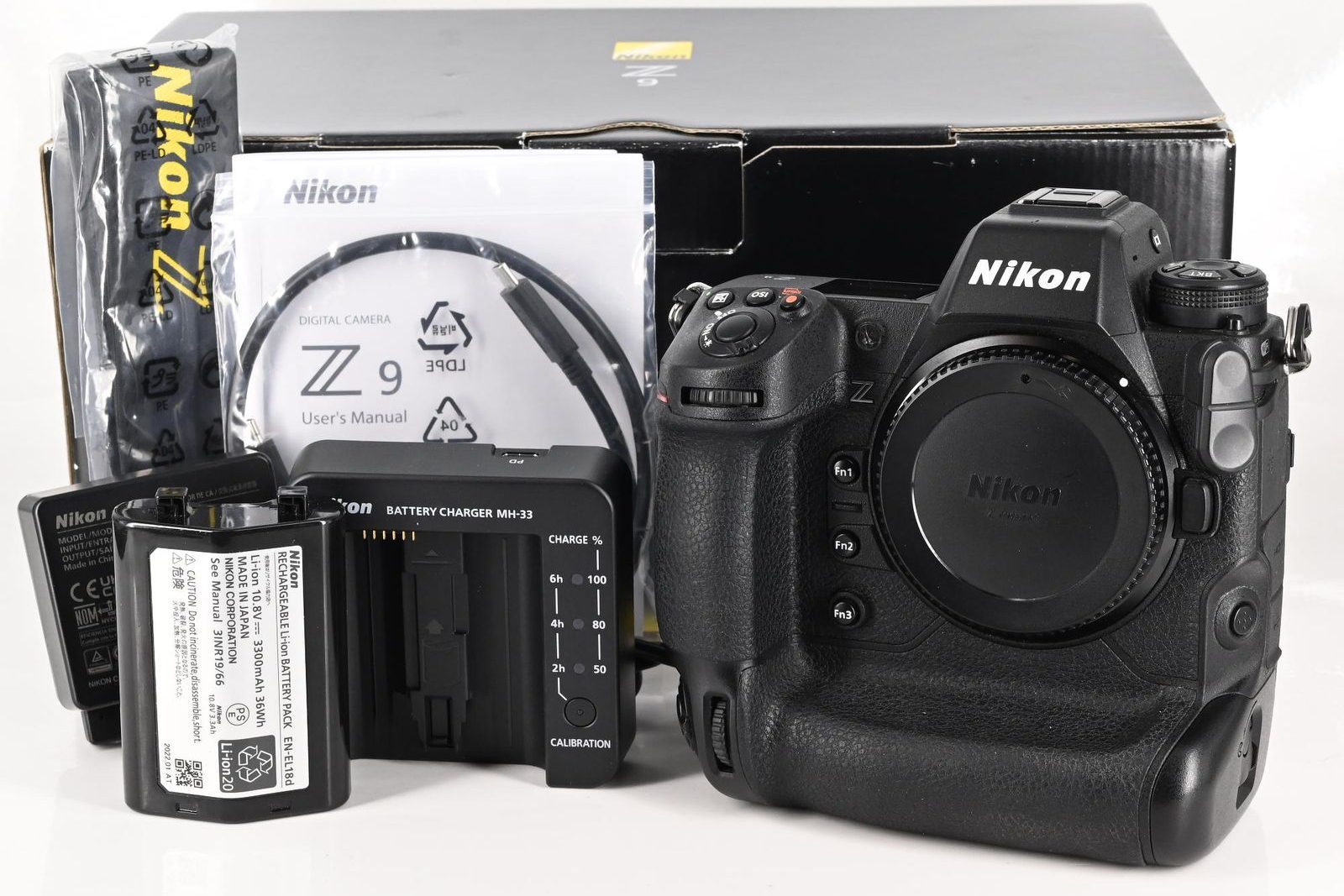
The Nikon Z9 Used Market Reality Check
Let’s start with hard numbers. Based on 127 verified sales in the GearFocus Pricing Guide, the average Nikon Z9 used sells for $4,247. But that average hides the real story. Condition matters — massively.
Excellent condition units (minimal wear, low shutter count) command $4,200-4,800. These are cameras that lived in studios or saw light professional use. Good condition drops to $3,800-4,200 — expect some cosmetic wear, higher actuations, maybe a ding on the grip. Fair condition? You’re looking at $3,400-3,800, typically with heavy brassing, high counts, or minor functional quirks.
Compare that to the $5,497 retail price (when you can find stock), and the math becomes obvious. Even an excellent condition Nikon Z9 used saves you $700-1,300. Drop to good condition and you’re pocketing up to $1,700. That’s a 70-200mm f/2.8 S. Or half a Z8. Or your mortgage payment.
But here’s the kicker — the Z9 has no mechanical shutter. Zero. It’s all electronic, rated for 400,000 actuations. I’ve seen cameras with 80,000 clicks selling as “high mileage.” That’s 20% of rated life. On a camera that many pros won’t even max out in a decade.
What Actually Matters When Inspecting a Nikon Z9 Used
Forget everything you know about inspecting DSLRs. The Z9 plays by different rules. No mirror to slap around. No shutter curtain to wear out. The inspection priorities shift dramatically.
Priority 1: The sensor itself. Not for scratches — the Z9’s sensor shield is surprisingly tough. Look for oil spots. Nikon mostly solved the oil issue that plagued early Z cameras, but some Z9s from the first production runs can develop spots. Easy to clean, but negotiating leverage if present.
Priority 2: EVF dead pixels. This is the big one. Power on, cap the lens, look through the viewfinder. Any stuck or dead pixels in the EVF are permanent. Unlike sensor spots, you can’t clean these away. One dead pixel in the corner? Liveable. A cluster in the center? Hard pass.
Priority 3: Autofocus accuracy across the frame. The Z9’s 493-point AF system is incredible when working properly. Set up a test: tape newspaper to a wall at 45 degrees. Focus on different areas using single-point AF. The focus should nail exactly where you place the point. Any front or back focusing, especially inconsistent across the frame, suggests calibration issues.
Shutter count? Sure, check it. But on a Nikon Z9 used with 50,000 or even 100,000 actuations, you’re still looking at years of life. I’d take a 75,000-count Z9 with perfect AF over a 10,000-count unit with EVF issues every single time.
One more thing — test the IBIS. Shoot handheld at 1/15s with a standard zoom. The keeper rate should be stellar. Any grinding noises or inconsistent stabilization means expensive repairs.
Z9 vs Z8: The Used Value Proposition
Alright. The elephant in the room. New Z8s are hitting $3,997, sometimes less with rebates. Good condition Nikon Z9 used units overlap that price. So why buy the older, larger flagship?
Two words: integrated grip. If you’ve never shot 8-10 hour days, this might seem trivial. It’s not. The Z9’s built-in vertical grip isn’t just about portrait orientation — it’s about balance with long lenses, battery life (the EN-EL18d laughs at all-day shoots), and controls that fall naturally under your fingers regardless of orientation.
The Z8 is brilliant. Same sensor, same processor, same image quality. But add the MB-N12 grip for true Z9 ergonomics and you’re at $4,600+. Suddenly that Nikon Z9 used at $4,200 looks smart again.
Then there’s the dual CFexpress Type B slots. The Z8 makes do with one CFexpress and one SD UHS-II. For wedding shooters running dual-record, sports photographers who can’t miss a buffer clear, or anyone who’s lost a card mid-shoot, those matched slots matter. The Z9’s dual high-speed storage isn’t a spec sheet flex — it’s working professional insurance.
Choose the Z8 if you value compact size and don’t need all-day power. Choose a Nikon Z9 used if you’re a volume shooter who priorities handling and reliability over size. At current used prices, it’s not about better or worse — it’s about matching the tool to your actual work.
Real-World Performance: Six Months with a Nikon Z9 Used
Theory is nice. Reality is better. My Nikon Z9 used came with 22,000 actuations and some honest wear. Six months and ~40,000 clicks later, here’s what actually matters.
The autofocus remains supernatural. Wildlife photographers talk about the Z9’s subject detection like it’s magic, and they’re not wrong. But for portrait work? Game-changing is underselling it. Eye AF that tracks through hair, glasses, movement — it just works. I’ve stopped thinking about focus and started thinking about moments.
Battery life with the EN-EL18d is absurd. I shot an entire wedding (1,847 frames) on 67% of one battery. Try that with any other mirrorless. The integrated grip means I’m never fumbling with add-ons or wondering if the grip connection will hold.
Build quality lives up to the flagship promise. My Nikon Z9 used has been through rain, dust, and one unfortunate encounter with a concrete floor (my fault, not the seller’s). Some new scratches joined the old ones. Everything still works perfectly.
The files remain stunning. 45.7MP of latitude-rich, color-accurate raw data. The high ISO performance still makes me grin — ISO 12,800 looks like 3,200 used to. For events and low light, it’s untouchable.
Honestly? The only thing I notice versus a new unit is the cosmetic wear. And I stopped caring about that after the first paying gig.
Who Should Actually Buy a Nikon Z9 Used?
Not everyone needs a flagship. Let’s be real about who benefits from a Nikon Z9 used versus other options.
Absolutely buy used if you’re: A working pro who bills for speed and reliability. Wedding photographers who can’t miss moments. Sports/wildlife shooters who need that buffer depth. Video producers leveraging 8K raw and 4K 120p. The savings on a Nikon Z9 used translate directly to your bottom line.
Consider carefully if you’re: A hobbyist who shoots occasionally. The Z9 is brilliant but massive — a Z6 III might serve you better. Studio photographers who rarely leave controlled environments — a high-res Z7 II could be the smarter play. Anyone who values compact gear over absolute performance.
Skip entirely if you’re: New to photography and still learning. This is Formula 1 machinery — start with something friendlier. Locked into F-mount glass with no upgrade path. Budget-constrained to the point where the camera purchase limits lens options.
The sweet spot? Established photographers and serious enthusiasts ready to step up their game. At current Nikon Z9 used prices, you’re getting tomorrow’s camera at yesterday’s prices.
Making the Purchase: GearFocus and Market Intelligence
When you’re ready to buy, knowledge is leverage. The Nikon Z9 on GearFocus shows real-time inventory from verified sellers. Not random Craigslist posts — actual photographers selling to photographers.
Watch for complete kits. A Nikon Z9 used with the FTZ II adapter, extra batteries, and cards often costs barely more than the body alone. Sellers upgrading to the Z9 II (whenever that appears) tend to offload entire systems. That’s your opportunity.
Timing matters less than you’d think. Unlike seasonal camera releases, flagship bodies like the Nikon Z9 used maintain steady pricing. A brief dip when new models announce, but nothing dramatic. Good deals come from motivated sellers, not calendar watching.
And that 48-hour inspection period on GearFocus? Use it. Test everything I mentioned above. Run the camera hard. If anything feels off, you’re protected. The best Nikon Z9 used deal is the one that arrives exactly as described.
The package that confused my FedEx driver six months ago has shot 40,000 frames since. Corporate headshots that paid the mortgage. A documentary project I’d been postponing. More dog photos than any reasonable person needs. That Nikon Z9 used purchase wasn’t just about saving money — though $1,300 stayed in my account. It was about getting flagship performance without flagship anxiety.
Browse used Nikon Z9 listings on GearFocus. Run the numbers yourself. The math is compelling, but the results? Those speak louder than any review. Sometimes the smart money isn’t on the newest gear — it’s on the right gear at the right price.
What’s your take on buying flagship cameras used? Drop your thoughts below, especially if you’ve made the jump on a Nikon Z9 used yourself.
FAQ
What’s a good shutter count for a Nikon Z9 used purchase?
Anything under 100,000 actuations is barely broken in on a Z9. With a 400,000 rated electronic shutter life and no mechanical components, even 150,000 clicks represents only 37% of the camera’s expected lifespan. Focus more on overall condition, sensor cleanliness, and EVF quality than pure actuation count.
How does the Nikon Z9 used market compare to buying new with warranty?
A Nikon Z9 used typically saves $700-1,700 versus retail, depending on condition. You sacrifice the manufacturer warranty, but many sellers transfer remaining coverage. The real question: is 12-24 months of warranty worth $1,000+? For most working pros, that money is better spent on glass or backup gear.
Should I wait for the Z9 II announcement to buy a Nikon Z9 used?
Flagship cycles run 3-4 years, and the Z9 only launched in 2021. Even when a Z9 II arrives, history shows predecessor values drop just 10-15% initially. If you need the camera now, buy now. Waiting for the “perfect deal” means missing months of shots with incredible gear.
Own one like this?
Make room for new gear in minutes.
