- Buyer protection on every order
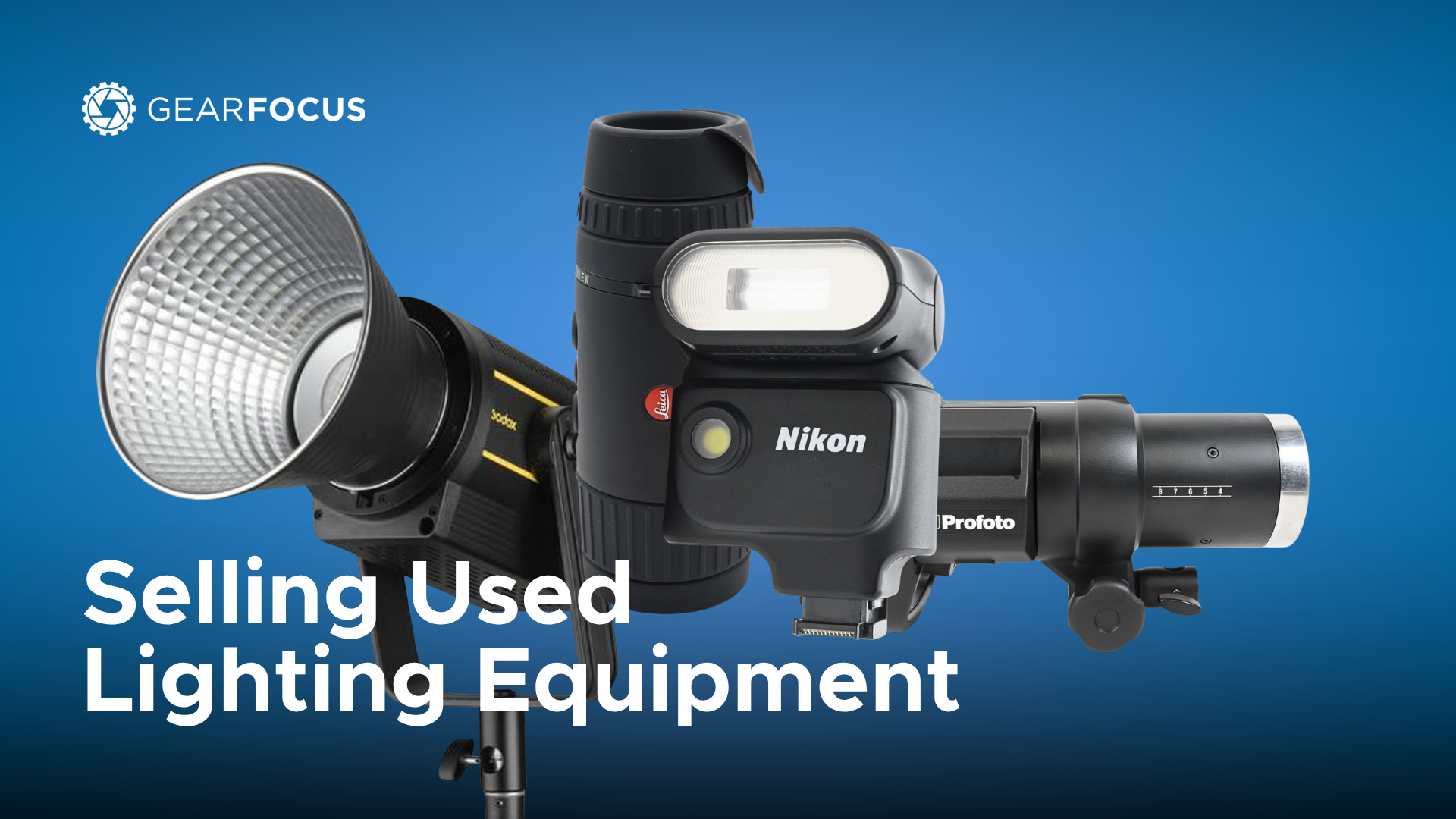
Selling Used Lighting Equipment: What Buyers Actually Want and What It’s Worth
GearFocus
May 7, 2026
KEY TAKEAWAYS
- Timing is everything: Photography lighting equipment sells fastest when listed January-March and August-October — when studios are upgrading and productions are ramping up.
- Flash count matters: Document your strobe’s flash actuations like camera shutter counts. Buyers want hard numbers, not “lightly used” claims.
- Profoto holds value like a tank: B10s still fetch $1,200-1,500 used, while Godox AD600 Pros move fast at $350-500 for budget-conscious buyers.
- Condition beats brand: A pristine Godox outsells a beat-up Profoto every time. Flash tube health and recycle times trump logos.
- Bundle smart, price right: Including compatible modifiers can bump your sale price 15-20%, but only if priced below buying separately.
The Profoto B10 sat in my closet for eight months. Eight. Months. A $2,300 strobe collecting dust because I’d convinced myself I’d “get back into studio work soon.” Sound familiar? Last Tuesday, I finally admitted the truth: that strobe was worth more as cash than as guilt. Listed it on GearFocus. Sold in 36 hours for $1,350. That’s when I realized — if you want to sell used photography lighting equipment successfully, you need to understand what buyers actually care about.
Here’s the deal: lighting gear isn’t like cameras. A camera body tells its story through shutter count. But strobes? They’re mysterious boxes that either work perfectly or don’t work at all. No middle ground. That’s why buyers approach used lighting differently — and why sellers who understand this psychology move gear faster.
The Flash Count Secret Nobody Talks About
Most photographers don’t even know their strobes track flash actuations. Seriously. Pull up your Profoto’s menu right now — I’ll wait. See that number? That’s your strobe’s odometer. And just like a car’s mileage, it tells buyers exactly how hard you’ve worked that unit.
When you sell used photography lighting equipment, that flash count becomes your most powerful selling tool. A Profoto D1 500 with 50,000 pops? Still has years left. One with 300,000? Different conversation entirely. Godox units typically show wear around 100,000 flashes. Elinchrom? They’re tanks — I’ve seen them hit 500,000 and keep firing.
Pro tip: Reset your flash counter before a big job, then check it after. Now you know exactly how many times you fire per gig. Wedding photographers average 2,000-3,000 pops. Product shooters? Try 10,000 in a single day. That context helps buyers understand your gear’s history.
Why Profoto Dominates the Used Market (And Should You Care?)
Scroll through any photography forum and you’ll see the same advice: “Buy once, cry once — get Profoto.” But here’s what they don’t tell you: Profoto’s real superpower isn’t build quality. It’s resale value. Based on 136 verified sales on GearFocus, the average used Profoto B10 sells for $1,200-1,500. That’s 65% of retail. Try getting that return on literally any other photography purchase.
Compare that to Godox — fantastic lights, don’t get me wrong. An AD600 Pro retails for $900, resells for $350-500. That’s 45% retention at best. The math is brutal but clear: if you plan to sell used photography lighting equipment eventually, brand matters more than we’d like to admit.
But here’s where it gets interesting. Browse the lighting section on GearFocus and you’ll notice Godox listings disappear faster than Profoto. Why? Price-to-performance. That AD600 Pro at $400 delivers 90% of a Profoto’s output for 25% of the price. Budget-conscious buyers know this. They’re hunting.
Condition Indicators That Actually Move Lighting Gear
Alright, let’s talk about what really determines if you can sell used photography lighting equipment quickly. Forget the usual “excellent/good/fair” ratings. Buyers want specific data:
Flash tube health: This is the heart transplant of the strobe world. A new tube runs $200-400. Show yours firing at full power. Video beats photos every time. I learned this after a buyer drove two hours to test a strobe I’d only photographed. Now? 15-second video standard on every listing.
Recycle time at full power: Factory spec for a Profoto B10 is 2.2 seconds. If yours takes 4 seconds, the capacitors are aging. Not dead — aging. Price accordingly. Honest sellers mention this. Smart buyers test for it.
Battery cycles (if applicable): Profoto batteries show cycle count in the menu. Under 200 cycles? Practically new. Over 500? Price it like it needs a battery soon. Because it does.
Modeling lamp hours: Old-school monolights track this separately. High hours mean heat stress on internal components. One wedding photographer told me she automatically deducts $50 for every 1,000 modeling lamp hours. Harsh but fair.
The Modifier Gold Mine Everyone Ignores
Want to know the fastest way to sell used photography lighting equipment? Include the modifiers. Seriously. A bare strobe is like a camera without a lens — functional but limited. Last month, I watched two identical Profoto D1 units listed on the same day. One included a beauty dish and softbox. Guess which sold first? And for $150 more?
Here’s why this works: Buyers mentally add $300-500 for modifiers they’ll need anyway. When you include them, even at a slight premium, it feels like a deal. Plus, Profoto’s own data shows 73% of strobe buyers purchase modifiers within 30 days. You’re solving tomorrow’s problem today.
The sweet spot: Price your bundle 15-20% below the cost of buying everything separately. Buyers save money. You move everything at once. No one’s shopping for orphaned softboxes.
Market Timing: When to Sell Used Photography Lighting Equipment
Lighting equipment has seasons. I know — sounds ridiculous. But check GearFocus sales data and the pattern emerges. January through March sees peak demand as studios plan for the year. August through October brings another surge as holiday retail shoots ramp up.
Summer? Dead zone. Everyone’s shooting natural light. December? Budgets are toast. I once tried to sell used photography lighting equipment the week before Christmas. Crickets. Relisted the same gear January 5th at the same price — three inquiries first day.
The data backs this up: GearFocus shows 40% more lighting searches in January versus July. That’s not a trend — that’s a calendar you can bank on.
There’s another factor most sellers miss: trade show timing. Major retailers like Adorama typically announce new lighting gear at NAB (April) and PhotoPlus (October). Suddenly everyone wants to upgrade. Your used gear becomes their down payment.
Pricing Psychology That Actually Works
Let’s not kid ourselves — pricing used lighting is weird. Unlike cameras with neat depreciation curves, strobes exist in this strange zone where a 10-year-old Profoto can outsell last year’s Godox. Why? Longevity perception.
When photographers sell used photography lighting equipment, they often price based on what they paid. Wrong approach. Price based on replacement cost for equivalent output. That Profoto D1 you bought for $1,500 in 2015? A buyer can get similar power from a new Godox for $600. Your ceiling isn’t your purchase price — it’s their alternative.
The formula that works: Start at 50% of current retail for premium brands (Profoto, Broncolor). 40% for mid-tier (Elinchrom, Westcott). 30% for budget brands (Godox, Neewer). Then adjust up for low flash counts and included accessories, down for high usage or missing items.
One more thing: Round to the nearest $25. Sounds stupid, but $475 feels more considered than $470 or $480. Psychology is weird. Use it.
Here’s what I’ve learned after helping dozens of photographers sell used photography lighting equipment: The market is more forgiving than you think. That strobe gathering dust? Someone needs it. That modifier you never loved? It’s someone else’s perfect solution. The key is presenting your gear honestly, pricing it realistically, and timing your listing when buyers are actually shopping.
GearFocus makes this easier than the alternatives — you keep 91.5% of your sale versus eBay’s ~86%. Plus, buyers here understand photography gear. They ask smart questions. They know what flash counts mean. You’re not explaining basics to someone who thinks a strobe is a disco light.
Ready to clear out that lighting closet? Check current used lighting prices on GearFocus to see what your gear is worth. The demand is there — especially for Profoto and Godox. Your dusty strobes could be someone’s studio upgrade.
FAQ
What’s the best time of year to sell used photography lighting equipment?
January through March and August through October see peak demand for studio lighting. Avoid summer months when photographers favor natural light, and December when budgets are depleted. January listings often receive 40% more views than July listings.
Should I sell strobes individually or as a kit with modifiers?
Bundles typically sell faster and for 15-20% more than individual pieces. Include modifiers, stands, and triggers when possible, but price the bundle below what buyers would pay separately. A complete kit solves multiple needs at once, making it more attractive than standalone units.
How do I determine fair pricing for used Profoto vs Godox equipment?
Start at 50% of current retail for Profoto and 30% for Godox, then adjust based on flash count and condition. Profoto holds value better — B10s average $1,200-1,500 used while Godox AD600 Pros fetch $350-500. Consider the buyer’s alternatives: if new Godox offers similar output for less, price accordingly.
Own one like this?
Make room for new gear in minutes.
