- Buyer protection on every order
Panasonic SHX1 Launch: What It Means for Used Box-Style Cinema Cameras
Jake Bennett
Nov 26, 2026
KEY TAKEAWAYS
- The short answer: Panasonic announced the SHX1 on November 17, 2026, and that single announcement is about to loosen the grip on used box-style cinema cameras. Owners upgrading from the BS1H and BGH1 have to put the old body somewhere, and the used market is where it lands.
- Who benefits: Budget filmmakers, multi-cam operators, and gimbal shooters who’ve been priced out of the box format.
- What to watch: Supply typically arrives before price movement does. Listings show up first; the softening follows.
- What’s coming onto the market: The full-frame Panasonic LUMIX DC-BS1H (6K, 10-bit 4:2:2) and the Micro Four Thirds Panasonic DC-BGH1 (C4K 60p, 10-bit).
- The catch: Neither body has in-body stabilization. Budget for lenses or a gimbal before you budget for the camera.
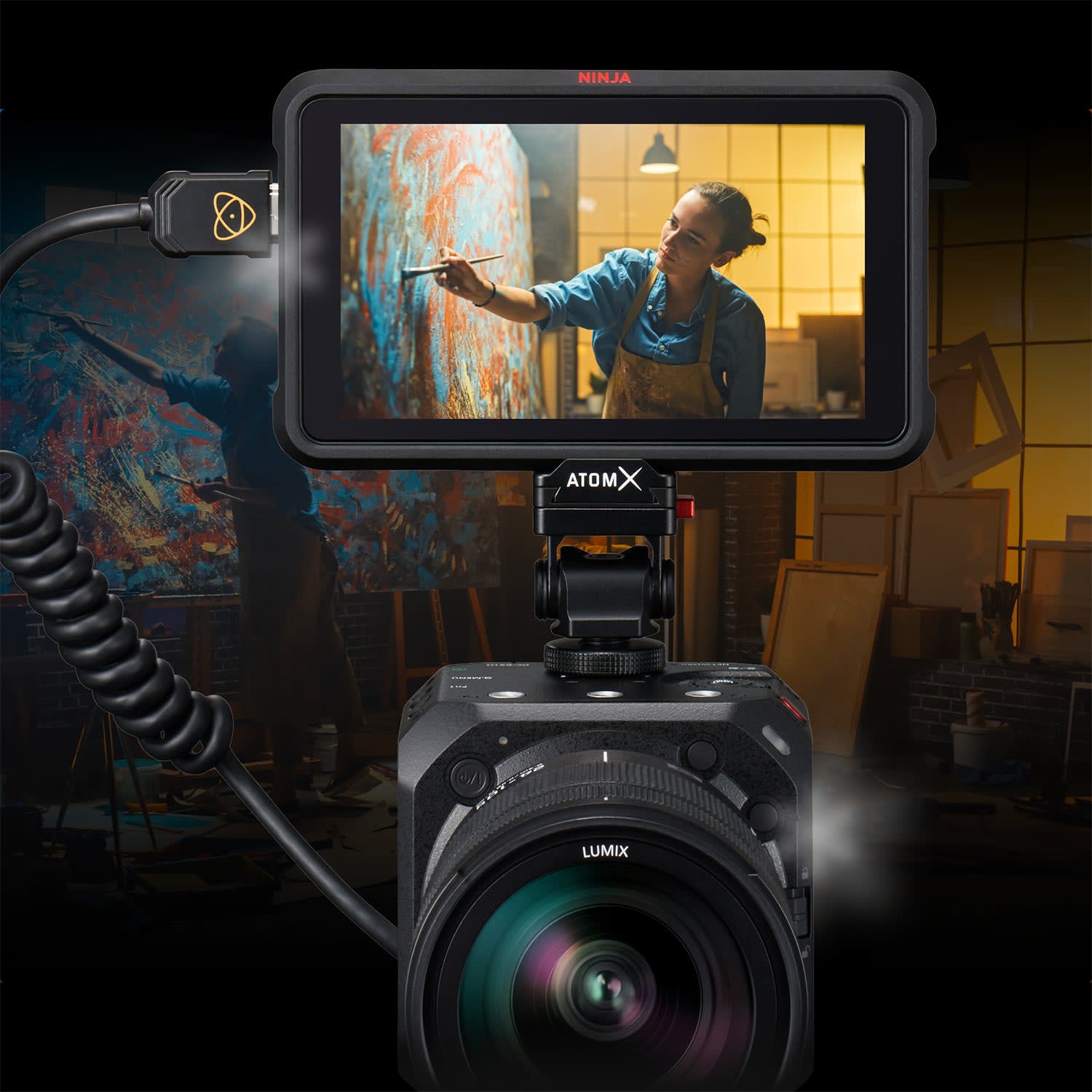
Panasonic announced the SHX1 on November 17, 2026, and the ripple is already heading straight for used box-style cinema cameras. DPReview describes it as a professional video camera carrying S1II DNA, which is exactly the kind of spec sheet that convinces a BS1H owner it’s time to move on.
Here’s the deal. Nobody keeps two box cameras doing the same job. When the upgrade lands, the old one gets listed. That’s not speculation, that’s just how working shooters manage cash flow.
So if you’ve been circling the box format and waiting for a reason, this is the reason.
Why Are Used Box-Style Cinema Cameras Suddenly Trending?
Because an announcement creates a decision deadline. The SHX1 reveal gives every BS1H owner a question to answer before the holidays, and most of them answer it by selling.
Box cameras have a specific audience: people running multi-cam setups, drone and gimbal operators, car mounts, crash cams, studio feeds. That audience upgrades in waves rather than one at a time, because their rigs are standardized. When one body in the kit gets replaced, often the whole set does.
That wave behavior is what makes used box-style cinema cameras different from, say, used hybrid mirrorless bodies. Hybrid bodies trickle onto the market. Box bodies arrive in clusters.
I ignored this pattern once. Waited six months for a price drop on a format that was already drying up instead of filling up, and ended up paying more than if I’d just bought on day one. Direction of supply matters more than patience.
What Exactly Is Hitting the Market?
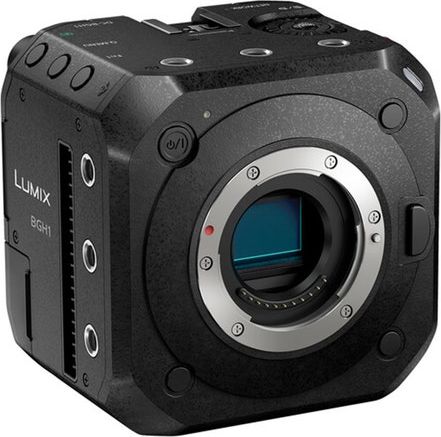
Two Panasonic bodies dominate the conversation around used box-style cinema cameras right now, and they serve genuinely different shooters.
The Panasonic LUMIX DC-BS1H is the full-frame option. GearFocus GearMaster data lists a 24MP sensor with the Venus Engine processor, 6K maximum video resolution at 24, 30, and 60fps, and 10-bit 4:2:2 color depth. V-Log and V-Gamut are available in both photo and video modes. Stills top out at 6000×4000 with a 10fps burst.
The Panasonic DC-BGH1 is the smaller, cheaper sibling. GearMaster data puts it at 10.2MP on a Micro Four Thirds sensor, recording C4K (4096 x 2160) up to 60fps in 10-bit, with V-Log L, HLG, and HDR profiles. Six frame rates are supported: 23.98, 24, 25, 30, 50, and 60fps.
Both run SD/SDHC/SDXC media. Both carry Panasonic’s DFD autofocus with face detection, eye detection, eye tracking, and subject tracking.
Full-Frame or Micro Four Thirds Among Used Box-Style Cinema Cameras?
This is the real fork in the road when shopping used box-style cinema cameras, and the answer depends less on the sensor than on what you bolt the camera to.
| Spec | Panasonic LUMIX DC-BS1H | Panasonic DC-BGH1 |
|---|---|---|
| Sensor | 24MP full-frame | 10.2MP Micro Four Thirds |
| Max video resolution | 6K | C4K (4096 x 2160) |
| Frame rates | 24, 30, 60fps | 23.98, 24, 25, 30, 50, 60fps |
| Color depth | 10-bit 4:2:2 | 10-bit |
| Log profiles | V-Log, V-Gamut | V-Log L, HLG, HDR |
| In-body stabilization | None | None (digital/electronic only) |
| Storage | SD/SDHC/SDXC | SD/SDHC/SDXC |
Full-frame gives you shallower depth of field and better low-light latitude. Micro Four Thirds gives you smaller lenses, less weight on the gimbal, and more depth of field when you need focus to hold on a moving subject.
Drone and gimbal operators tend to go MFT. Narrative and commercial shooters tend to go full-frame. Neither is wrong.
The Stabilization Problem Nobody Mentions
Read enough listings for used box-style cinema cameras and you’ll notice sellers rarely volunteer this: neither body has in-body optical image stabilization. The BS1H depends entirely on lens-based stabilization. The BGH1 offers digital/electronic IS only, which crops and softens.
That’s not a flaw so much as a design choice. Box cameras live on rigs, drones, sliders, and tripods. They were never meant to be handheld.
But it changes the math on your purchase. If you’re coming from a stabilized hybrid body and planning to shoot handheld, the total cost of entry includes a gimbal or a set of OIS glass. Factor that in before you decide one of these used box-style cinema cameras fits your budget.
I learned this the expensive way on a different camera entirely. Bought the body, loved the body, then spent nearly as much again making it usable the way I actually shoot. Plan the rig before you plan the camera.
What Does an Upgrade Wave Do to Prices?
Generally, supply arrives first and price movement follows. Listings appear within weeks of an announcement; the pricing effect takes longer because early sellers anchor to what they paid.
Gifting season complicates it. Late November through December tightens supply across the whole used market as buyers come in and sellers get busy, so the two forces partly cancel out. The clearer window tends to open after the new year, when the SHX1 actually ships and the upgrade wave finishes.
If you want selection, shop now while the early listings of used box-style cinema cameras are still coming in fresh. If you want leverage, wait. You usually can’t have both.
Worth saying plainly: nobody can promise a specific number. Used box-style cinema cameras are a narrow niche, and narrow niches move unpredictably.
What to Check Before You Buy
Box bodies get used differently than hybrids, so the inspection list is different too.
- Mounting points: These cameras live in cages. Check the 1/4″-20 threads for stripping.
- Thermal history: Ask about long-record use. Box bodies often run for hours in enclosed rigs.
- Ports: SDI and HDMI connections take the most abuse on multi-cam setups.
- Included accessories: Cages, batteries, and plates meaningfully change the real cost.
- Cosmetic wear: Rig rash is normal and shouldn’t scare you off. Internal damage should.
On GearFocus, every seller identity is verified, and the standard policy gives you 48 hours after delivery to confirm the camera matches the listing. If it doesn’t, you return it at no charge and the seller covers return shipping. For used box-style cinema cameras that have lived hard lives on set, that verification window is the part that matters most.
Most orders ship within 1 to 3 business days.
Already Own One? This Is Your Window
If you’re the person upgrading to the SHX1, the flip side applies. Demand for used box-style cinema cameras is rising because of the same announcement that’s pushing you to sell, and buyers are actively searching the format right now.
Sellers keep 91.5% of the sale price on GearFocus, with an 8.5% total fee. On a body in this price class, that gap against generalist marketplaces is real money, not a rounding error.
Timing note: the shooters buying used box-style cinema cameras in December are often doing it on year-end equipment budgets. That’s a motivated audience. List it while they’re looking.
Where Box Cameras Fit Against Everything Else
Worth stepping back. Box cameras aren’t automatically the right answer just because they’re about to get more available.
If you need a viewfinder, a built-in display you trust, or a camera that works handheld out of the box, a conventional cinema body or hybrid serves you better. GearMaster data flags unspecified display specs on the BS1H and no viewfinder at all, which tells you what the design priorities were.
But if your work is rigged, remote, or multi-cam, nothing else gives you this much image quality in this little volume. Our roundup of the best used cinema cameras under $3,000 covers the conventional alternatives, and the broader budget filmmaker guide is a good reality check before you commit to the format.
Also worth browsing: the Panasonic AG-DVX200 if you want a traditional camcorder body instead.
How Used Box-Style Cinema Cameras Fit a 2026 Kit
The honest use case for used box-style cinema cameras in late 2026 is the second, third, or fourth camera. Not the hero body.
Interview B-cam. Locked-off wide. Car mount. Drone payload. Overhead rig in a product studio. Anywhere a conventional body’s grip and viewfinder are dead weight, the box shape earns its place.
The matching color science helps too. If you’re already shooting V-Log on a Panasonic hybrid, adding used box-style cinema cameras from the same family means one grade, not two. That’s a post-production saving people underrate until they’re the one doing the grading at midnight.
Used box-style cinema cameras also tend to hold value reasonably well, precisely because the niche is small and the buyers are specific.
Conclusion
An announcement in mid-November 2026 changed the supply picture for used box-style cinema cameras, and the effect plays out over the next few months rather than overnight. More listings are coming. Whether prices follow depends on how many SHX1 orders actually convert.
My read: if the box format suits your rig, start watching listings now and buy when the right condition and accessory bundle shows up. Don’t wait for a number that may not arrive. Used box-style cinema cameras come up on GearFocus regularly, and the BS1H and BGH1 are both worth a look if the format fits how you work.
FAQ
Will the SHX1 announcement lower BS1H prices?
It should increase supply as owners upgrade, which typically pressures prices over time. Gifting season partly offsets that through December. The clearer picture arrives in early 2026 once the SHX1 actually ships.
What’s the difference between the BS1H and BGH1?
The BS1H is full-frame with 24MP and 6K video. The BGH1 is Micro Four Thirds with 10.2MP and C4K 60p. The BGH1 is smaller and lighter for gimbal and drone work.
Do box-style cinema cameras have image stabilization?
Neither Panasonic body has in-body optical stabilization. The BS1H relies entirely on stabilized lenses; the BGH1 offers digital/electronic IS only. Budget for a gimbal or OIS glass if you shoot handheld.
Are box cameras good for photography?
Not really. The BS1H manages 24MP stills at 10fps, but the BGH1’s 10.2MP sensor is modest, and neither has a viewfinder. These are video tools first, with stills as a secondary capability.
Own one like this?
Make room for new gear in minutes.
