- Buyer protection on every order
Recreate the Kate Bush Album Cover Look With a Used Hasselblad 500CM
Beth Rogers
Sep 10, 2026
KEY TAKEAWAYS
- The short answer: A used Hasselblad 500CM body with an 80mm f/2.8 lens and a film back is the cheapest honest route into the classic medium format look, typically landing in the low four figures on the used market, while a digital Hasselblad delivers the same 6×6 framing and lens character with instant feedback at many times the cost.
- The look is mostly the lens and the format: square 6×6 composition, Zeiss rendering, and a leaf shutter that syncs flash at any speed do most of the heavy lifting, film or digital.
- Film adds the part nobody fakes cleanly: grain structure, highlight rolloff, and the pace of 12 frames per roll that changes how a portrait session actually runs.
- Budget reality: the used Hasselblad 500CM system is modular, so a body, a back, and a lens can be bought separately as funds allow.
- Who should pick which: film for the aesthetic and the process, digital Hasselblad for client work where turnaround and certainty matter.
There is a photograph from 1978 that most people have seen without knowing they have seen it. Kate Bush, wrapped in a leotard, arms curled overhead, floating against a flat pink field. Soft, slightly unreal, square. The kind of frame that only ever came out of a waist-level finder.
Matt Granger recently set out to recreate that cover twice, once on a Hasselblad 500CM film body and once on a digital Hasselblad, and the comparison is a useful gut check for anyone eyeing a used Hasselblad 500CM right now. You can watch the whole recreation on his channel, and the results are less lopsided than you would expect.
Here is the deal. The look you are chasing is not locked behind a five-figure digital back. Most of it is baked into the format, the glass, and the shutter. A used Hasselblad 500CM gets you all three for the price of a decent mirrorless body.
The Gear List: What Actually Makes The Look
| Piece | Role In The Look | Stands In For |
|---|---|---|
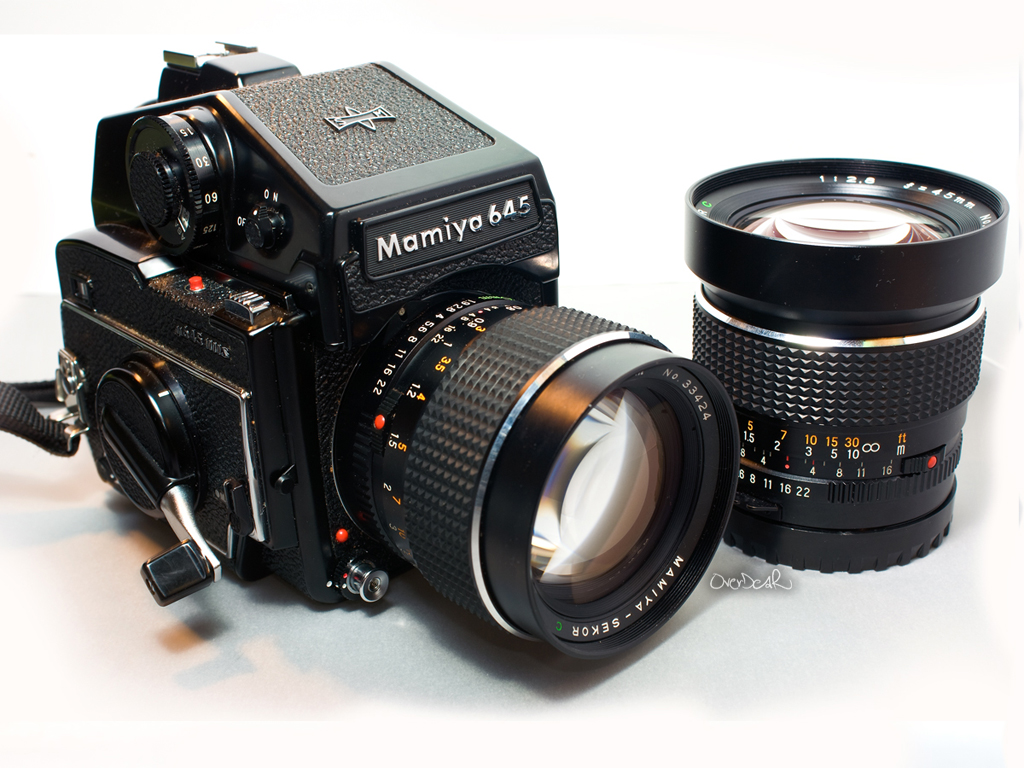
| Hasselblad 500CM body | 6×6 square frame, waist-level finder, mechanical reliability | Digital Hasselblad body (907X, X-series, or a V-system back) |
| Zeiss Planar 80mm f/2.8 C or CF | The rendering itself: gentle transitions, that specific out-of-focus falloff | Modern XCD glass |
| A12 film back (6×6, 120 film) | 12 frames per roll, film grain, highlight rolloff | CFV digital back or integrated sensor |
| Waist-level finder | Slower, more deliberate framing at chest height | Rear LCD or EVF |
| Leaf shutter (in-lens) | Flash sync at any shutter speed, up to 1/500s | Same leaf shutter behavior in modern Hasselblad lenses |
That is the whole kit. Body, lens, back, finder. The modular design of the used Hasselblad 500CM is the reason so many working photographers still shoot one: nothing is soldered to anything else, and every piece can be replaced independently when it eventually wears.
Buyers browsing GearFocus for a used Hasselblad 500CM should know the system comes apart into those components on listings too. Some sellers list a complete outfit, some list a bare body. Read the description carefully.
Why Does A used Hasselblad 500CM Still Look Like That?
Square framing forces a different set of decisions. There is no landscape or portrait orientation to fall back on, no safe crop to fix a bad composition later. The subject either sits in the middle of that box convincingly or it does not.
The 1978 Kate Bush cover works precisely because of this. Her arms trace the top corners of the frame. In a 3:2 rectangle that pose collapses into dead space. The square is doing compositional work that a used Hasselblad 500CM makes unavoidable.
Then there is the Zeiss Planar 80mm f/2.8. On a 6×6 negative it behaves roughly like a 50mm on full frame in field of view, but the depth of field falls off differently because the capture area is so much larger. Skin renders with a smoothness that does not read as softness. It is a specific look, and it is the single biggest reason people hunt down a used Hasselblad 500CM instead of a cheaper medium format alternative.
The leaf shutter matters more than most people expect. Flash sync at 1/500s means you can overpower daylight with a modest strobe, which is exactly how those flat, saturated backdrop looks from the late seventies were built. A focal plane shutter camera caps out around 1/200s and loses that option entirely.
Film Versus Digital: What Granger’s Recreation Actually Showed
The honest finding from running the same shot through both systems is that the digital file is cleaner, more predictable, and easier to match to a reference. The film frame has something else going on in the highlights and the grain that is difficult to replicate afterward.
Neither one is wrong. They are different tools with a shared optical lineage, and the choice comes down to what the shoot demands.
| Consideration | Used Hasselblad 500CM (film) | Digital Hasselblad |
|---|---|---|
| Frames per load | 12 per 120 roll | Limited only by card capacity |
| Feedback | After development | Immediate |
| Grain and highlight rolloff | Native to the emulsion | Applied in post, approximately |
| Ongoing cost | Film plus development per roll | Effectively zero after purchase |
| Power | None required, fully mechanical | Battery dependent |
| Entry cost | Low four figures typical on the used market | Substantially higher |
The twelve-frame limit changes behavior more than any spec sheet suggests. A shoot that runs 400 frames on digital runs 36 on three rolls of 120. Every exposure gets thought about first. Direction gets tighter because reloading interrupts momentum.
I ignored that pacing difference on my first medium format session and burned two rolls warming up before the subject had even settled. Rookie move. On digital that is a non-event. On a used Hasselblad 500CM it is most of your budget for the hour.
Building The Look On A Used Hasselblad 500CM Budget
Start with the body and the 80mm. That combination alone produces the aesthetic, and it is the configuration most sellers list. A used Hasselblad 500CM without a lens is cheaper but leaves you sourcing glass separately, which usually costs more in the end.
Check the film back carefully. The light seals and the dark slide are the two failure points that turn a good deal into a repair bill. Backs are sold independently, so a body with a tired back is not a dealbreaker if the price reflects it.
The finder is a genuine choice. The standard waist-level finder is what gives the shooting experience its character, and it is what most used Hasselblad 500CM listings include. A prism finder is brighter and corrects the reversed image, but it adds weight and, honestly, some of the reason people want this camera.
For lighting, one strobe and a large modifier gets you most of the way to the flat, graphic backdrop look. The leaf shutter on a used Hasselblad 500CM lets you shoot that strobe at 1/500s against a bright background without a high-speed sync workaround.
Which One Should You Buy?
If the aesthetic is the point, the used Hasselblad 500CM is the answer and it is not close. The film response, the grain, the pace, the mechanical feel of that mirror slapping up. You are buying the process as much as the images.
If you are shooting paid work with a turnaround, a digital Hasselblad earns its cost quickly. Client approval on set, no scanning workflow, no lab wait. The lens character carries over because the optical design lineage is the same.
Plenty of shooters run both. A digital body for the deliverables, a used Hasselblad 500CM for the frames that need to look like they came from a different decade. Used Hasselblad 500CM bodies come up on GearFocus regularly if that split appeals to you, and browsing the current medium format listings is the fastest way to see what a complete outfit runs right now.
Practical Notes Before You Buy A used Hasselblad 500CM
Fire the shutter at every speed if you can. The 500CM is fully mechanical, which is a strength, but it also means the slow speeds are the first place a service-overdue body shows itself. Sluggish 1/2s and 1s are the tell.
Ask about the last service. These bodies are repairable indefinitely by specialists, and a recently serviced used Hasselblad 500CM is worth more than a slightly cheaper one with unknown history.
Check the mirror and the focusing screen for haze. A dim screen makes the waist-level finder frustrating, and replacement screens are available but add cost.
On GearFocus, sellers are identity-verified and the standard policy gives you 48 hours after delivery to confirm the item matches its description. If it does not, the return costs you nothing and the seller covers return shipping. That matters on a mechanical camera where you want to hear it work before committing.
Sellers keep 91.5% of the sale price here, which is why complete used Hasselblad 500CM outfits tend to be priced sensibly rather than padded to cover a marketplace cut.
BOTTOM LINE
- Hasselblad 500CM body: the mechanical square-format foundation, no battery required
- Zeiss Planar 80mm f/2.8 C or CF: the rendering that defines the look
- A12 film back: 12 frames of 6×6 per roll of 120, the pacing that shapes the session
- Waist-level finder: chest-height framing, the reason the shooting feels different
- One strobe plus a large modifier: leaf shutter sync at 1/500s makes the flat backdrop look achievable
- Approximate total: low four figures for a complete used outfit, well under a digital Hasselblad equivalent
Autumn is the right season to pick one up. Fall portrait work suits the format, the light is doing interesting things by four in the afternoon, and used medium format supply tends to loosen before the gifting crunch tightens it again in November. A used Hasselblad 500CM bought now has a couple of good months of shooting ahead of it. That 1978 cover was made with tools you can still own, and a used Hasselblad 500CM is the most direct path to them.
FAQ
What camera gives you the classic medium format film look for less?
A used Hasselblad 500CM with an 80mm f/2.8 lens and A12 back. The square 6×6 format, Zeiss rendering, and leaf shutter deliver the aesthetic at a fraction of digital medium format pricing.
Is a used Hasselblad 500CM hard to use?
It is fully manual with no meter, so you need a handheld light meter or a metering app. Loading film and reading a waist-level finder both take practice, but the mechanics are simple and durable.
Can a digital Hasselblad match the film look?
It matches the format, framing, and lens character closely. Grain structure and highlight rolloff are approximated in post rather than captured natively, which is the gap most people notice in side-by-side comparisons.
How many photos does a Hasselblad 500CM take per roll?
Twelve frames on a standard A12 back using 120 film. A 220 back doubles that to 24, though 220 film is far harder to source today than it was decades ago.
What should I check when buying one used?
Test all shutter speeds, especially the slow end. Inspect the film back light seals and dark slide, check the focusing screen for haze, and ask when the body was last serviced.
Own one like this?
Make room for new gear in minutes.
