- Buyer protection on every order
Ricoh GRIIIx Discontinued: What It Means for Used GR Prices Now
Bill Pryor
Sep 7, 2026
KEY TAKEAWAYS
- The short version: Ricoh confirmed the GRIIIx is ending production because replacement parts are running out, with no successor confirmed to fill the gap. As of September 2026, that makes the used Ricoh GRIIIx a genuinely finite supply, and secondhand prices on compact 40mm-equivalent cameras rarely soften after a discontinuation like this one.
- Supply, not demand, is the story. Nothing about the camera changed. The number of them that will ever exist just got fixed.
- Check shutter count before anything else. A GR-series body with heavy use has a dust and shutter history you inherit.
- The GRIII (28mm equivalent) is the pressure-release valve. Buyers priced out of the 40mm body tend to slide sideways to it.
- Selling window: If you own one and never bonded with it, this is a better moment to list than last spring was.
Ricoh has told the world the GRIIIx is on its way out, and the reason is boring in the way that supply chain news is always boring: they can’t get the parts. DPReview reported the announcement in late August 2026, and within about a week the conversation in every pocket-camera corner of the internet had shifted to the same question. What happens to the used Ricoh GRIIIx now?
Here’s the deal. Discontinuation news does something specific to a used market, and it does it fast. Not always dramatically, but reliably.

Why Is the Used Ricoh GRIIIx Suddenly Trending?
Because the supply just became a closed set. That’s it. That’s the whole mechanism.
Ricoh’s statement points to replacement parts availability as the constraint, and it leaves open the possibility of a gap before whatever comes next arrives. A gap is the important word. If a successor landed next month, the used Ricoh GRIIIx would behave like any other outgoing model: prices drift down as early adopters flip their old bodies to fund the new one.
But when there’s no announced replacement and the current model is winding down, that drift doesn’t happen. Buyers who want this exact camera, with this exact 40mm-equivalent lens, have exactly one place to go. The secondhand market.
I’ve watched this pattern play out with discontinued compacts before and I got it wrong the first time. Years ago I assumed a discontinued point-and-shoot would get cheaper because it was “old now.” It got more expensive. I passed on it twice and paid more than the original street price eighteen months later. Lesson learned, expensively.
What Actually Happens to Used Ricoh GRIIIx Prices
Nobody should predict a number here, and this article isn’t going to. What can be said is directional, based on how used gear markets behave when production ends.
Three things typically move at once:
- Listing volume drops first. Owners who were casually considering selling stop considering it. Scarcity news makes people hold.
- Asking prices firm up before sold prices do. Sellers reprice on sentiment quickly; actual transactions catch up more slowly.
- Condition spread widens. Clean, low-count bodies pull further away from beaten ones, because buyers stop treating a rough copy as an acceptable compromise when they’re already committing to a camera nobody’s making anymore.
That third one matters most for anyone shopping. In a healthy production market, a scuffed body is a discount. In a discontinued market, a scuffed body is a scuffed body you can’t easily upgrade out of.
The Condition Problem Nobody Mentions
The GR series has a reputation, and it’s not entirely a flattering one. Dust on the sensor is the thing GR owners talk about the way other photographers talk about the weather. It’s part of owning the camera.
Now stack the parts shortage on top of that. If Ricoh is running short on components for building new units, service parts for repairing old ones aren’t going to be plentiful either. A used Ricoh GRIIIx bought in the middle of a parts squeeze is a camera you should assume you’ll be living with as-is.
Which means the pre-purchase check goes from “good practice” to “the whole ballgame.”
Shutter count is the fastest read on how hard a body has worked. It’s not a perfect proxy for condition, but a compact that’s fired tens of thousands of frames has also had its lens barrel extend and retract tens of thousands of times, pumping air and dust past the sensor every single cycle. The complete guide to checking Ricoh GR IIIx shutter count before you buy walks through how to pull that number, and it’s worth doing before money moves.
Ask for a photo of a plain white surface at a narrow aperture too. Dust shows up mercilessly in that shot.
Should You Buy a Used Ricoh GRIIIx Right Now, or Wait?

Waiting is a strategy when supply is growing. It’s a gamble when supply is shrinking.
If the 40mm-equivalent field of view is the specific thing you want, waiting doesn’t obviously help you. The camera won’t be redesigned into existence again, and there’s no confirmed successor date to wait for. Every month between now and whenever Ricoh announces the next GR is a month where the pool of available used Ricoh GRIIIx bodies gets a little smaller and a little more picked over.
If you’re flexible on focal length, waiting is more reasonable. The 28mm-equivalent GRIII is a different camera serving a different instinct, and it isn’t under the same announcement pressure right now.
Recommendation framing, plainly:
- Buy now if: You’ve already decided on 40mm equivalent, you shoot street or documentary work where pocketability is non-negotiable, and you can find a body with a verified shutter count and clean sensor images.
- Wait if: You’re still deciding between focal lengths, or you’re shopping on sentiment rather than a real gap in your kit.
- Skip entirely if: You wanted it as an investment. Cameras are tools first. Gear that appreciates is a nice accident, never a plan.
The GRIII Sidestep
Every time a specific model gets scarce, buyers spill over into the nearest alternative. That’s the GRIII here, and there’s a reasonable argument it’s the better first GR anyway.
28mm equivalent is the classic GR field of view. Wider, more forgiving in tight spaces, more forgiving of imprecise framing when you’re shooting from the hip. The 40mm on the used Ricoh GRIIIx is tighter and more deliberate, closer to how a lot of people actually see, but it asks more of you.
If the GRIIIx market tightens and you slide over to the GRIII instead, the same due diligence applies. Same dust concerns, same shutter cycle question. There’s a matching Ricoh GR III shutter count guide covering the check on that body.
One honest caveat about spillover demand: it tends to lift the alternative’s price too, just later and less sharply. So the sidestep saves money, it doesn’t make the whole situation free.
If You Own One: Reading the Selling Window
Plenty of people bought a GRIIIx, used it enthusiastically for a season, and then went back to their main body. If that’s you, the announcement changes your math.
A used Ricoh GRIIIx listed in September 2026 meets a buyer pool that just got told the well is running dry. That’s a fundamentally different audience from the one that existed in June. Sellers on GearFocus keep 91.5% of the sale price, and the standard buyer protection gives the buyer a 48-hour window after delivery to confirm the camera is as described, which tends to make people more comfortable committing to a used compact sight-unseen.
Practical notes if you list:
- Include the shutter count in the listing text. Not in a reply to a question. In the listing. It’s the first thing a serious buyer wants.
- Photograph the sensor test shot. Flat white surface, narrow aperture. Honesty about dust builds more trust than pretending it isn’t a GR-series thing.
- Mention what’s included. Original battery count, charger, any case or ring cap. Small stuff, but it separates listings.
- Don’t oversell the scarcity. Buyers who feel pressured walk. Let the news speak for itself.
Have one sitting in a drawer? Listing it on GearFocus puts it in front of people actively hunting for exactly this camera right now.
Where This Fits in the Wider Used Market
Compact cameras have been having a strange few years. Demand for small, deliberate, single-focal-length shooters keeps climbing while manufacturers keep quietly retiring them. The used Ricoh GRIIIx joining that list isn’t an isolated event, it’s the same current that’s pushed prices up on older enthusiast compacts and even oddball formats.
You can see the same pull in unexpected corners of the market. Interest in vintage 110 film SLRs like the Minolta 110 Zoom is driven by the same appetite: something small, something with a personality, something that isn’t a phone.
The used Ricoh GRIIIx just happens to be the digital, currently-supported, actually-practical version of that appetite. Which is exactly why the discontinuation news landed as hard as it did.
And if you’re weighing a compact against a second body in a system you already own, that’s a legitimately different calculation. The Canon R6 vs R6 Mark II used comparison covers that kind of decision from the other direction.
I’ll admit my own bias here. I resisted the GR concept for years because I thought a fixed lens on a small sensor camera was a solved problem that phones had already solved. Wrong. The thing a used Ricoh GRIIIx does that a phone doesn’t is make you commit to a frame. That’s not a spec, and it’s why the used Ricoh GRIIIx market reacted to this announcement the way it did. Whether you buy one this month or list the one you’ve got, decide on the camera, not the news cycle. Scarcity is a real factor in what a used Ricoh GRIIIx costs, but it’s a terrible reason to own one.
FAQ
Why is the Ricoh GRIIIx being discontinued?
Ricoh cited a lack of available replacement parts as the reason production is ending. The announcement, reported in August 2026, also raised the possibility of a gap before a successor model arrives.
Will used Ricoh GRIIIx prices go up?
Directionally, discontinued cameras with no announced successor tend to hold or firm up on the secondhand market as listings thin out. No specific figure can be predicted, and condition will increasingly drive the spread between listings.
What should I check before buying a used Ricoh GRIIIx?
Shutter count first, then sensor dust. Request a photo of a plain white surface shot at a narrow aperture, and confirm what accessories are included. With parts scarce, repairs get harder, so condition matters more than usual.
Is the GRIII a good alternative to the GRIIIx?
It is if you want a wider 28mm-equivalent view instead of the GRIIIx’s tighter 40mm equivalent. Same body, same dust considerations, different shooting instinct. Many buyers priced out of the GRIIIx move to it.
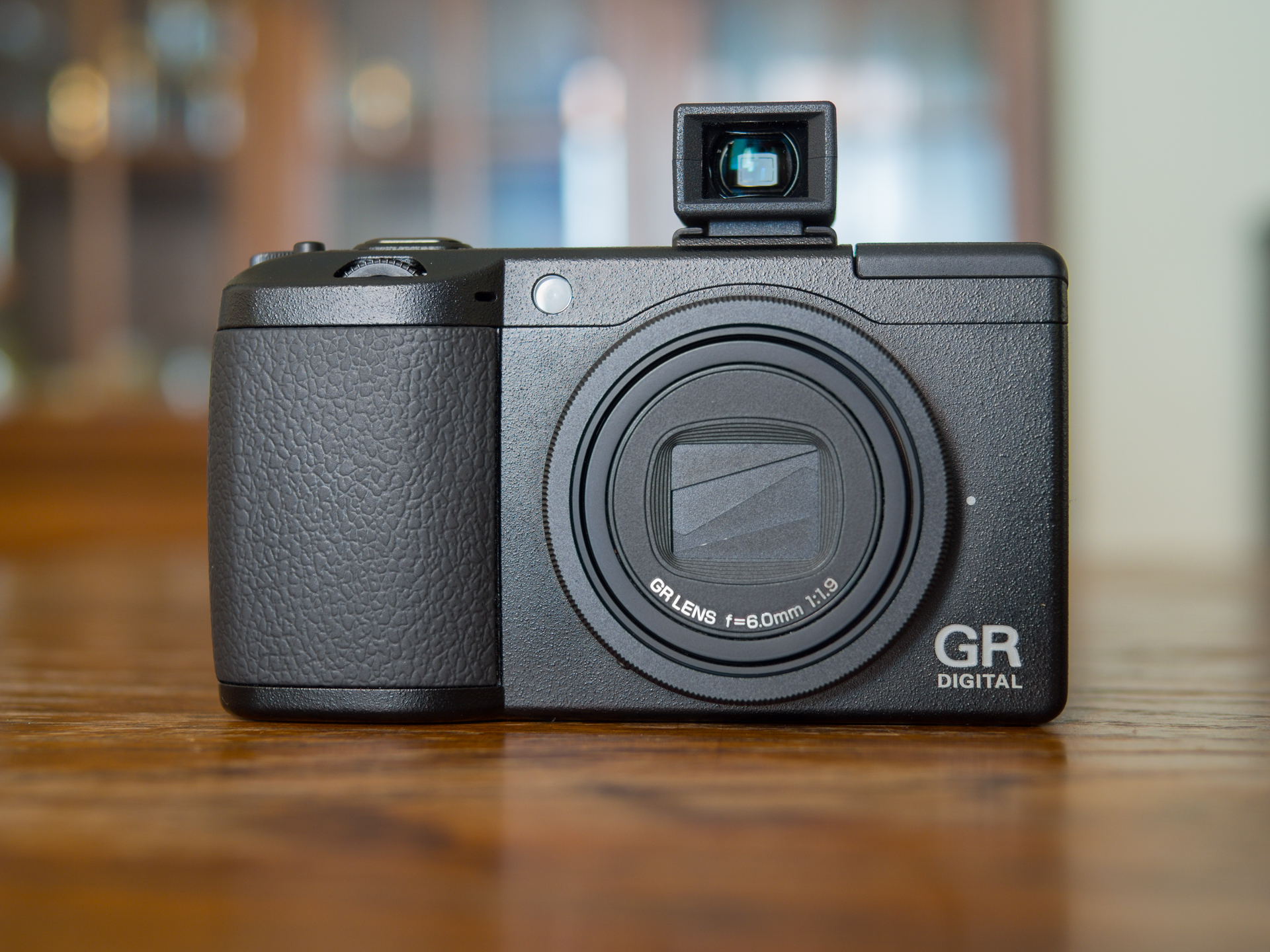
Photo: Ricoh GR Digital 3 & GV-2 optional viewfinder. Straight up front view by Ivan Radic, CC BY 2.0
Own one like this?
Make room for new gear in minutes.
