- Buyer protection on every order
Sony RX10 IV on the Used Market as a New RX10 Arrives
Bill Pryor
Aug 4, 2026
KEY TAKEAWAYS
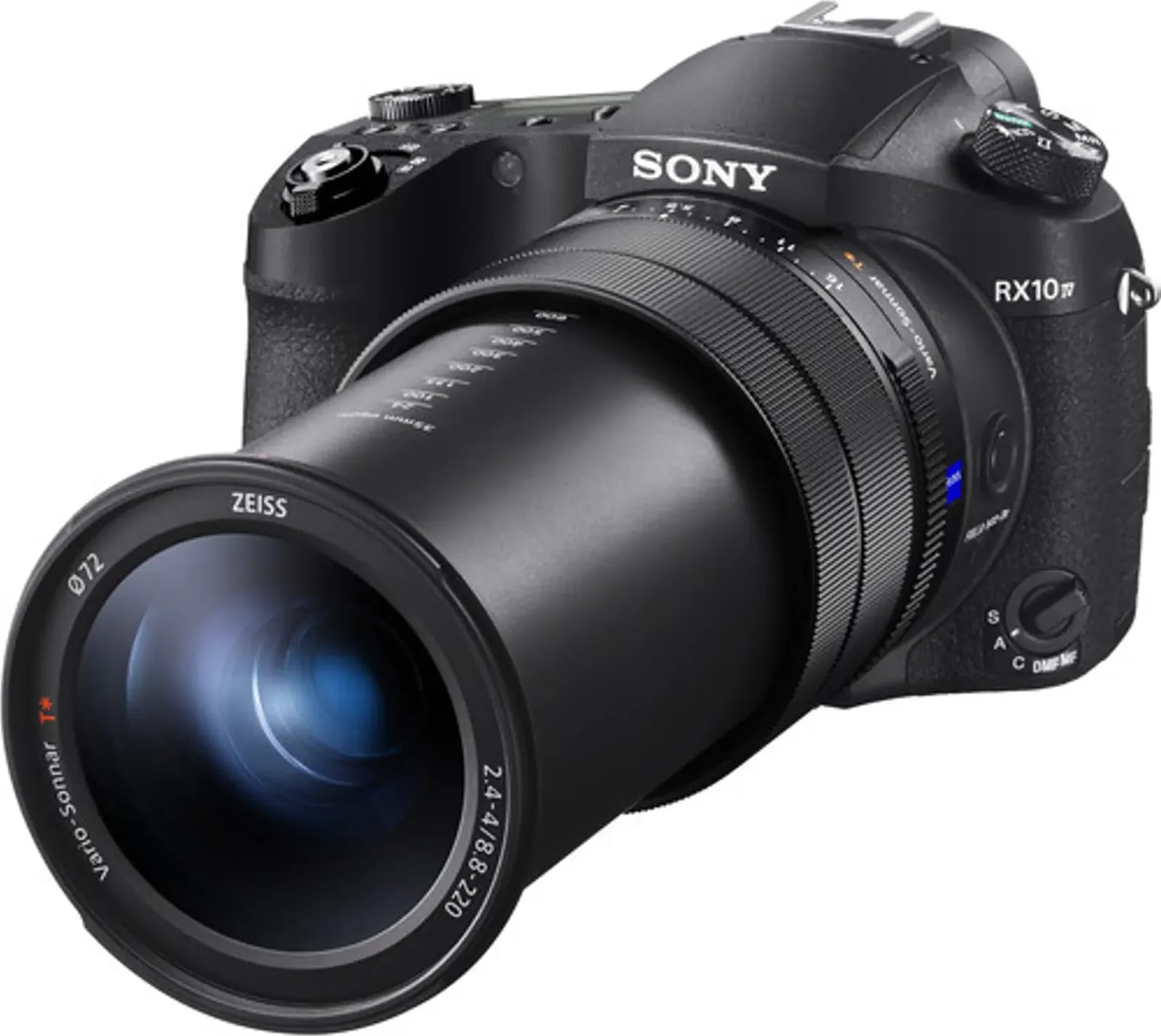
- The short version: A used Sony RX10 IV gives you a 24-600mm equivalent f/2.4-4 zoom, a 1-inch stacked sensor, and 24fps burst shooting in one sealed body. With a successor announced, a used Sony RX10 IV is the smarter buy for anyone who wants reach without a bag full of lenses.
- Why now: Sony teased a new RX10 for a July 9 announcement, its first bridge camera update in nearly a decade. Upgraders sell their old bodies. That supply lands on the used market.
- Who it suits: Travel shooters, birders, air show and youth sports parents, and anyone tired of swapping lenses in dusty places.
- What to check first: Shutter count, zoom ring smoothness, EVF condition, and whether the battery still holds a charge worth mentioning.
- What it is not: A low-light champion or a shallow depth of field machine. A 1-inch sensor is a 1-inch sensor.
The camera came out of a padded case that smelled faintly of old foam and sunscreen. Somebody had shot a lot of vacations with it. The grip was worn shiny on the right side where a thumb had lived for years, and the zoom ring made that soft mechanical whir when you turned it, the sound of a lens moving a long way inside a body that never changes shape.
That is the bridge camera experience in one sentence. Nothing sticks out. Nothing comes off. You point it at a hawk 400 feet up and you point it at your friend across a dinner table and you never touch a lens cap in between.
Sony has not meaningfully updated this category in nearly a decade. Now they have, and the timing changes the math for everyone shopping the used market.
Why Is the Used Sony RX10 IV Suddenly a Value Target?
Sony teased a new RX10 with a full announcement set for July 9, according to CineD. That is the first update to the RX10 line in close to ten years.
Here is what that does. Every camera announcement creates two groups: the people who buy the new thing, and the people who list the old thing to help pay for it. The second group is where a used Sony RX10 IV comes from.
That supply pattern is the whole reason a used Sony RX10 IV is worth watching right now. More listings from upgraders means more choice for buyers, and more choice tends to mean softer asking prices as sellers compete for the same shopper. This is not a prediction about a specific number. It is just how used gear behaves after a successor lands.
Now the part nobody says out loud. The RX10 IV was already very good at the thing it does. A new sensor and a new processor will not add 200mm of reach or make the lens brighter. If the specs that matter to you were already covered, a used Sony RX10 IV does the same job for less money.
What You Actually Get With a Used Sony RX10 IV
The pitch is simple enough to explain at a family barbecue: one camera, one lens, 24mm to 600mm equivalent, aperture ranging from f/2.4 at the wide end to f/4 at the long end.
To match that range with interchangeable lenses you need a wide zoom, a standard zoom, and a telephoto that costs more than most people spend on their entire kit. Then you need a bag to carry all three, and you need to be willing to change lenses on a beach or at a rodeo.
Sitting behind that lens is a 1-inch stacked CMOS sensor at 20.1 megapixels, paired with phase detect autofocus on the sensor. Burst shooting runs up to 24 frames per second with tracking. Video tops out at 4K.
The autofocus is the part that surprises people who assume bridge cameras are slow. It tracks moving subjects reliably across the frame, which is why a used Sony RX10 IV keeps showing up in the hands of people photographing birds, planes, and kids who do not hold still.
Weather sealing rounds it out. Not submarine grade, but enough that a light rain at a soccer game is a non-event.
Who Should Buy a Used Sony RX10 IV (And Who Should Not)
I will be honest about a mistake I made. Years ago I talked myself out of a superzoom because the sensor was small and I had opinions about sensor size. Then I spent a summer hauling a full-frame body and three lenses through airports, shooting maybe a third of what I would have shot with something I could carry in one hand. The best camera argument is not a cliche when your shoulder is the limiting factor.
A used Sony RX10 IV makes sense if you are:
- A travel shooter: One body, one lens, one bag. Museums, markets, wildlife on the same afternoon.
- A birder or wildlife hobbyist: 600mm equivalent with fast tracking autofocus, no teleconverter math.
- A sports or air show parent: 24fps burst and a lens that reaches the far sideline.
- A B-camera owner: Something to keep in the car that shoots decent 4K without a rig.
- Someone downsizing: Tired of the lens shuffle and willing to trade some sensor size for simplicity.
Look elsewhere if you need:
- Clean high ISO: A 1-inch sensor gives up ground to APS-C and full frame once the light drops. That is physics, not a flaw.
- Heavy background separation: Portrait shooters chasing creamy backgrounds will find the depth of field deeper than they want.
- Big print files: 20.1 megapixels is plenty for most uses and thin for aggressive cropping into gallery prints.
- A pocket camera: It is compact for what it does, not compact in absolute terms. Handle one before you commit.
The All-in-One Tradeoff, Laid Out Straight
Every buying decision is a trade. Here is the honest ledger on the bridge camera format versus a mirrorless body with lenses.
| Consideration | Bridge camera (RX10 IV format) | Mirrorless body plus lenses |
|---|---|---|
| Focal range in one package | 24-600mm equivalent, always attached | Requires 2-3 lenses to cover |
| Sensor size | 1-inch stacked CMOS | APS-C or full frame |
| Low light headroom | Limited, best in decent light | Substantially better |
| Dust exposure | Sealed, no lens changes | Sensor exposed at every swap |
| Total weight to carry | One body | Body plus glass plus bag |
| Upgrade path | Replace the whole camera | Add or swap lenses over time |
If your shooting lives in daylight and your problem is reach and portability, the left column wins and a used Sony RX10 IV is a genuinely efficient purchase. If your shooting lives indoors or after sunset, the right column wins and no amount of zoom range fixes it.
How to Inspect a Used Sony RX10 IV Before You Buy
This is the part that separates a good buy from an expensive lesson. Work through it in order.
1. Shutter count. Ask for it before anything else. A superzoom with a 24fps burst mode can rack up actuations fast, because one held button on a bird in flight is not one frame, it is forty. Our complete guide to checking RX10 IV shutter count walks through how to read it and what number should give you pause.
I ignored shutter count on a used body early in my career. Rookie move. It gave up eight months later, halfway through a shoot, and the repair quote was most of what I had saved.
2. Zoom mechanism. Run the zoom through its whole travel, slowly, listening. You want smooth resistance and a consistent sound. Grinding, hesitation, or a spot where it binds means the lens has been through something. On a fixed-lens camera the lens is the camera, so this is not a negotiable check.
3. Electronic viewfinder. Look through it in a bright room and a dim one. Check for dead pixels, dust behind the glass, and whether the eye sensor switches reliably between EVF and rear screen.
4. Sensor and lens glass. Shoot a plain bright surface at the smallest aperture and look for dark specks. Angle the front element toward a light and check for internal dust or haze. Some dust in a superzoom is normal after years of use. Haze or fungus is a walk away.
5. Battery health. The RX10 IV takes the NP-FW50, a small battery working hard behind a long lens. Sellers often include spares, which is worth real money. Ask how many the seller has and roughly how old they are.
6. Ports and dials. Cycle every dial and press every button. Test the flip screen hinge. Plug something into the mic jack if you shoot video.
A well-documented used Sony RX10 IV listing that answers these questions unprompted is usually a listing from someone who took care of the camera. That correlation holds more often than not.
Timing Your Purchase of a Used Sony RX10 IV in 2026
It is early August 2026. Two calendar facts shape the next few months for anyone shopping a used Sony RX10 IV.
First, back to school season is here. Every year around now, families and students buy cameras for programs, clubs, and trips. That is real demand for exactly the kind of do-everything camera the RX10 IV represents.
Second, holiday gift season starts building in November. Gifting demand tends to tighten supply on desirable used bodies, because the people who would have listed theirs in September decide to wait or keep it. If a used Sony RX10 IV is on your list, the stretch between now and late October is generally a more comfortable place to shop than December.
There is also the successor effect still working through the market. Announcement to shipping to sellers actually listing their old bodies is a multi-month chain, not an overnight flip. Patience has a payoff here, but so does buying a clean copy when you find one. A pristine used Sony RX10 IV with low actuations and two batteries is worth more than a hypothetical cheaper one that has not appeared yet.
Getting the Most Out of a Used Sony RX10 IV
Buying it is half the job. Here is what makes the format sing.
Live at the long end, but respect the light. The lens opens to f/4 at 600mm. In good daylight that is fine. Under stadium lights it is not, so plan your reach around your light rather than the other way around.
Use the burst deliberately. 24fps is a tool, not a default. Short controlled bursts at the moment of action beat holding the button and hoping. Your shutter count and your card sorting time both benefit.
Let the stacked sensor work. That sensor design keeps rolling shutter distortion low, which matters when you are panning fast on a moving subject. Practice tracking pans and you will see the difference against older superzooms.
Shoot RAW when it counts. 20.1 megapixels off a 1-inch sensor has less latitude than a full frame file. RAW recovers highlights and shadows you would otherwise lose, and on a smaller sensor that headroom matters more, not less.
Carry spare batteries. Two extras minimum. A long zoom and an EVF are both power draws, and used batteries are used batteries.
Used bodies in this category come up on GearFocus regularly, and every seller is identity verified before they can list. If you spot a clean used Sony RX10 IV worth a closer look, browsing the marketplace is a reasonable next step.
If You Are Selling Instead of Buying
Flip the perspective for a second. If the new RX10 has your attention and your current body is about to become surplus, the same supply wave that helps buyers works against sellers who wait too long.
Listing early in an upgrade cycle usually beats listing late, because you are competing with fewer identical cameras. Pull your shutter count, photograph the actual body including the worn spots, list every battery and accessory you are including, and price against what comparable copies are asking rather than what you paid.
Sellers keep 91.5% of the sale price on GearFocus, an 8.5% total fee, which is a meaningfully bigger share than generalist marketplaces leave you with. If you are working through the mechanics of a first listing, our guide on timing a Sony body sale covers the same logic applied to a different camera, and the pricing approach we use for the Canon 5D Mark IV shows how condition tiers translate into asking prices.
Buyer Protection and What Happens After You Click Buy
Two things worth knowing before you commit to a used Sony RX10 IV on any marketplace.
On GearFocus, every purchase carries a 48-hour verification window after delivery. If the camera does not match the listing, you return it at no charge and the seller covers return shipping. Some sellers also offer a 14-day no-questions-asked return, which is a seller-by-seller thing rather than a platform-wide policy, and it excludes items listed in Poor or As-Is condition. Poor and As-Is listings are final sale, full stop.
Most orders ship within one to three business days. When your camera arrives, use that 48-hour window like it matters: run the zoom, check the EVF, shoot a test card, verify the shutter count against the listing.
Do not skip the inspection because the camera looks fine in the box. Looking fine and working fine are two different findings.
BOTTOM LINE
- Best for: Daylight shooters who need 24-600mm reach in one weather-sealed body they can carry all day.
- Skip it if: Your work happens in low light or depends on shallow depth of field.
- Non-negotiable checks: Shutter count, zoom smoothness, EVF condition, battery health.
- Timing: August through October is a friendlier window than the holiday gifting stretch.
- The verdict: With a successor arriving, a used Sony RX10 IV is one of the more sensible all-in-one buys on the used market, provided you go in clear-eyed about sensor size.
Superzoom bridge cameras occupy a strange spot. They are not the sharpest tool for any single job, and they are the only tool for a surprising number of situations. That is the whole appeal. A used Sony RX10 IV will not out-resolve a full frame body or out-shoot it after dark, but it will be in your hand at 600mm when the interesting thing happens, which is a form of image quality nobody puts on a spec sheet.
With Sony finally moving on this line after nearly ten years, the pool of used Sony RX10 IV bodies is going to grow. Inspect carefully, buy the clean copy rather than the cheap one, and use that 48-hour window when it lands. A well-chosen used Sony RX10 IV earns its spot in the bag fast.
FAQ
Is a used Sony RX10 IV still worth buying in 2026?
Yes, for daylight shooters who want 24-600mm equivalent reach in one sealed body. The stacked sensor and fast tracking autofocus still hold up. The 1-inch sensor limits low-light work, which is the main tradeoff.
What shutter count is too high on an RX10 IV?
There is no universal cutoff, but 24fps burst shooting inflates counts quickly, so context matters more than the raw number. Always request the count and compare it against the asking price and overall condition.
Will used RX10 IV prices drop after the new RX10 launches?
Successor launches typically increase used supply as upgraders sell, and more supply generally softens asking prices over months rather than days. No specific price movement is guaranteed for any individual listing.
How does the RX10 IV compare to a mirrorless camera with a telephoto lens?
The RX10 IV wins on weight, convenience, and dust protection. A mirrorless body with dedicated glass wins on low-light performance, background separation, file flexibility, and long-term upgrade paths. Your shooting light decides.
What accessories should come with a used Sony RX10 IV?
Look for at least one spare NP-FW50 battery, the charger, the lens hood, and the original strap. Extra batteries are the most valuable inclusion, since original cells degrade over years of use.
Own one like this?
Make room for new gear in minutes.
