- Buyer protection on every order
What Your Go-To Camera Brand Says About You (An Entirely Unscientific Study)
GearFocus
Mar 23, 2026
Key Takeaways
- Canon shooters are the reliable friend everyone needs — and the last person to admit their gear is aging.
- Sony users didn’t buy a camera. They bought a spec sheet with a shutter button.
- Fujifilm people have beautiful photos, beautiful opinions, and a lot of feelings about film grain.
- Nikon shooters are loyal to a fault — and honestly? That’s kind of admirable.
- Leica owners are either world-class photographers or very, very committed to an aesthetic. There’s no middle ground.
Picture this. You’re at a photography meetup. Doesn’t matter where — a rooftop in Brooklyn, a park trail in Portland, a Starbucks patio in suburban Ohio. Someone across the room raises their camera. And before they’ve said a single word, you already know something about them.
Not their name. Not their skill level. Not even what they shoot.
Their camera brand. That’s all you need. This is what your go-to camera brand says about you.
Alright, look — this is entirely unscientific. No focus groups were harmed in the making of this article. But after years of watching the photography community argue on forums, obsess over spec sheets, and clutch their gear like it’s a personality trait, some patterns have emerged. Clear ones.
So let’s get into it. No roasts, no brand wars — just honest, affectionate observations from a community that takes its gear very, very seriously.
Canon: The Reliable One Who Never Deletes Their Exes
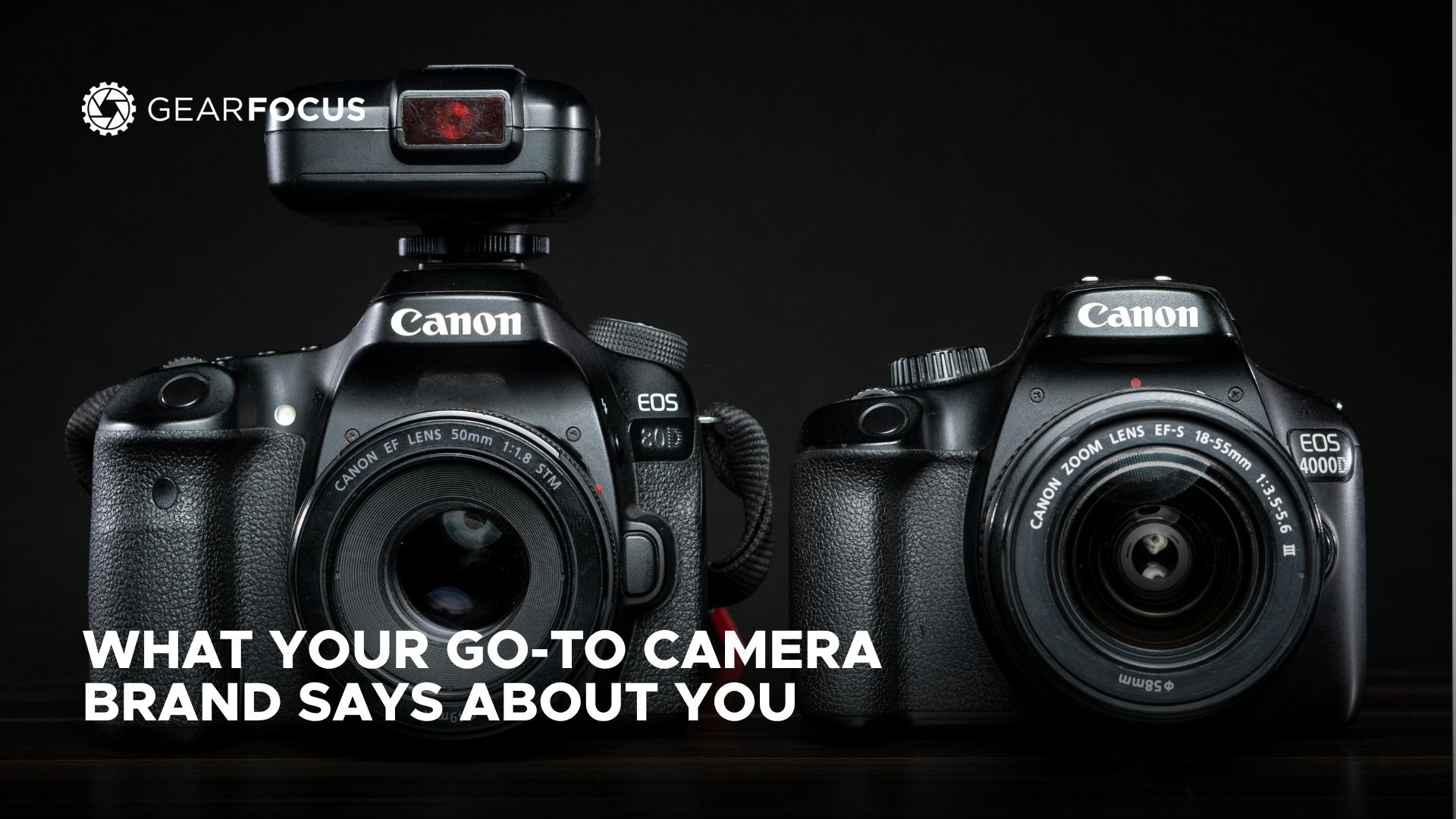
Here’s the deal with Canon shooters. They are fundamentally good people. Salt of the earth. They chose Canon because someone they trusted — a college professor, a photographer uncle, a well-meaning YouTube comment — told them it was a solid choice. And it was. It is. Canon has been making incredible cameras for decades, and the Canon lineup on GearFocus is proof that their gear holds value like almost nothing else in this category.

The Canon EOS R5 Mark II: full-frame, feature-packed, and exactly what you’d expect from the brand that reliable people choose. Find one on GearFocus before a Canon loyalist snaps it up first.
But here’s the confessional part: Canon users are allergic to switching. A friend once told me she was still shooting a Canon 5D Mark III — in 2024. “It still works,” she said, with the conviction of someone defending a decades-long relationship. And you know what? She wasn’t wrong. But she also hadn’t cleaned the sensor in two years, so.
Canon people trust the system. They trust the colors (and Canon colors ARE warm and gorgeous — PetaPixel has written about Canon’s color science more times than we can count). They trust the lenses, the menus, the ergonomics. They will be shooting Canon when the sun burns out, and they will be comfortable doing it.
What it says about you: You believe in consistency. You probably also have a “forever car” and strong opinions about what loyalty means. We respect it.
Sony: The Person Who Brought a Spreadsheet to a Picnic
No shade. Genuinely, no shade. Sony shooters are often incredible photographers. But let’s be honest about how most of them got there — they watched a 47-minute YouTube comparison video, built a spreadsheet, cross-referenced dynamic range scores across three generations of sensors, and then bought the camera with the best numbers.

And the thing is — those numbers are real. Sony’s autofocus has been so dominant for so long that DPReview basically had a running Sony autofocus appreciation thread going for years. Eye-tracking, bird recognition, subject detection — Sony engineers woke up every morning and decided to solve problems photographers didn’t even know they had yet.
The Sony mirrorless category on GearFocus moves fast. Like, very fast. Because Sony releases a new camera roughly every nine months, and Sony users upgrade with similar frequency. They’ll sell an A7 IV the moment the A7 V drops, not because anything is wrong with the A7 IV, but because the new one has two more autofocus points and they read about it at 11pm.
What it says about you: You optimize. You probably have a morning routine that involves supplements and a “system.” Your photos are technically immaculate. Your camera bag weighs forty pounds.
Nikon: Loyalty as a Love Language
Let me tell you something about Nikon shooters. They’ve been through it. The brand had a rough stretch. People wrote think pieces. Forums got loud. And Nikon shooters? They stayed. Every single one of them.

That’s not stubbornness. That’s conviction.
Nikon glass is some of the best glass ever made — full stop. And the Z-series mirrorless lineup has quietly become one of the most underrated systems on the market. When you browse Nikon gear on GearFocus, you’ll notice something: the condition ratings on Nikon bodies tend to be excellent. Nikon users take care of their stuff. Because when you’re committed to a brand, you treat the gear like it matters.
Honestly? There’s something kind of beautiful about that.
What it says about you: You don’t quit. You probably have friendships that go back to middle school, a favorite diner booth, and a deep distrust of anything described as “disruptive.”
Fujifilm: The Artist Who Also Has Strong Opinions About Coffee
Okay. Fujifilm people. I say this with genuine love: you are a lot.
The best kind of a lot. But a lot.
Fujifilm shooters chose their camera the way some people choose a neighborhood to live in — based almost entirely on vibes and aesthetic. And the vibes are correct. Fujifilm cameras look incredible, handle beautifully, and produce JPEG colors so good that half their users don’t even shoot RAW. The film simulations — Velvia, Classic Chrome, Eterna — are basically Instagram filters that are actually good.

Here’s the thing nobody tells you before buying Fujifilm: you will develop opinions. Strong ones. You will have thoughts about the difference between shooting with Classic Neg versus Classic Chrome that you will share unprompted at dinner parties. You will own at least one piece of camera gear that is functionally a fashion accessory.
The Fujifilm listings on GearFocus are a rabbit hole. Fair warning. One minute you’re browsing an X-T4. Twenty minutes later you’ve added a vintage Fujinon lens to your watchlist and you’re reading a Reddit thread from 2019 about which X-Trans sensor generation has the best skin tones.
What it says about you: You’re creative, opinionated, and you shoot in places with good light. Your Instagram is either stunning or extremely curated. Probably both.
Leica: A Lifestyle, a Philosophy, and a Second Mortgage
There are two types of Leica owners.
Type One: A seasoned photojournalist or fine art photographer who has used a Leica rangefinder for twenty-five years and can see light in a way that makes the rest of us embarrassed to hold a camera. Their photos are in galleries. They are deeply, quietly excellent.

Type Two: Someone who watched one too many Henri Cartier-Bresson documentaries on a Tuesday night and went all in.
Both types are welcome. That’s the thing about Leica — it’s the camera brand that most openly sells not just a product but an entire identity. And people buy in completely. The red dot isn’t just a logo. It’s a statement. It’s “I believe in the decisive moment so much that I spent the equivalent of a used car on a body with no autofocus and no video mode.”
Respect, honestly. Deep, slightly bewildered respect.
What it says about you: You believe photography is an art form and you’re willing to pay for that belief in full. You have a favorite black-and-white photographer and you’ve mentioned them this week.
OM System (Olympus): The Underdog You Probably Slept On

Quick sidebar for the OM System / Olympus crowd — you picked the camera that nobody talks about enough. You did it for the size, the weather sealing, or the legendary image stabilization. You made a smart, practical, non-glamorous decision.
You’re the kind of person who actually reads the manual.
So What Does It All Mean?
Here’s the truth under all of it: camera brand loyalty is a real thing, but it’s also kind of a fun illusion. The best photographers in the world have shot on almost everything. The gear matters — but it matters less than the eye behind it.
What matters more is building a kit that actually works for you. Not the YouTuber with the most views. Not the forum thread from three years ago. You.
And honestly? The smartest move any photographer can make is treating their gear like a living, evolving collection — buying smart, selling what’s not serving you anymore, and upgrading with intention rather than impulse.
That’s exactly what the GearFocus marketplace is built for. Real photographers selling to real photographers. Gear that’s been used, cared for, and listed by people who know what they’re talking about.
Whatever brand you’re loyal to — welcome. We’ve got listings for all of you.
FAQ
Does camera brand actually affect photo quality? Mostly, no. At the mid-to-high level, every major camera brand produces tools capable of professional results. The differences — sensor color science, autofocus behavior, ergonomics — are real but rarely decisive. A skilled photographer shooting Canon will produce better work than a beginner with a Sony A1. The camera accelerates your vision. It doesn’t replace it.
Is it worth switching camera brands for better specs? Sometimes. But switching systems is expensive because lenses matter more than bodies. Before you make a brand jump, calculate the full cost — new lenses, accessories, and learning curve included. A more practical move is often upgrading within your existing system. Browse what’s available on GearFocus before committing to a full switch — you might find a great deal on exactly what you’re looking for without blowing your budget.
Which camera brand holds its resale value best? Historically, Canon and Nikon DSLRs hold value well due to their enormous user bases and lens ecosystems. Leica holds value exceptionally well — some models actually appreciate over time. Sony mirrorless bodies depreciate faster because of Sony’s aggressive release cycle. Fujifilm X-series bodies tend to hold a solid middle ground. If resale value matters to you, buy used in the first place — the depreciation curve is already behind you.
Own one like this?
Make room for new gear in minutes.
