Agfa 90mm f/4 Color-Telinear Lens
The Agfa 90mm f/4 is a lens from Agfa. Check GearFocus for current availability, with buyer protection on every purchase.
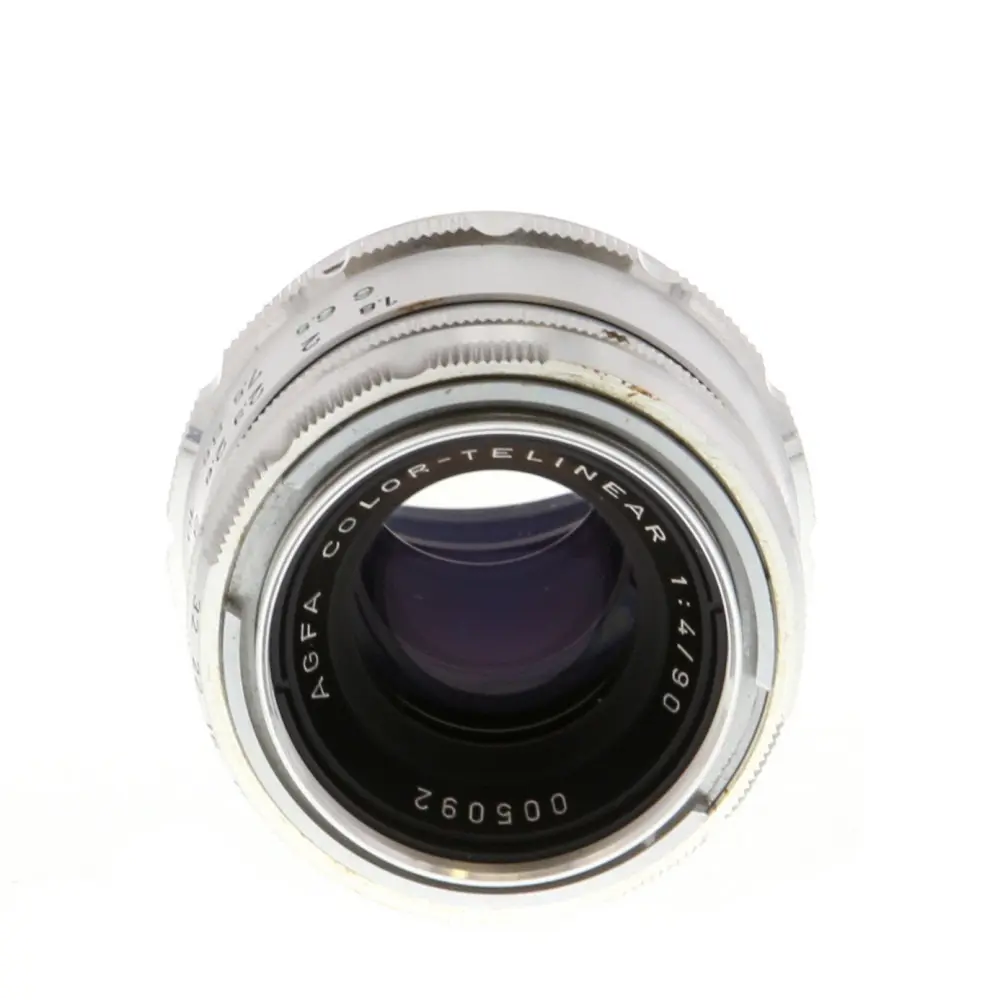
Agfa 90mm f/4 Color-Telinear Lens
Get notified when one lists.
We'll text or email you the moment a Agfa 90mm f/4 Color-Telinear Lens is listed on GearFocus.
Have a Agfa 90mm f/4 sitting in your bag?
You'd be the first listing for this model.
Serious buyers are already watching — list yours in minutes.
Lens Overview — Agfa 90mm f/4
Key Features — Agfa 90mm f/4
90mm f/4 Focal Length: A moderate telephoto perspective well-suited to portrait-distance and close-range subject work on 35mm film.
Color-Telinear Designation: Agfa's Color-Telinear name identifies this as part of their dedicated telephoto optics line, built for color-corrected rendering.
Manual Focus Operation: Fully manual focus control, consistent with SLR lens design from the 1960s and favored by film photographers seeking precise focus handling.
35mm Film Format: Designed specifically for 35mm SLR cameras, making it a natural fit for standard film bodies of the era.
1960s Vintage Construction: Manufactured between 1960 and 1969, giving this lens genuine collectible provenance and the optical character typical of mid-century German photographic glass.
Non-Standard Lens Mount: Listed under an 'Other' mount classification, so buyers should verify compatibility carefully or source an appropriate adapter before use.
Lens Specifications — Agfa 90mm f/4
| Spec | Detail |
|---|---|
| Use Cases | Portrait, Landscape, Creative Effects |
| Lens Type | Telephoto |
| Lens Mount | Other |
| Focus Type | Manual Focus |
Description — Agfa 90mm f/4
The Agfa 90mm f/4 Color-Telinear is a manual focus telephoto lens from the 1960–1969 manufacturing era, designed for use with 35mm film on SLR-type cameras. With a 90mm focal length and f/4 maximum aperture, it occupies a classic telephoto range well-suited to film photography on 35mm format. The lens carries an 'Other' mount designation, so buyers should confirm adapter compatibility for their intended camera system before purchase. Flash compatibility is listed as none.
For film photographers, collectors, or those drawn to vintage Agfa optics, the Color-Telinear represents an accessible piece of 1960s photographic history. Its manual focus operation places full creative control in the photographer's hands, consistent with the working methods of its era.
Pros — Agfa 90mm f/4
- ✓90mm focal length at f/4 maximum aperture provides a moderate telephoto perspective on 35mm film
- ✓Manual focus operation offers full control over focus, consistent with the lens's 1960s SLR heritage
- ✓Designed specifically for 35mm film format, making it compatible with standard 35mm SLR film cameras of the era
Cons — Agfa 90mm f/4
- ✗Mount is listed as 'Other,' meaning direct compatibility with specific camera bodies is unclear and adapters may be required
- ✗No weight specification is available, making it difficult to assess handling characteristics before purchase
- ✗Flash compatibility is listed as none, limiting supplemental lighting options in certain shooting scenarios
Videos — Agfa 90mm f/4
Agfa Ambi Silette 35 mm interchangeable lens rangefinder camera — erguy6319