Bronica 7.5cm (75mm) f/2.8 Nikkor-P Nippon Kogaku Lens
The Nippon Kogaku 7.5cm f/2.8 is a lens from Nippon Kogaku. Check GearFocus for current availability, with buyer protection on every purchase.
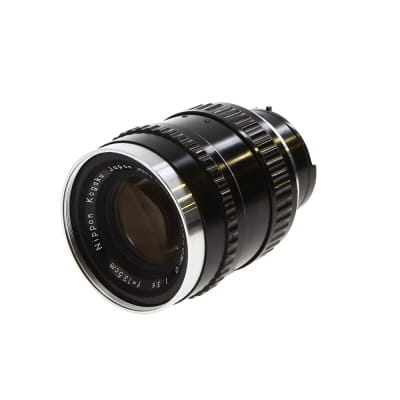
Bronica 7.5cm (75mm) f/2.8 Nikkor-P Nippon Kogaku Lens
Get notified when one lists.
We'll text or email you the moment a Bronica 7.5cm (75mm) f/2.8 Nikkor-P Nippon Kogaku Lens is listed on GearFocus.
Have a Nippon Kogaku 7.5cm f/2.8 sitting in your bag?
You'd be the first listing for this model.
Serious buyers are already watching — list yours in minutes.
Lens Overview — Nippon Kogaku 7.5cm f/2.8
Key Features — Nippon Kogaku 7.5cm f/2.8
75mm f/2.8 Aperture: A maximum aperture of f/2.8 provides a relatively bright image for a medium format optic, useful for lower-light shooting and subject separation.
Nippon Kogaku Optics: Manufactured by Nippon Kogaku in the 1960s, the forerunner to Nikon, representing a period of precision Japanese optical craftsmanship.
Integrated Leaf Shutter: The built-in leaf shutter allows flash synchronization at all shutter speeds, unlike focal-plane shutter systems which are limited to a specific sync speed.
Early Bronica S Mount: Designed for the original Bronica S system bodies, not the later Bronica SQ system — verify mount compatibility before purchase.
Medium Format Coverage: Covers the 120 film format, delivering the larger negative area and characteristic rendering that medium format is known for.
Manual Focus Design: Full manual focus operation gives the photographer direct, tactile control over focusing — a workflow favored by many film photographers.
Lens Specifications — Nippon Kogaku 7.5cm f/2.8
| Spec | Detail |
|---|---|
| Use Cases | Portrait, Studio, Product |
| Lens Mount | Bronica S |
| Focus Type | Manual Focus |
Description — Nippon Kogaku 7.5cm f/2.8
The Bronica 7.5cm (75mm) f/2.8 Nikkor-P is a vintage manual focus medium format lens produced by Nippon Kogaku during the 1960–1969 era. It is designed for the Bronica SQ lens mount and built around 120 film format medium format cameras. A defining mechanical feature of this lens is its leaf shutter, which sits within the lens body and enables flash synchronization across the shutter's full speed range — a practical advantage that distinguishes it from focal-plane shutter designs.
With a maximum aperture of f/2.8, the lens offers a solid balance of light gathering and compact form for a medium format optic. As a fully manual focus design, it appeals to photographers who value deliberate, hands-on shooting technique. Whether you are building a working Bronica SQ film system or adding a piece of 1960s Nippon Kogaku optical history to your collection, this lens represents a well-defined, mount-specific option for the medium format film community.
Pros — Nippon Kogaku 7.5cm f/2.8
- ✓Leaf shutter design allows flash synchronization at all shutter speeds
- ✓Bronica SQ mount ensures compatibility with Bronica SQ system cameras
- ✓Manual focus operation gives the photographer direct, tactile control
Cons — Nippon Kogaku 7.5cm f/2.8
- ✗Manual focus only — no autofocus capability for faster-paced shooting situations
- ✗Bronica SQ mount limits compatibility to a specific and now-vintage camera system
- ✗Flash compatibility is listed as none, despite the leaf shutter's inherent sync capability — verify flash accessory support before purchase
Videos — Nippon Kogaku 7.5cm f/2.8
Zenza Bronica S2 + Nikkor-P 75mmF2.8 — koujiya-camera