Canon 135mm f/3.5 LTM M39 Rangefinder Lens
The Canon 135mm f/3.5 is a lens from Canon. Check GearFocus for current availability, with buyer protection on every purchase.
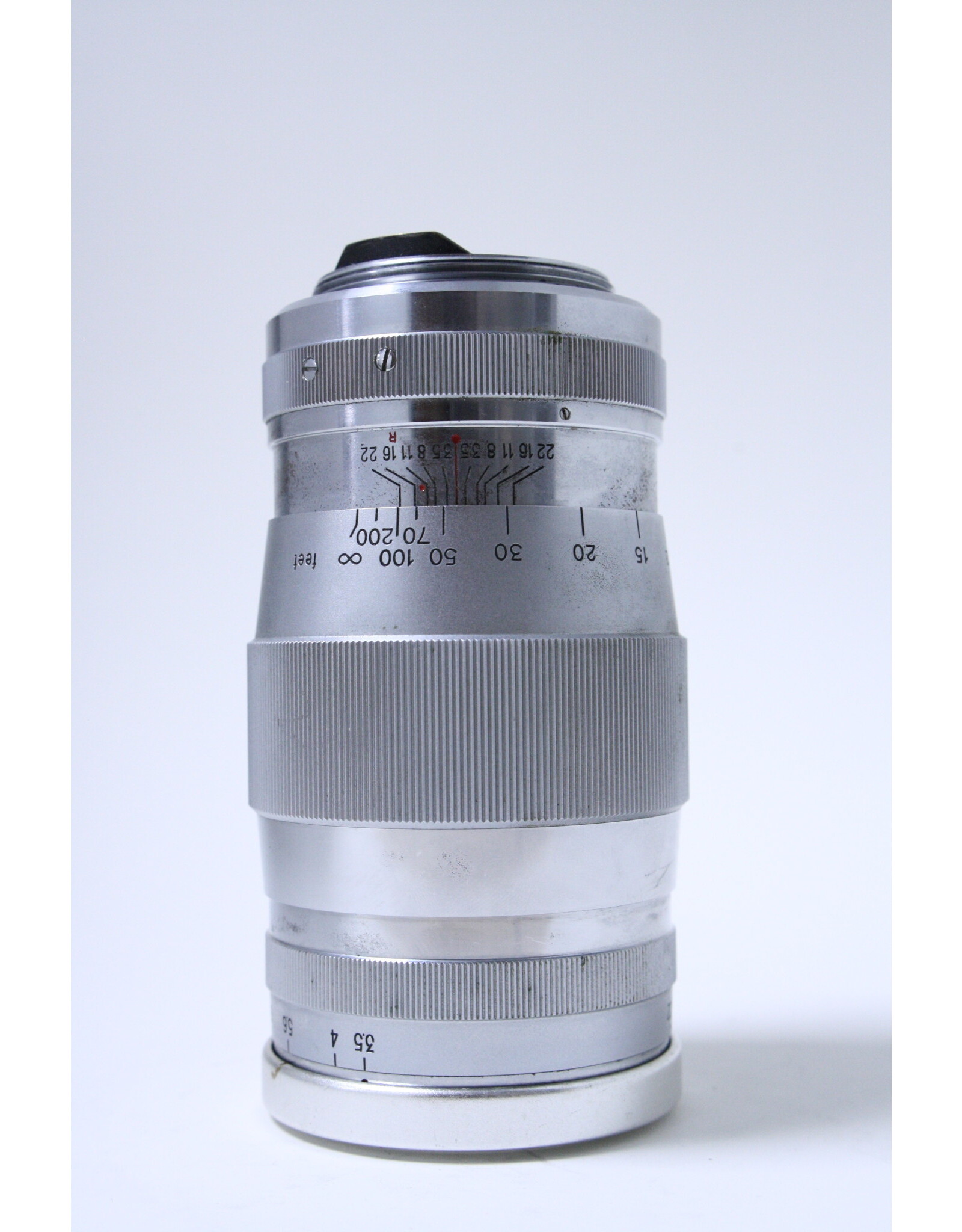
Canon 135mm f/3.5 LTM M39 Rangefinder Lens
Get notified when one lists.
We'll text or email you the moment a Canon 135mm f/3.5 LTM M39 Rangefinder Lens is listed on GearFocus.
Have a Canon 135mm f/3.5 sitting in your bag?
You'd be the first listing for this model.
Serious buyers are already watching — list yours in minutes.
Available Now on GearFocus

Lens Overview — Canon 135mm f/3.5
Key Features — Canon 135mm f/3.5
135mm f/3.5 Telephoto: A moderate telephoto focal length well-suited for portraiture and street photography on rangefinder cameras.
Leica Thread Mount (M39): Screw-thread mount compatible with a wide range of vintage rangefinder cameras and adaptable to many modern systems via third-party adapters.
Rangefinder-Coupled Design: Mechanically coupled for accurate focus confirmation through the rangefinder viewfinder on compatible bodies.
Manual Focus Operation: Fully manual focus control reflects the hands-on shooting workflow typical of 1960s rangefinder photography.
1960s Vintage Provenance: Manufactured during Canon's mid-century rangefinder era, making it a collectible piece of Japanese optical history.
All-Metal Construction: Solid all-metal build provides a durable, substantial feel characteristic of professional lenses from this period.
Lens Specifications — Canon 135mm f/3.5
| Spec | Detail |
|---|---|
| Use Cases | Portrait, Landscape, Street, Creative Effects |
| Lens Mount | Leica Thread Mount (LTM / M39) |
| Focus Type | Manual Focus |
Description — Canon 135mm f/3.5
The Canon 135mm f/3.5 LTM M39 Rangefinder Lens is a manual focus telephoto lens produced during the 1960s, built to the Leica Thread Mount (LTM / M39) standard. Designed for rangefinder-coupled camera systems, this lens reflects the precision manufacturing approach Canon brought to its mid-century optics. The M39 screw mount was one of the defining thread mount standards of the era, ensuring compatibility across a range of rangefinder bodies.
Weighing in at 400–420 grams, the lens balances the solid build quality expected of vintage telephoto designs with a weight that remains workable in the field. All operation is fully manual, requiring the photographer to focus and compose with direct, deliberate intent. For film photographers, collectors, or anyone seeking a piece of Canon's optical history, this 135mm rangefinder lens offers an authentic connection to a significant chapter in photographic heritage.
Pros — Canon 135mm f/3.5
- ✓Leica Thread Mount (LTM / M39) enables broad compatibility with rangefinder-coupled lens systems
- ✓Manufactured in the 1960s, offering genuine vintage provenance for collectors and film enthusiasts
- ✓Manageable weight between 400–420g for a 135mm telephoto lens
Cons — Canon 135mm f/3.5
- ✗Manual focus only — no autofocus capability of any kind
- ✗Rangefinder coupling limits seamless integration to compatible rangefinder bodies
- ✗As a 1960s vintage lens, sample condition and optical quality will vary significantly between individual copies
Videos — Canon 135mm f/3.5
Best Budget Lenses for your Canon P — Brian's Photo Show