Carl Zeiss 50mm f/2.8 Tessar Lens
The Carl Zeiss 50mm f/2.8 is a lens from Carl Zeiss. Used copies start from $130 on GearFocus, with buyer protection on every purchase.
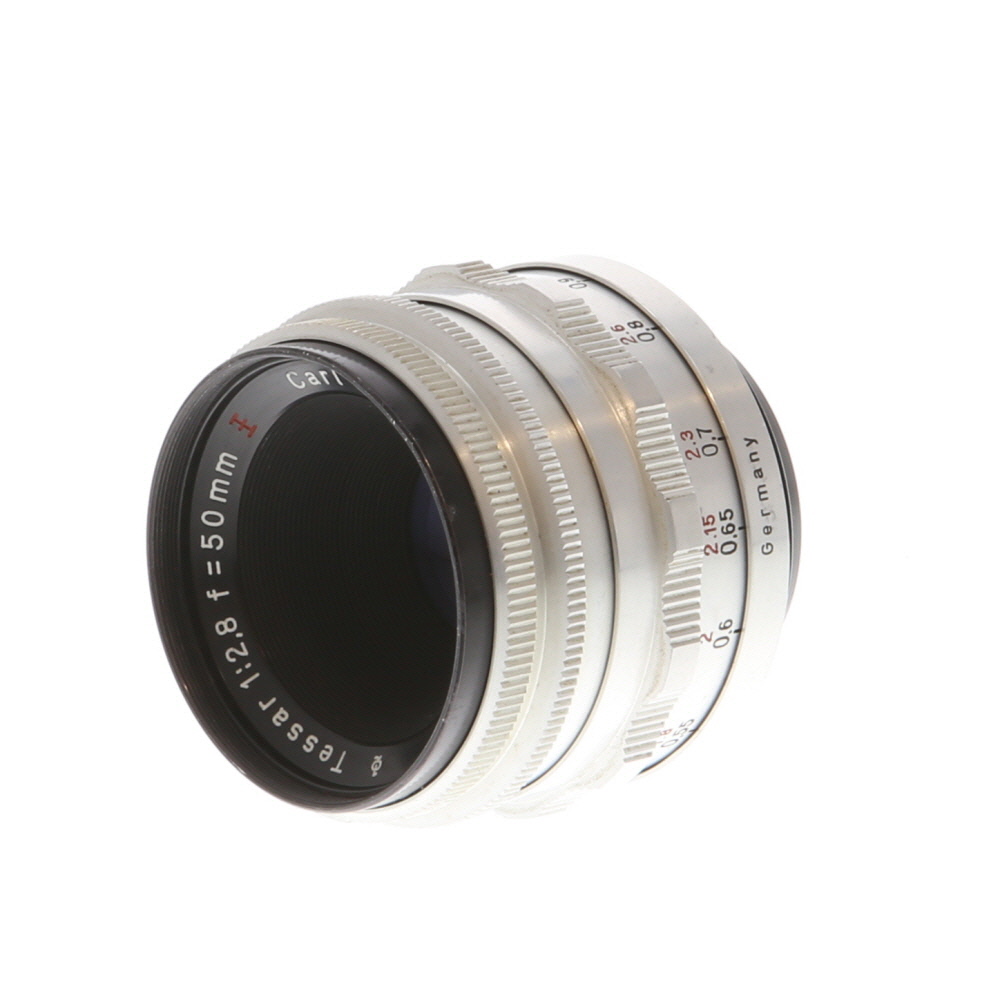
Carl Zeiss 50mm f/2.8 Tessar Lens


Used Carl Zeiss 50mm f/2.8 Listings on GearFocus
![Carl Zeiss Jena Tessar lens 2.8/50 mm Zebra M42 Screw mount [Rare First Version]](https://gearfocus.b-cdn.net/QsBi2KSRqTRTmfw5i04zQoLgzNn2/products/iby2ZcnHAKIOHhiuRTFF/thumb@500_1783454597207.jpeg?width=576&quality=80&format=webp "View Carl Zeiss Jena Tessar lens 2.8/50 mm Zebra M42 Screw mount [Rare First Version]")
Lens Overview — Carl Zeiss 50mm f/2.8
Key Features — Carl Zeiss 50mm f/2.8
Classic Tessar Optical Formula: The four-element, three-group Tessar design is one of Zeiss's most celebrated optical formulas, known for producing sharp, contrasty images with characteristic rendering.
50mm f/2.8 Aperture: A natural field of view on 35mm film makes this a versatile standard lens for everyday and documentary shooting.
M42 Screw Mount: Universal M42 thread mount allows use on a wide range of vintage SLRs and modern mirrorless cameras via widely available adapters.
Vintage Zeiss Construction: Built to the exacting mechanical standards of mid-20th century Zeiss manufacturing, with an all-metal body reflecting genuine period craftsmanship.
Manual Focus Operation: Fully manual focus ring suits deliberate, controlled shooting and is popular with videographers and photographers using mirrorless camera systems.
Full 35mm Frame Coverage: Designed to cover the full 35mm film frame, and produces a standard field of view on full-frame digital sensors when adapted.
Lens Specifications — Carl Zeiss 50mm f/2.8
| Spec | Detail |
|---|---|
| Use Cases | Portrait, Street, Creative Effects |
| Lens Type | Prime |
| Lens Mount | M42 Screw Mount |
| Focus Type | Manual Focus |
Description — Carl Zeiss 50mm f/2.8
The Carl Zeiss 50mm f/2.8 Tessar is a manual focus prime lens produced during the 1960s, built for 35mm SLR cameras and fitted with an M42 screw mount for broad compatibility across vintage and adaptable modern systems. Weighing between 200g and 250g, this compact lens is easy to handle whether mounted on a classic film body or paired with a contemporary mirrorless camera via an M42 adapter. Its 35mm film format coverage means it is engineered for full-frame performance.
As a fully mechanical, manual focus lens, it suits photographers who prefer to engage directly with the shooting process — controlling focus and exposure by hand without electronic assistance. The M42 mount is one of the most widely supported vintage standards, making this lens accessible to a broad range of shooters and collectors. For those drawn to the history and craftsmanship of 1960s optical manufacturing, the Carl Zeiss 50mm f/2.8 Tessar is a compelling and historically significant lens option.
Pros — Carl Zeiss 50mm f/2.8
- ✓M42 screw mount offers wide adaptability to many modern and vintage camera systems
- ✓Manufactured during the 1960s, offering genuine vintage provenance and build quality
- ✓Compact and lightweight at 200–250g, comfortable for handheld use
Cons — Carl Zeiss 50mm f/2.8
- ✗Manual focus only — no autofocus capability for modern workflows
- ✗M42 screw mount requires an adapter for use on contemporary camera systems
- ✗No aperture or focus specifications beyond f/2.8 maximum are provided, limiting detailed pre-purchase evaluation
Videos — Carl Zeiss 50mm f/2.8
Three Fantastic German 50s! Zeiss Planar 50mm f1.8 v. Zeiss Jena Pancolar AND Zeiss Jena Tessar! — Zenography