Mamiya 645E Medium Format Camera
The Mamiya 645E is a Medium Format medium format camera — known for its 6×4.5cm Medium Format and 120 and 220 Film Support. Used copies start from $625.93 on GearFocus, with buyer protection on every purchase.
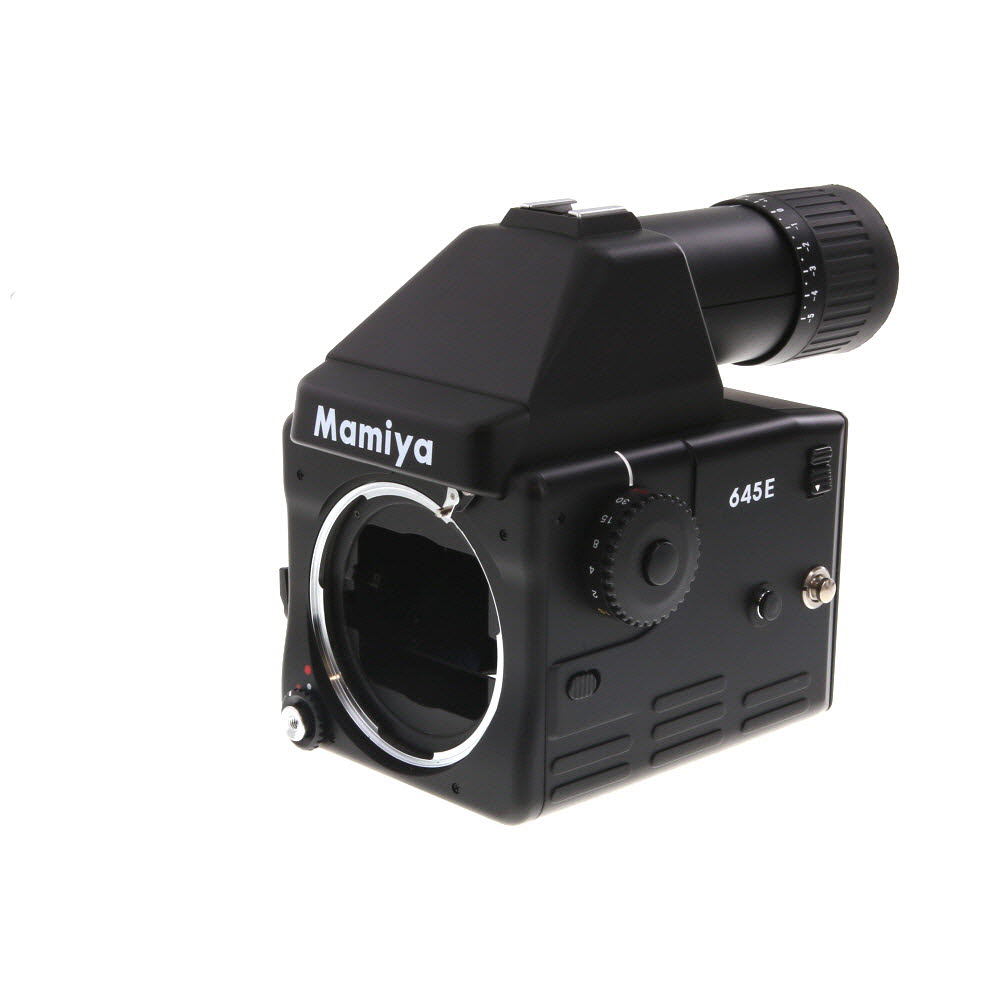
Mamiya 645E Medium Format Camera


Used Mamiya 645E Listings on GearFocus

Overview — Mamiya 645E
Key Features — Mamiya 645E
6×4.5cm Medium Format: Shoots on 120/220 roll film for a negative significantly larger than 35mm, yielding finer grain and greater detail.
120 and 220 Film Support: Accepts both 120 and 220 roll film, allowing shooters to choose between shorter rolls or extended sessions without reloading.
Mamiya 645 Lens Mount: Compatible with the full range of interchangeable Mamiya 645 mount lenses, making this body a capable foundation for a modular system.
Focal Plane Shutter: Built-in focal plane shutter allows lens swapping without shutter blades in every optic, keeping system costs lower.
Manual Focus SLR: Through-the-lens SLR viewing with manual focus gives the shooter direct, precise control over focus in studio and field use.
Hot Shoe and PC Sync: Dual flash connectivity accommodates both on-camera flash units and studio strobes via the PC sync port simultaneously.
Specifications — Mamiya 645E
| Spec | Detail |
|---|---|
| Use Cases | Portrait, Landscape, Studio, Product, Architecture |
| Type | Medium Format |
| Sensor | Medium Format |
| AF System | Manual Focus Only |
| Image Stabilization | None |
| Storage Media | Other |
| Weather Sealing | None |
| Lens Mount | Mamiya 645 |
| Hot Shoe | ISO Standard (Universal) |
Description — Mamiya 645E
The Mamiya 645E is a medium format SLR camera built for 120 and 220 roll film, manufactured during the 1990–1999 period. It uses the Mamiya 645 lens mount, accepting interchangeable Mamiya 645 mount lenses to build out a flexible shooting system. Focusing is manual, and the camera uses a focal plane shutter design.
For flash users, the 645E provides both a hot shoe and a PC sync port, supporting on-camera flash as well as tethered studio lighting setups. The body weighs between 1,200 and 1,300 grams, giving it a solid presence that suits tripod or supported shooting. Whether you're sourcing this body to enter the Mamiya 645 system or expanding an existing kit, the 645E covers the core requirements of medium format film photography with dual film format support and a well-established lens ecosystem.
Pros — Mamiya 645E
- ✓Supports both 120 and 220 film formats, offering flexibility in roll length and shooting sessions
- ✓Mamiya 645 lens mount provides access to a range of interchangeable Mamiya 645 mount lenses
- ✓Dual flash connectivity via hot shoe and PC sync port accommodates both on-camera and studio flash setups
Cons — Mamiya 645E
- ✗Manual focus only — no autofocus capability, which may slow down workflow compared to later medium format systems
- ✗Weight of 1,200–1,300 grams makes this a substantial camera for extended handheld shooting
- ✗Film-based medium format requires darkroom or lab access, adding cost and time versus digital workflows
Videos — Mamiya 645E
Mamiya 645 Review - Shooting with the Camera — Willem Verbeeck