Olympus E-3 Professional DSLR Camera
The Olympus E-3 is a 10MP Type 4/3 DSLR camera — known for its 10MP Four Thirds Sensor and Sensor-Shift IBIS. Check GearFocus for current availability, with buyer protection on every purchase.
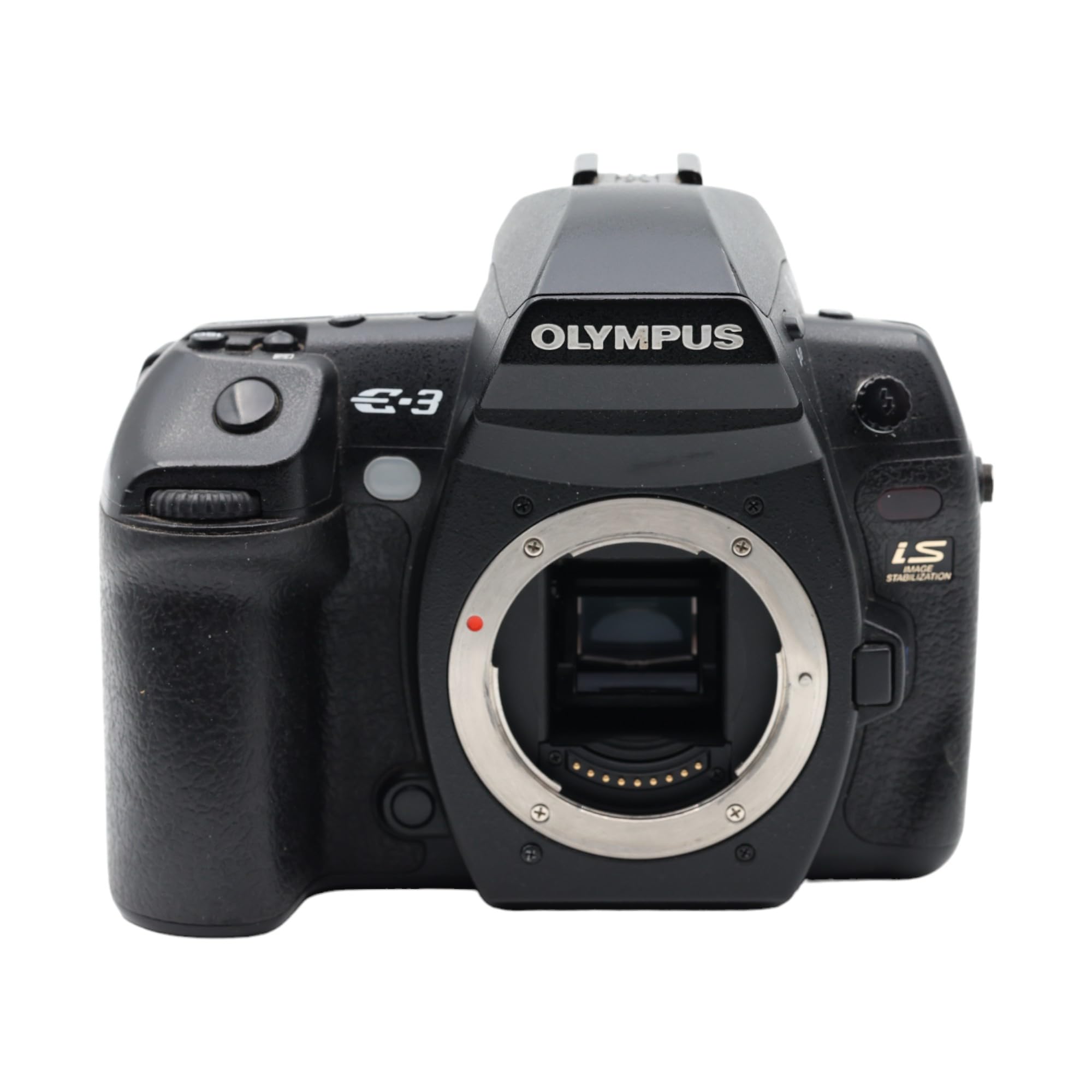
Olympus E-3 Professional DSLR Camera
Get notified when one lists.
We'll text or email you the moment a Olympus E-3 Professional DSLR Camera is listed on GearFocus.
Have a Olympus E-3 sitting in your bag?
You'd be the first listing for this model.
Serious buyers are already watching — list yours in minutes.
Available Now on GearFocus


Olympus OM-4 SLR Film Camera Kit w/ 50mm f1.2 Zuiko Auto-S (49mm) Lens


Olympus OM-D E-M10 Mark IIIs Mirrorless MFT 16MP Digital Camera Body



Olympus Stylus Tough 3000 Digital Camera 12.0MP 3.6x Opt Zoom HD Video 32GB SD
Overview — Olympus E-3
Key Features — Olympus E-3
10MP Four Thirds Sensor: Produces images at up to 3648x2736 pixels using Olympus's Four Thirds format with a 2x crop factor.
Sensor-Shift IBIS: In-body image stabilization works with any compatible Four Thirds lens, regardless of whether the lens itself has stabilization.
11-Point Phase Detection AF: Phase detection autofocus across 11 points provides reliable focus acquisition and tracking for moving subjects.
5 fps Burst Shooting: Continuous shooting at up to 5 frames per second makes the camera capable for action and event photography.
Magnesium Alloy Weather Sealing: The reinforced magnesium alloy body carries a weather-sealed rating for confident use in rain, dust, and harsh outdoor environments.
Fully Articulated LCD: A 2.5-inch tilting and rotating LCD screen allows flexible framing from low, high, or off-angle shooting positions.
Specifications — Olympus E-3
| Spec | Detail |
|---|---|
| Use Cases | Wildlife, Sports |
| Type | DSLR |
| Sensor | Type 4/3 (Four Thirds) |
| Resolution | 10MP |
| Processor | TruePic III |
| ISO Range | 100 – 3200 |
| AF System | Phase Detection |
| AF Points | 11 points |
| Max Photo Resolution | 3648x2736 |
| Burst Rate | 5 fps |
| Image Stabilization | Sensor-Shift (IBIS) |
| Display | 2.5 inches Fully articulated TFT LCD |
Description — Olympus E-3
The Olympus E-3 Professional DSLR is built around a Four Thirds sensor with 10MP resolution and a maximum image output of 3648x2736 pixels, processed by the TruePic III image processor. The ISO range runs from 100 to 3200, covering a broad range of shooting scenarios. The in-body sensor-shift image stabilization (IBIS) is a key feature, applying stabilization at the sensor rather than relying on lens-based systems.
Autofocus is handled by an 11-point phase detection system, while continuous shooting reaches up to 5 fps. The body is made from magnesium alloy with weather sealing, measuring 142 x 116 x 75 mm and weighing 800g. A fully articulated 2.5-inch TFT LCD at 230,000 dots sits alongside an optical pentaprism viewfinder for flexible composition.
Storage options include CompactFlash, the camera connects via USB, and a built-in pop-up flash with wireless control adds lighting flexibility. The Olympus BLM-1 battery delivers approximately 610 shots per charge. Color output supports both sRGB and Adobe RGB.
Pros — Olympus E-3
- ✓In-body sensor-shift image stabilization (IBIS) benefits any attached lens
- ✓Weather-sealed magnesium alloy body rated for demanding outdoor conditions
- ✓11-point phase detection autofocus system for reliable focus acquisition
Cons — Olympus E-3
- ✗No video recording capability — maxResolution and maxFrameRate are null
- ✗10MP resolution may feel limiting compared to modern professional standards
- ✗ISO ceiling of 3200 is modest for low-light work
Videos — Olympus E-3
DPReview TV: Olympus OM-D E-M5 III - worth the wait? — DPReview TV