OM SYSTEM OM-D E-M10 Mark III Mirrorless Camera
The OM System E-M10 Mark III is a 16MP Micro Four Thirds mirrorless camera — with 4K video and in-body stabilization. Check GearFocus for current availability, with buyer protection on every purchase.
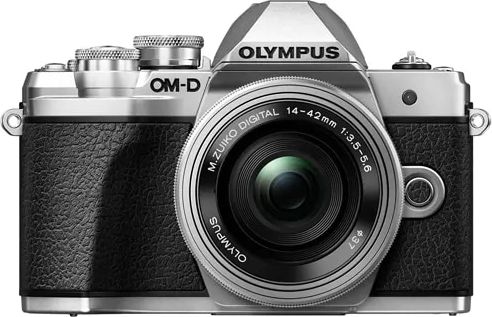
OM SYSTEM OM-D E-M10 Mark III Mirrorless Camera
Get notified when one lists.
We'll text or email you the moment a OM SYSTEM OM-D E-M10 Mark III Mirrorless Camera is listed on GearFocus.
Have a OM System E-M10 Mark III sitting in your bag?
You'd be the first listing for this model.
Serious buyers are already watching — list yours in minutes.
Camera Overview — OM System E-M10 Mark III
Key Features — OM System E-M10 Mark III
16MP MFT Sensor: The 16MP Micro Four Thirds sensor paired with the TruePic VIII Dual Quad-Core processor delivers solid image quality across a wide range of shooting situations.
5-Axis In-Body Stabilization: Five-axis IBIS combined with digital IS compensates for camera shake during handheld shooting, helping produce sharper stills and smoother video.
Micro Four Thirds Mount: Compatible with a broad ecosystem of MFT lenses from OM System, Panasonic, and third-party manufacturers, offering significant flexibility in lens choice.
121-Point Contrast AF: The 121-point contrast detection system includes Face Detection, Eye Detection, and subject tracking for reliable autofocus in everyday shooting scenarios.
4K & High Frame Rate Video: Records 4K at up to 30fps, Full HD at up to 60fps, and 120fps at HD resolution for slow-motion capture across a practical range of video use cases.
2.36M-Dot EVF: The electronic viewfinder offers a 2.36M-dot resolution at 60Hz for clear, responsive framing in bright conditions where the rear screen is harder to read.
Camera Specifications — OM System E-M10 Mark III
| Spec | Detail |
|---|---|
| Use Cases | Travel, Beginner-Friendly |
| Type | Mirrorless |
| Sensor | Micro Four Thirds (MFT) |
| Resolution | 16MP |
| Processor | TruePic VIII Dual Quad-Core |
| ISO Range | 100 – 25600 |
| AF System | Contrast Detection, Face Detection AF, Eye Detection AF |
| AF Points | 121-point |
| Max Photo Resolution | 4608x3456 |
| Burst Rate | 8.6 fps |
| Max Video Resolution | 4K |
| Max Frame Rate | 30fps |
Description — OM System E-M10 Mark III
The OM System OM-D E-M10 Mark III is a Micro Four Thirds mirrorless camera powered by a 16MP sensor and a TruePic VIII Dual Quad-Core image processor. It shoots across an ISO range of 100 to 25600 and offers continuous burst shooting at up to 8.6fps. The built-in 5-Axis In-Body Image Stabilization, supplemented by digital IS, is designed to help maintain image sharpness during handheld use.
Autofocus is handled by a 121-point Contrast Detection system that also includes Face Detection AF, Eye Detection AF, and subject tracking. The 3-inch Tilting Touchscreen LCD with 1,040,000 dots works alongside a 2.36M-dot Electronic Viewfinder running at a 60Hz refresh rate. Video recording reaches 4K at 30/25/24p, Full HD at 60fps, and HD at 120fps, all in 8-bit color.
Connectivity covers Wi-Fi, Bluetooth, USB, and Micro HDMI (Type-D) output. The body is built from metal and plastic, weighs 410g, and measures 121.5 x 83.6 x 49.5 mm. A built-in pop-up flash and hot shoe are also included.
Storage is handled via SD, SDHC, and SDXC cards.
Pros — OM System E-M10 Mark III
- ✓5-Axis In-Body Image Stabilization with additional digital IS helps reduce camera shake during handheld shooting
- ✓121-point Contrast Detection AF system with Face Detection, Eye Detection, and subject tracking for versatile autofocus coverage
- ✓4K video recording at 30/25/24p, Full HD at 60fps, and HD at 120fps offer a range of video frame rate options
Cons — OM System E-M10 Mark III
- ✗No weather sealing, limiting use in wet or dusty environments
- ✗Video is limited to 8-bit color depth, which restricts post-processing flexibility for color grading
- ✗No USB-C port; uses a standard USB connection which may be slower for charging and data transfer
Reviews — OM System E-M10 Mark III
Videos — OM System E-M10 Mark III
Olympus OM-D E-M10 Mark III reviewed, demonstrated and explained — Maarten Heilbron