Panasonic Lumix S PRO 16-35mm f/4 Lens
The Panasonic 16-35mm f/4 is a 16–35mm f/4 lens designed for L Mount Alliance mount cameras. Check GearFocus for current availability, with buyer protection on every purchase.
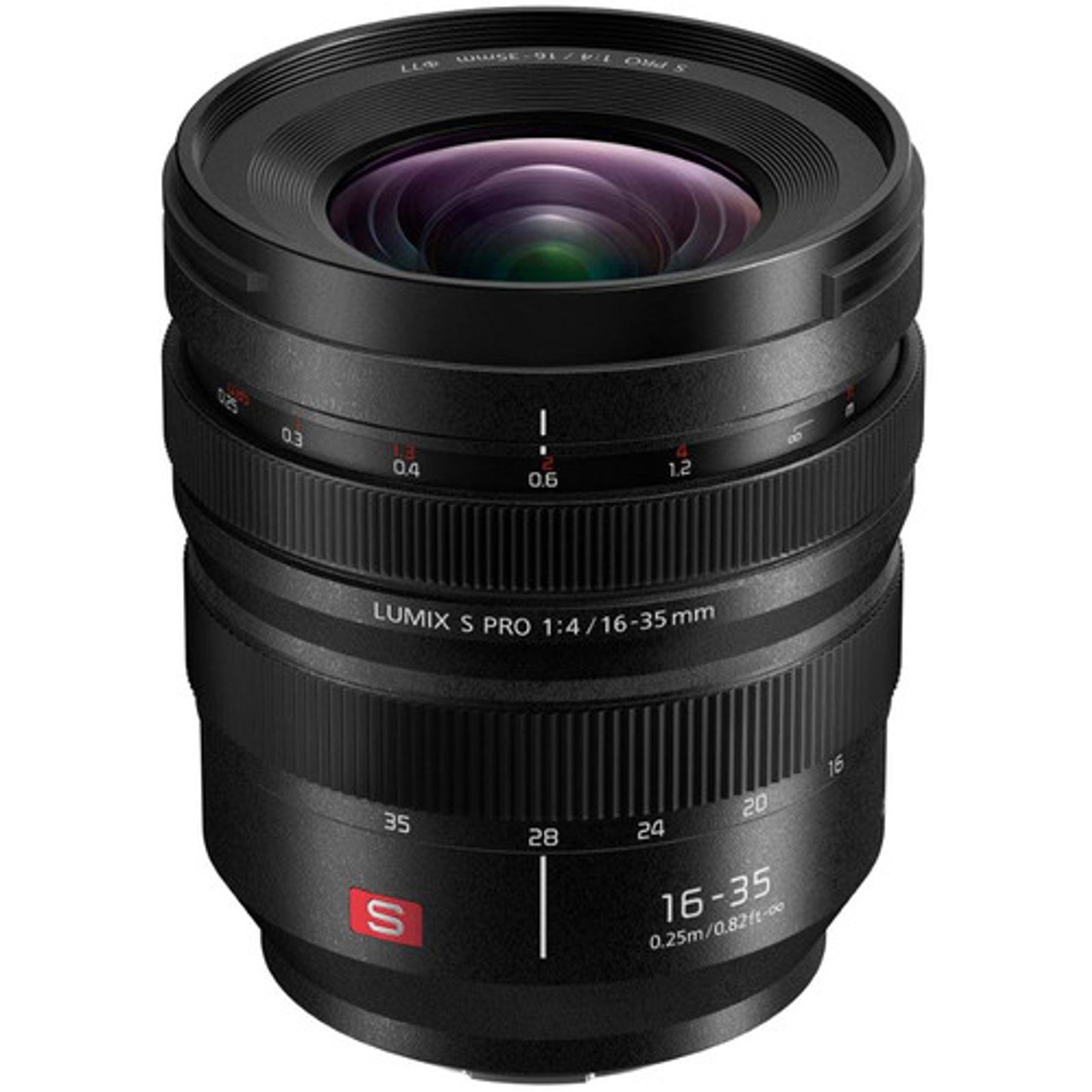
Panasonic Lumix S PRO 16-35mm f/4 Lens
Get notified when one lists.
We'll text or email you the moment a Panasonic Lumix S PRO 16-35mm f/4 Lens is listed on GearFocus.
Have a Panasonic 16-35mm f/4 sitting in your bag?
You'd be the first listing for this model.
Serious buyers are already watching — list yours in minutes.
Available Now on GearFocus


Panasonic 50-200mm f2.8-4 Leica DG ASPH Power O.I.S. MFT Lens H-ES50200

Panasonic Lumix G 12-32mm f3.5-5.6 Vario Mega OIS Lens MFT H-FS12032


Panasonic Lumix G 100-300mm f4-5.6 Vario Mega OIS Lens H-FS100300 MFT

Panasonic Lumix G 45-150mm f4-5.6 Mega OIS Lens MFT Micro 4/3 H-FS45150


Lens Overview — Panasonic 16-35mm f/4
Key Features — Panasonic 16-35mm f/4
16-35mm Wide-Angle Zoom: Covers a versatile range of wide-angle perspectives suited to landscape, architecture, interior, and travel photography.
Constant f/4 Aperture: Maximum aperture remains f/4 throughout the entire zoom range, ensuring consistent exposure and depth of field at any focal length.
L-Mount Compatibility: Designed for the L-Mount standard, making it compatible with full-frame mirrorless cameras from Panasonic, Leica, and Sigma.
Autofocus Support: Built-in autofocus motor enables reliable subject tracking and fast acquisition alongside manual focus operation.
77mm Filter Thread: Standard 77mm front thread accommodates widely available screw-in filters such as polarizers and graduated NDs for outdoor shooting.
Dust & Splash Resistant: PRO series construction includes dust and splash resistance for reliable use in outdoor and demanding shooting environments.
Lens Specifications — Panasonic 16-35mm f/4
| Spec | Detail |
|---|---|
| Use Cases | Landscape, Architecture, Travel, Video / Cinematography |
| Lens Type | Zoom |
| Format | Full Frame |
| Zoom/Prime | Zoom |
| Focal Length | 16–35mm |
| Maximum Aperture | f/4 |
| Camera System | Mirrorless |
| Lens Mount | L Mount Alliance |
| Autofocus | Yes |
| Focus Type | Auto, Manual |
| Image Stabilization | None |
| Filter Thread | 77mm |
Description — Panasonic 16-35mm f/4
The Panasonic Lumix S PRO 16-35mm f/4 is a wide-angle zoom lens designed specifically for full-frame mirrorless cameras using the L-Mount system. Its focal length spans 16mm to 35mm, covering a range that suits a broad variety of wide-angle applications. The constant f/4 maximum aperture is one of its most practical attributes — holding steady across the entire zoom range means no unexpected exposure shifts while recomposing a shot.
Both autofocus and manual focus are supported, giving photographers the ability to switch between modes as the situation demands. The 77mm filter thread is a welcome inclusion for landscape and outdoor shooters who regularly use polarizing or ND filters. The lens weighs in at 500 grams and carries no built-in image stabilization, making it best paired with a camera body that offers in-body stabilization for handheld shooting at slower shutter speeds.
For L-Mount system users in need of a reliable wide-angle zoom with a consistent aperture, this lens covers the fundamentals well.
Pros — Panasonic 16-35mm f/4
- ✓Constant f/4 maximum aperture across the full 16–35mm zoom range ensures consistent exposure throughout
- ✓16mm to 35mm focal length range delivers a versatile spread of wide-angle perspectives
- ✓L-Mount interface provides compatibility with full-frame mirrorless cameras using that system
Cons — Panasonic 16-35mm f/4
- ✗No built-in image stabilization, making the lens entirely dependent on any in-body stabilization available
- ✗Maximum aperture of f/4 is more limiting in low-light situations compared to faster wide-angle alternatives
- ✗Limited to L-Mount, restricting compatibility to cameras using that specific mount standard
Reviews — Panasonic 16-35mm f/4
- Panasonic LUMIX S PRO 16-35mm f/4 review
Digital Camera World · 2020-01-15 - Panasonic S Pro 16-35mm f/4 Review: The S-Line's Long-Awaited Wide Angle
PetaPixel · 2020-01-15 - Panasonic Lumix S Pro 16-35mm F4 Review w / S5 IIx & S1
The Hybrid Shooter - Panasonic Lumix S 16-35mm f4 Review-The Best 16-35mm I've Ever Used
Grey House Visual
Videos — Panasonic 16-35mm f/4
Panasonic Lumix S Pro 16-35mm f/4 In-Depth Review — Richard Wong