Topcon RE Super SLR Film Camera Body
The Topcon Super is a film camera from Topcon — known for its Topcon UV Mount and Focal Plane Shutter. Check GearFocus for current availability, with buyer protection on every purchase.
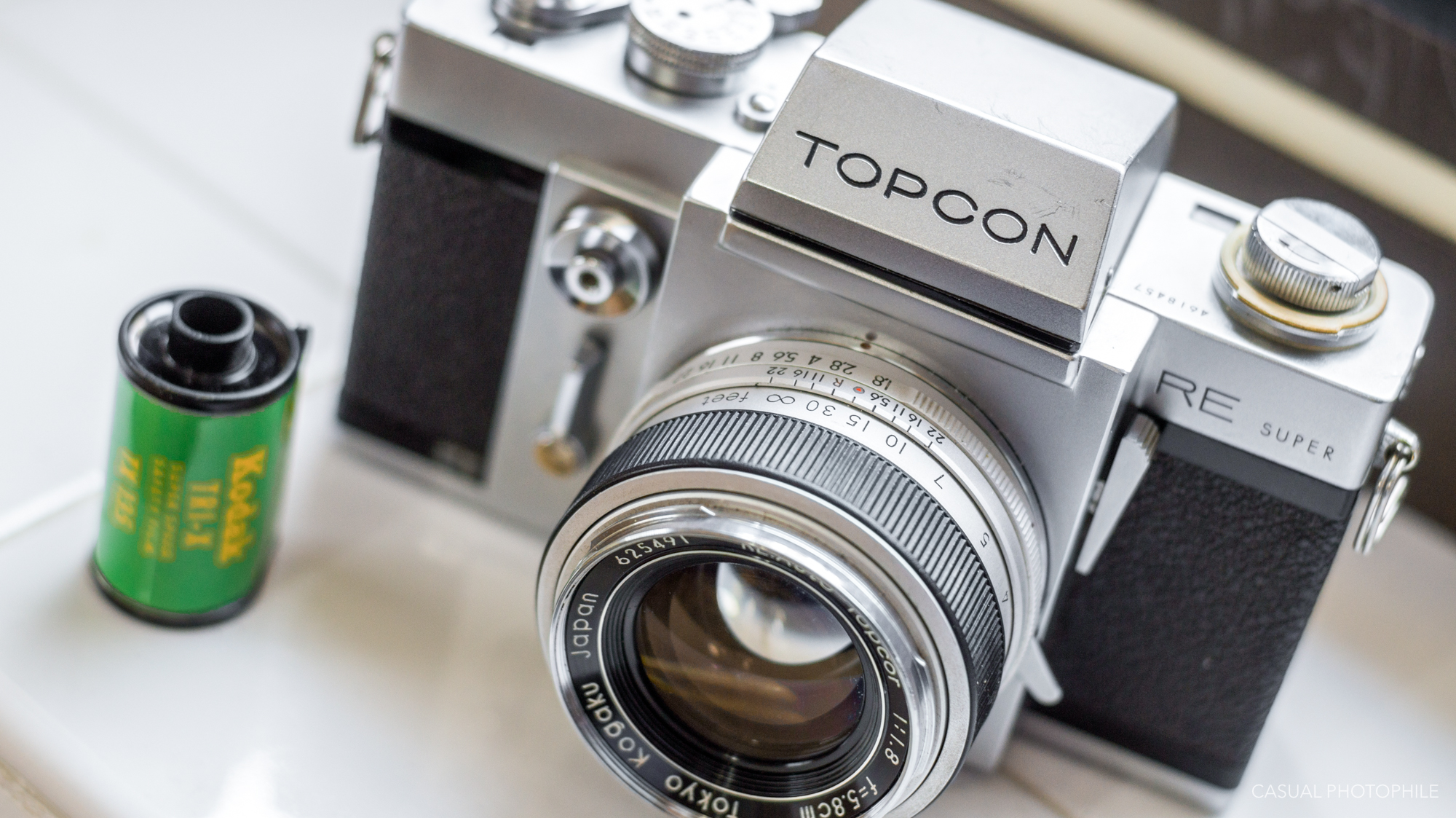
Topcon RE Super SLR Film Camera Body
Get notified when one lists.
We'll text or email you the moment a Topcon RE Super SLR Film Camera Body is listed on GearFocus.
Have a Topcon Super sitting in your bag?
You'd be the first listing for this model.
Serious buyers are already watching — list yours in minutes.
Available Now on GearFocus

Camera Overview — Topcon Super
Key Features — Topcon Super
Topcon UV Mount: Uses Topcon's proprietary UV (Universal Viewer) bayonet mount, compatible with Topcon RE and Super D lenses; Exakta-mount lenses require an adapter.
Focal Plane Shutter: Mechanical focal plane shutter design offers reliable, precise exposure control consistent with professional SLRs of the 1960s.
TTL Through-the-Lens Metering: One of the earliest SLRs to feature TTL metering, allowing exposure readings taken directly through the taking lens for greater accuracy.
Manual Focus Operation: Fully manual focus system encourages deliberate, hands-on shooting suited to the pace of film photography.
Dual Flash Connectivity: Both a cold shoe and PC sync port are provided, supporting a wide range of on-camera and off-camera flash setups.
35mm Film Compatibility: Uses standard 35mm film cartridges, which remain widely available and affordable from numerous manufacturers today.
Camera Specifications — Topcon Super
| Spec | Detail |
|---|---|
| Use Cases | Portrait, Landscape, Street, Creative Effects |
| Lens Mount | Exakta Bayonet |
| Hot Shoe | Cold Shoe (No Contacts) |
Description — Topcon Super
The Topcon RE Super is a 35mm SLR film camera body from the 1960s, built around the Exakta Bayonet lens mount system. It accepts interchangeable Exakta Bayonet lenses, giving shooters access to a range of compatible optics from that period. The camera uses a focal plane shutter and operates with manual focus, delivering a fully mechanical, deliberate shooting experience that resonates with film photography enthusiasts.
Weighing in at 850g, the body has a reassuringly solid presence. For flash photography, the RE Super provides both a cold shoe and a PC sync port, accommodating a range of flash setups without requiring a proprietary hot shoe. Compatible with standard 35mm film, the camera remains practical for everyday film shooting.
This body is well-suited for collectors of vintage SLR equipment or photographers interested in exploring 1960s camera systems firsthand.
Pros — Topcon Super
- ✓Exakta Bayonet mount enables compatibility with a range of interchangeable Exakta Bayonet lenses
- ✓Dual flash connectivity via both cold shoe and PC sync port provides flexible flash options
- ✓Focal plane shutter is a reliable mechanical design consistent with professional SLRs of the era
Cons — Topcon Super
- ✗Manual focus only — no autofocus capability for photographers accustomed to modern systems
- ✗Exakta Bayonet mount is a niche system with a limited and aging pool of compatible lenses
- ✗Cold shoe rather than a hot shoe means no direct electronic flash communication
Videos — Topcon Super
A Beginner Guide for 35mm Film Photography. — Teo Crawford