- Buyer protection on every order
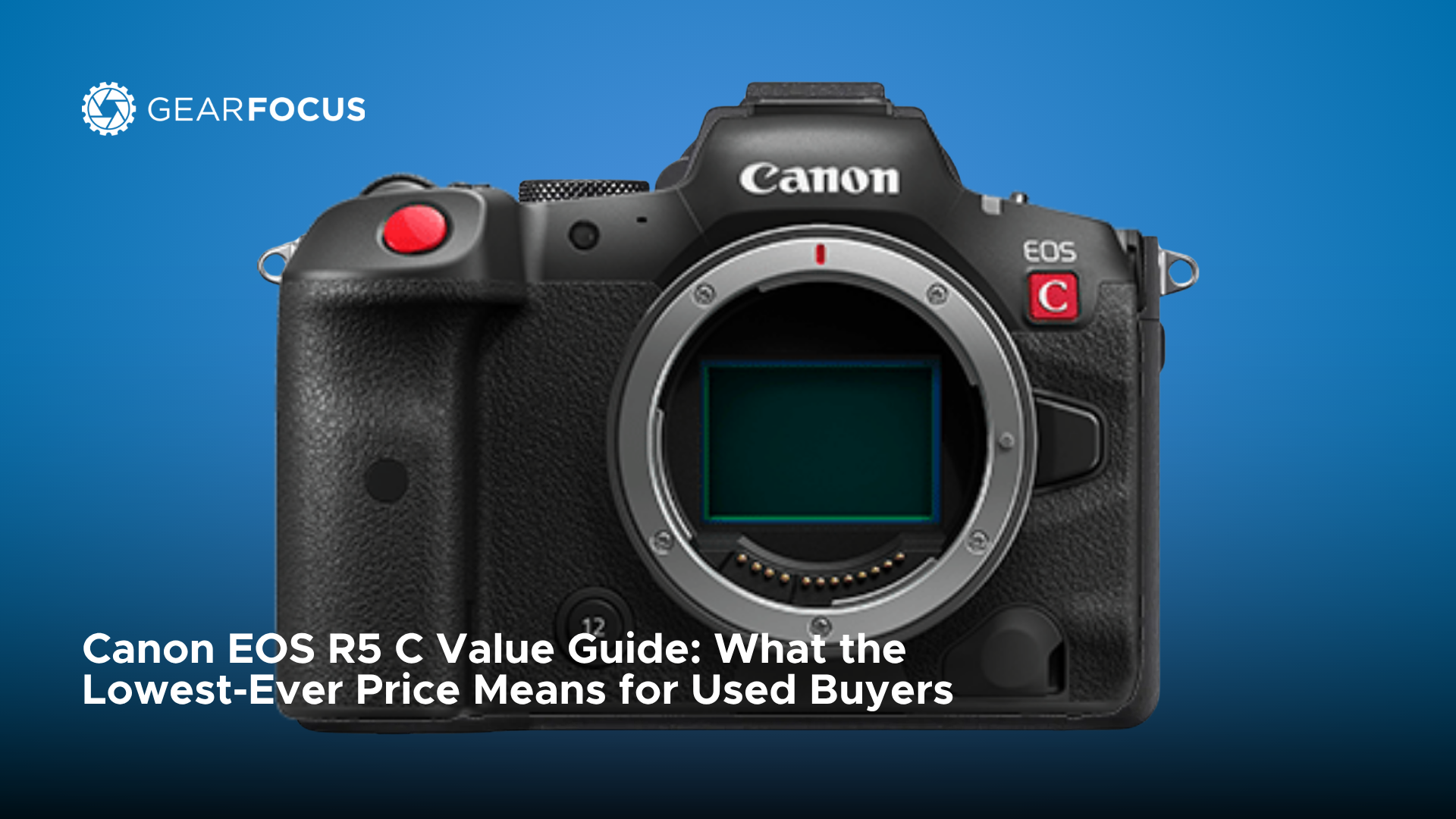
Canon EOS R5 C Value Guide: What the Lowest-Ever Price Means for Used Buyers
Bill Pryor
Sep 23, 2026
KEY TAKEAWAYS
- The short answer: The Canon EOS R5 C used price is under real downward pressure right now, because Digital Camera World reports the new body just hit its lowest-ever retail figure. Used still wins for most hybrid shooters in September 2026, but the margin is thinner than it was, and sellers should move sooner rather than later.
- Why it’s happening: A record-low new price compresses the entire ladder beneath it. Used values are always priced against the cheapest new unit a buyer can find.
- What the camera still is: 45MP full-frame stills, 8K internal video at up to 60fps, 10-bit color, and a codec list running from ProRes RAW to H.264, per GearFocus GearMaster data.
- The catch buyers forget: No in-body optical stabilization. Only Digital/Electronic IS. That single spec decides whether the Canon EOS R5 C used price is a bargain or a trap for your workflow.
- Sellers: Listing now beats listing in December. Gifting season pulls buyers toward cheap new bodies, not $3,000 hybrid cinema cameras.
Digital Camera World just reported that the Canon EOS R5 C dropped to its lowest-ever new price. Not a flash sale. Not a bundle gimmick. An actual record floor on a brand-new cinema-capable hybrid body.
That headline is doing something specific to the Canon EOS R5 C used price, and it’s worth understanding the mechanism before you buy or sell anything. Used gear does not have an independent value. It has a value relative to the cheapest new unit available at that moment. Drop the new floor, and every used listing underneath it gets squeezed upward into irrelevance or downward into a discount.
So here’s what this piece actually does. It walks through how the Canon EOS R5 C used price behaves when new prices crater, what the camera is genuinely worth to you in real shooting terms, and whether the used route still beats the new route as of September 2026.
Fair warning: the answer is yes for most people, but not for everyone, and the exceptions matter more than usual this time.
How a Record-Low New Price Moves the Canon EOS R5 C Used Price
Think of it as a ladder. New retail sits at the top rung. Mint used sits a rung or two below. Excellent, then Good, then Fair, then As-Is, descending from there.
When the top rung drops, the whole ladder has to shift or it stops making sense. Nobody pays $3,200 for a Mint used body when a sealed one with a full warranty is sitting at $3,400. The gap has to open back up, and the only way it opens is for the Canon EOS R5 C used price to come down.
This does not happen instantly. It happens in stages, and the stages are predictable enough that you can position yourself in them.
The Three Stages of a Used-Price Correction
Stage one, roughly the first two to four weeks. Listings hold firm. Sellers who priced before the news either haven’t seen it or don’t believe it. Buyers who have seen it stop clicking Buy. Listings sit. Nothing sells. This is the awkward stage, and right now, in late September 2026, this is roughly where we are.
Stage two, weeks four through ten. The first sellers blink. A few Excellent-condition bodies get relisted lower, they sell fast, and that transaction becomes the new reference point everyone else prices against. The Canon EOS R5 C used price finds its new shelf here.
Stage three, roughly month three onward. Equilibrium. The gap between new and used re-establishes at a normal spread, and the Canon EOS R5 C used price stabilizes until the next event moves it again.
I have watched this cycle play out enough times to have gotten it wrong once in an expensive way. I held a body through stage one convinced the market was overreacting. It wasn’t overreacting. It was just slow. By the time I listed, I was pricing into stage three and eating the full correction.
What the Canon EOS R5 C Actually Is
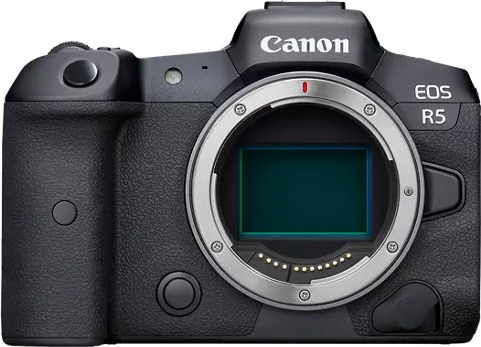
Before the money talk goes further, the hardware deserves a fair hearing, because a lot of the commentary around the Canon EOS R5 C used price treats it as “an R5 with a fan bolted on.” That undersells it.
Per GearFocus GearMaster data, the Canon EOS R5 C is a full-frame mirrorless body built around a 45MP sensor and the DIGIC X processor. Stills top out at 8192×5464 with burst shooting up to 20fps. Video runs to internal 8K at up to 60fps in 10-bit, with Canon Log 3, HDR PQ, and BT.2020 profiles available.
The codec list is where it separates itself. RAW, ProRes RAW, CinemaDNG, H.265, and H.264 all live in one body. That is an unusually broad roster for something this size, and it is the specific reason working hybrid shooters keep tracking the Canon EOS R5 C used price instead of just buying a standard R5.
Autofocus covers 1053 points with Eye, Face, and Animal Detection plus AI-based subject tracking. Storage is CFexpress Type B and SDXC. Connectivity includes HDMI, USB-C, Wi-Fi, Bluetooth, and both a 3.5mm mic input and a 3.5mm headphone out.
The Spec That Decides Everything
No in-body optical image stabilization. Digital and Electronic IS only.
That is the single most important line item for anyone evaluating the Canon EOS R5 C used price, and it is the one most likely to get skimmed past in a listing description. A gimbal-and-tripod shooter will never notice its absence. A run-and-gun documentary shooter handholding a long lens will notice within about four minutes.
Two other limitations from the same GearMaster data deserve mention. Battery is rated at 320 shots, so spare LP-E6NH cells are not optional for a full day. And the body weighs 770g, which is substantial for a mirrorless camera and shows up in your wrists by hour six.
None of that makes it a bad camera. It makes it a specific camera. Match yourself to it honestly, and the Canon EOS R5 C used price starts to look like real value. Ignore the mismatch, and you have bought an expensive paperweight with excellent codecs.
Canon EOS R5 C Used Price vs Canon EOS R5: The Comparison That Actually Matters
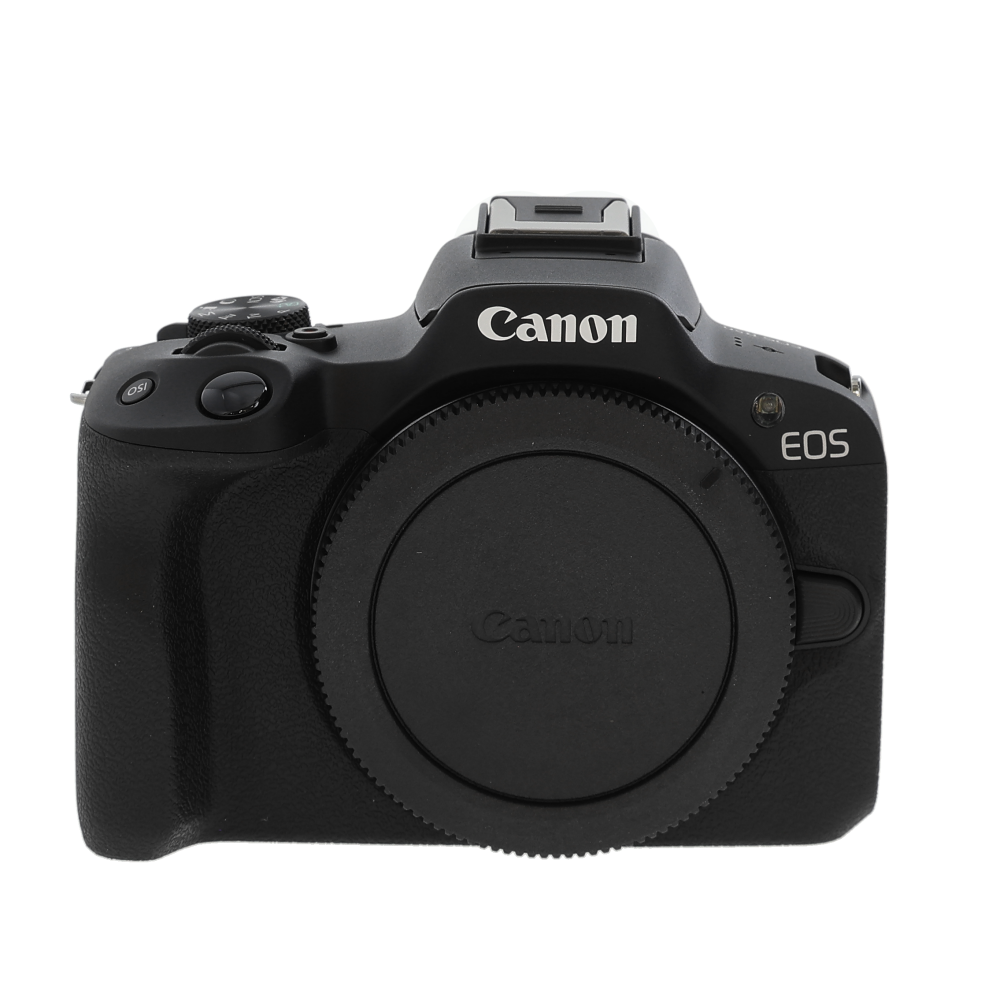
Most shoppers tracking the Canon EOS R5 C used price are also, quietly, tracking the standard R5. That is the real fork in the road, so here are the differences that carry weight.
| Spec | Canon EOS R5 C | Canon EOS R5 |
|---|---|---|
| Sensor | 45MP full-frame | 45MP full-frame |
| Max still resolution | 8192×5464 | 8192×5464 |
| Burst rate | Up to 20fps | Up to 20fps |
| 8K video | Up to 60fps, 10-bit | 8K, 10-bit |
| Recording formats | RAW, ProRes RAW, CinemaDNG, H.265, H.264 | H.265, H.264 |
| Log profiles | Canon Log 3, HDR PQ, BT.2020 | Canon Log, Canon Log 3 |
| Image stabilization | Digital/Electronic IS only | In-body stabilization |
| AF points | 1053 | 1053 |
| Body weight | 770g | 738g |
| Battery rating | 320 shots | 320 shots (LCD) / 220 (EVF) |
Read that table twice. The sensors match. The autofocus systems match. The burst rates match. What separates them is video architecture on one side and stabilization on the other.
Which means the Canon EOS R5 C used price is really a question about one trade: are you buying ProRes RAW and 8K60 badly enough to give up in-body stabilization? For a studio, product, or tripod-based cinematography workflow, that trade is a steal. For a wedding or travel shooter working handheld all day, the standard R5 is the smarter buy, and its own used pricing has been softer for longer.
If you’re weighing that second path, our breakdown of the Canon EOS R5 against the Sony A7R V on the used market covers the 45MP alternatives in more depth.
Is Buying Used Still Better Than Buying New Right Now?
For most buyers, yes. But the reasoning has changed shape, so work through it deliberately rather than defaulting to “used is always cheaper.”
Buy used if: you want the widest possible spread between what you pay and what the camera does, you are comfortable evaluating condition and shutter count, and you plan to keep the body long enough that warranty coverage matters less than acquisition cost. The Canon EOS R5 C used price still sits meaningfully under new, and that spread is the entire argument.
Buy new if: the record-low retail figure lands close enough to Mint used pricing that the warranty tips it, you’re expensing the purchase and want a clean invoice, or you simply do not want to assess a stranger’s camera. When a new price hits an all-time low, the “buy new” case gets stronger than it has any right to be.
The honest framing: the Canon EOS R5 C used price advantage has narrowed, not disappeared. Do the arithmetic on the specific listing in front of you instead of on a general principle.
What Actually Drives a Canon EOS R5 C Used Price Up or Down
Condition grade is the obvious lever, but it isn’t the only one. Four factors move individual listings well away from the market average.
Shutter count and hours. This body gets bought by video people, which means it accumulates recording hours, not just actuations. A low shutter count on a camera that spent two years rolling 8K is a misleading number. Ask about both.
Included accessories. Extra LP-E6NH batteries meaningfully raise a listing’s real value given that 320-shot rating. So do CFexpress Type B cards, which are not cheap on their own. A body bundled with three batteries and a fast card justifies sitting above the typical Canon EOS R5 C used price.
Thermal history. The R5 C exists because of active cooling. A body that has been run hard in hot environments is a different proposition than one used in a climate-controlled studio. Sellers rarely volunteer this. Ask anyway.
The successor effect. Any newer Canon cinema hybrid announcement will push the Canon EOS R5 C used price down again, independent of this retail drop. That’s not a prediction of a specific number, just the shape the market always takes.
Buying Smart on GearFocus Right Now
A few practical notes for anyone shopping the Canon EOS R5 C used price on the marketplace this month.
Every purchase carries the standard 48-hour verification window after delivery. If the camera isn’t as described, you return it at no charge and the seller covers return shipping. That window is exactly when you check thermal behavior, run a long 8K clip, and confirm the shutter count matches the listing.
Some sellers additionally offer a 14-day no-questions-asked return. That’s a per-seller option, not a platform-wide policy, and it excludes Poor and As-Is items. Items graded Poor or As-Is are final sale regardless. Most orders ship within one to three business days.
Seller identities on GearFocus are verified, which matters more on a $3,000 hybrid body than on a $200 lens. Bodies in this class come up regularly, so if the first listing’s condition notes are vague, pass and wait. The Canon EOS R5 C GearMaster page is a reasonable place to keep an eye on what’s active.
If You’re Selling: Timing Beats Optimism
I’ll be blunt with sellers, because this is where the Canon EOS R5 C used price news actually costs people money.
Listing at a pre-drop number and waiting for a buyer who doesn’t read camera news is not a strategy. It’s a delay tactic that ends with you accepting stage-three pricing in November instead of stage-two pricing in October.
Seasonality compounds it. Late September through October is a decent window for pro-grade gear, because buyers are budgeting for Q4 production work and end-of-year equipment purchases. Once the holiday gift cycle takes over in late November, attention shifts hard toward consumer bodies and kit lenses. A $3,000 cinema hybrid is nobody’s stocking stuffer.
On fees, GearFocus takes 8.5% total, so you keep 91.5% of the sale. On a body in this price class, that difference against generalist marketplaces is real money, and it’s part of how you absorb a market correction without eating it entirely. If you’re also moving a standard R5, our piece on selling the Canon EOS R5 now that new prices hit an all-time low covers the same dynamics on that body.
Write the listing like a buyer wrote it. Shutter count, recording hours if you know them, thermal history, included batteries and cards, honest condition notes on the screen and mount. Sellers who do that consistently clear their listings faster, even in a soft market. Listing is straightforward, and the Canon EOS R5 C used price you get is mostly a function of how much doubt you remove.
Who Should Still Buy This Camera
Strip away the pricing noise and the recommendation is fairly clean.
Strong fit: hybrid shooters who need genuine cinema codecs and 45MP stills from one body. Studio, product, and controlled-environment work where a tripod or gimbal is standard. Anyone whose post workflow specifically benefits from ProRes RAW or CinemaDNG.
Weak fit: handheld documentary and event shooters who rely on in-body stabilization. Travel photographers counting grams. Anyone who wants a stills camera first and treats video as occasional, who is better served by a standard R5 at a lower used price.
The Canon EOS R5 C used price only reads as a bargain if you land in the first group. That’s not a knock on the camera. It’s what a specialist tool looks like.
BOTTOM LINE
- Verdict for buyers: Buy, but verify the specific gap. The Canon EOS R5 C used price still undercuts new, though by less than it did before the record-low retail drop.
- Verdict for sellers: List now. Stage-two pricing in October beats stage-three pricing after the holiday cycle takes over.
- Deal-breaker spec: No in-body optical stabilization. Digital/Electronic IS only, per GearFocus GearMaster data.
- The real differentiator: ProRes RAW, CinemaDNG, and 8K up to 60fps in a body that also shoots 45MP stills at 20fps.
- Check before you buy: Shutter count, recording hours, thermal history, and whether spare LP-E6NH batteries are included.
- Protection: 48-hour verification window on every order. Use it to run a long clip and confirm the camera matches the listing.
Where This Leaves You in September 2026
Record-low new pricing is good news dressed as bad news. It drags the whole ladder down, which means the Canon EOS R5 C used price is heading somewhere more attractive than it has been, just not instantly and not evenly across every listing.
If you’re buying, be patient through the next few weeks and compare each specific listing against the current new figure rather than against what used bodies cost in the spring. If you’re selling, stop waiting. Price into the correction and keep 91.5% of what you clear.
And if you’re still deciding between this body and the standard R5, let the stabilization question answer it for you. That one spec has settled more of these arguments than the Canon EOS R5 C used price ever will.
FAQ
Is the Canon EOS R5 C still worth buying used in 2026?
Yes for hybrid shooters who need ProRes RAW, CinemaDNG, and 8K up to 60fps in one body. The Canon EOS R5 C used price still undercuts new retail, though the record-low new price narrowed that gap.
Will the Canon EOS R5 C used price drop further?
Used values typically settle within two to three months of a major new-price drop, then hold until the next market event. A successor announcement would push the Canon EOS R5 C used price lower again.
Does the Canon EOS R5 C have in-body image stabilization?
No. Per GearFocus GearMaster data, it offers Digital and Electronic IS only. Handheld shooters relying on sensor-shift stabilization should consider the standard Canon EOS R5, which includes in-body stabilization at a lower used price.
What should I check before buying a used Canon EOS R5 C?
Shutter count plus total recording hours, since video use accumulates wear differently. Confirm thermal history, count included LP-E6NH batteries, and verify CFexpress Type B cards are present. Use the 48-hour verification window.
Should I sell my Canon EOS R5 C now or wait?
Sell now. The Canon EOS R5 C used price correction is underway, and buyer attention shifts toward consumer bodies once the holiday gift cycle begins in late November.
Own one like this?
Make room for new gear in minutes.
