- Buyer protection on every order
Panasonic LUMIX S9 Buying Guide: New Deal Price vs Used Market Value
Bill Pryor
Oct 20, 2026
KEY TAKEAWAYS
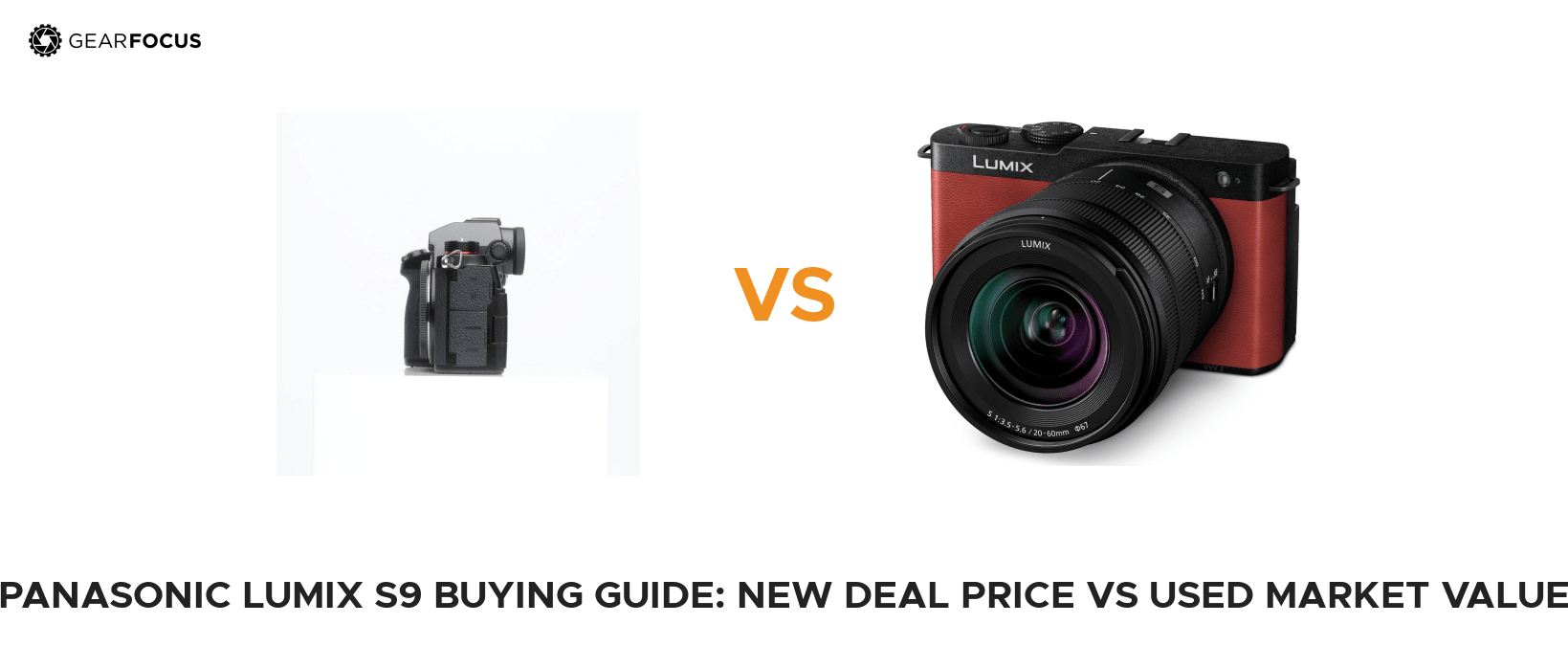
- The short answer: This Panasonic LUMIX S9 buying guide lands in a weird window. L-Rumors reported the black body selling new for $1,097 as a one-day price, called the lowest ever. When new stock gets that cheap, used listings have to undercut it or sit, so used buyers gain leverage and sellers lose it.
- What the camera actually is: A 24.2MP full-frame L-Mount body with the Venus Engine processor, 4K/60p 10-bit video, V-Log and HLG profiles, and 5-axis in-body stabilization, per GearFocus GearMaster data.
- Where it bites: 380 shots per charge, a single SDXC/SDHC slot, and a micro HDMI port instead of full-size. None of those are deal-breakers. All three are budget items you should plan around.
- Buy used when: The listing undercuts current street price by enough to cover a spare battery, a cage, and the cable you will inevitably break.
- Buy new when: A flash sale puts the new price within a couple hundred dollars of used, which is exactly what just happened.
Here’s the thing nobody tells you about writing a Panasonic LUMIX S9 buying guide in October 2026: the price floor keeps moving under your feet. L-Rumors reported the black S9 going for $1,097 as a one-day-only deal, described as the lowest price the camera has ever hit. That number matters to you even if you missed it, and especially if you were planning to sell yours.
Because used prices don’t exist in a vacuum. They exist in relation to what a buyer can get a sealed box for. Drop the sealed-box number hard enough and every used listing on every marketplace has to answer a very uncomfortable question: why would I buy yours?
That’s the whole premise of this Panasonic LUMIX S9 buying guide. Not “is the S9 good” — it’s fine, we’ll get to the specs — but “what is it worth right now, to you specifically, new or used.”

What Is the Panasonic LUMIX S9 Actually Built For?
Start with what the data supports. According to GearFocus GearMaster data, the Panasonic LUMIX S9 is a full-frame mirrorless camera built around a 24.2MP sensor paired with Panasonic’s Venus Engine image processor. Maximum still resolution is 6000×4000 pixels. It shoots up to 10 frames per second in burst mode.
Autofocus runs on a hybrid phase and contrast detection system with 225 focus points, Eye Detection AF, and AI-based subject tracking. That’s a meaningful spec line for anyone who shoots people who move, which is most people who shoot people.
On the video side: 4K at up to 60fps, 10-bit color depth, with V-Log and HLG profiles available. Stabilization is 5-axis in-body with additional digital IS layered on top. The viewfinder is a 5.76M dot EVF running at a 120Hz refresh rate.
GearMaster lists the use cases as portrait, landscape, travel, video and cinematography, and studio. Broad, but honest. This is a generalist body with a video-leaning spec sheet, and that framing drives most of what follows in this Panasonic LUMIX S9 buying guide.
The Three Limitations Every Panasonic LUMIX S9 Buying Guide Has to Name
Any Panasonic LUMIX S9 buying guide that skips the cons is selling you something. GearMaster data flags three, and all three are real.
Battery life: 380 shots per charge. That’s a number you feel on a full day. Not catastrophic, but it means two spares minimum if you’re shooting an event, and it means the camera is effectively more expensive than its sticker price.
Single SDXC/SDHC card slot. No dual-card redundancy. For travel and personal work, nobody cares. For paid work where a corrupted card means a refund and a reputation hit, this is the spec that decides whether the S9 is your A-camera or your B-camera.
Micro HDMI output. Not mini. Micro. That port is fragile, the cables are specific, and if you’re running an external monitor or recorder, you want a cage with a cable clamp before you want anything else. Factor it into the budget.
Here’s where I’ll own something. I bought a body with a single card slot years ago and told myself I’d be careful. I was careful right up until a card threw an error on a shoot and I spent an evening running recovery software with my stomach in my shoes. Everything came back. It didn’t have to.

How Does a Record-Low New Price Affect Used S9 Values?
This is the mechanical core of the Panasonic LUMIX S9 buying guide, so let’s be precise about it.
Used pricing is anchored to new pricing. Always has been. A used body typically needs to sit far enough below the current street price to compensate a buyer for three things: unknown shutter actuations, a shorter or absent warranty, and the general risk premium of buying from a stranger.
When new street price is stable, that gap is predictable and sellers price into it comfortably. When new street price collapses to a record low, even for a single day, the anchor drags. Buyers see that number, screenshot it, and bring it to every negotiation for weeks afterward.
The deeper problem for sellers is that a record-low flash sale doesn’t feel like a one-day event to a buyer. It feels like evidence of where the price is heading. Whether or not that’s true, it changes behavior, and behavior sets the market.
New vs Used: A Practical Decision Table
Rather than hand-wave, here’s the comparison laid out. Specs below come from GearFocus GearMaster data; the deal price comes from the L-Rumors report cited above.
| Factor | New (at flash-sale pricing) | Used |
|---|---|---|
| Reference price point | $1,097 reported one-day low | Must undercut current street price meaningfully |
| Shutter actuations | Zero | Unknown unless verified |
| Manufacturer warranty | Full term | Partial or none |
| Sensor | 24.2MP full-frame | 24.2MP full-frame |
| Video ceiling | 4K/60p, 10-bit, V-Log and HLG | Identical |
| Stabilization | 5-axis IBIS plus digital IS | Identical |
| Accessories included | Box contents only | Often batteries, cages, cards |
| Availability | Flash sales are brief | Listings come up regularly |
Notice the middle rows. The sensor, the processor, the stabilization, the video spec: identical. A used S9 is not a worse camera. It’s the same camera with a history.
If you’re weighing this and the math is close, used S9 bodies come up on GearFocus regularly, and the GearMaster page for the Panasonic LUMIX S9 is worth a look before you commit either direction.
Is Buying a Used Panasonic LUMIX S9 Still Worth It?
Yes, with conditions. This Panasonic LUMIX S9 buying guide puts the threshold like this: a used body has to be cheap enough to pay for the accessories the camera needs anyway.
Work it out. Two spare batteries, because 380 shots per charge is not a day. A fast SDXC card, since there’s only one slot and you want it to be a good one. A cage with HDMI clamping if you’re running external monitoring through that micro port. That’s a real stack of money sitting on top of whatever you pay for the body.
If a used listing saves you enough to cover that stack, buying used is straightforwardly correct. If it saves you a hundred dollars against a sealed box with a full warranty, it isn’t.
The other variable is what’s in the box. Used listings frequently include the batteries, cards, and cages the original owner accumulated. A well-kitted used S9 can be better value than a bare new one even at a smaller discount. Read the listing carefully; that’s half of any Panasonic LUMIX S9 buying guide worth reading.
What Should You Check Before Buying a Used S9?
Shutter count first, always. On a body this young, a high actuation count tells you it came off a working set rather than a hobbyist’s shelf. That isn’t automatically disqualifying, but it should move the price.
We have a full walkthrough on checking the Panasonic LUMIX S9 shutter count before you buy, and the same logic applies across the LUMIX line if you’re cross-shopping a Panasonic LUMIX G9 instead.
Beyond actuations, a short checklist. Inspect the micro HDMI port for stress or wobble, because that’s the first thing to fail on a video-heavy body. Ask whether the seller shot V-Log regularly, which tells you it ran hot for long takes. Confirm the card slot door latches cleanly. Check the EVF for dust.
And ask what lenses it lived on. L-Mount is a strong ecosystem, and a seller offloading the body while keeping the glass usually means they moved up in the same system, not away from it. That’s a good sign about the body.
Who Should Skip the S9 Entirely?
A Panasonic LUMIX S9 buying guide that recommends the camera to everyone isn’t a guide, it’s a brochure.
Skip it if you shoot weddings or any single-chance event as your primary income. The single card slot is a structural risk, and the right answer there is a dual-slot body, full stop.
Skip it if you shoot long days in the field without charging access. 380 shots per charge means you’re managing batteries instead of managing the shoot.
Skip it if your workflow lives on an external recorder and you’ve already killed two micro HDMI ports. You know who you are. Buy the body with the full-size port.
Everyone else — travel, portrait, landscape, studio, hybrid video work with a monitor you treat gently — the S9 earns its place. That’s the honest read.
What This Means If You’re Selling Instead of Buying
Flip the Panasonic LUMIX S9 buying guide around for a second, because some of you are on the other side of this transaction.
A record-low new price is not a reason to panic-dump. It’s a reason to price deliberately and to lead with what the sealed box doesn’t include. Your batteries, your card, your cage, your clean actuation count: those are the argument.
Transparency does more work than discounting here. Post the shutter count in the listing body rather than waiting to be asked. Photograph the HDMI port. Say what the camera shot. Buyers reading this guide are being told to ask those questions, so answering them up front removes the friction that makes listings sit.
On GearFocus, sellers keep 91.5% of the sale price under the 8.5% total fee, which matters more than usual when the market is compressing and every percentage point is coming out of a thinner margin. If you’re consolidating your L-Mount kit, our piece on selling old Panasonic LUMIX L-Mount gear covers the timing side in more depth.
Timing: Does October Change the Math?
It does, and any Panasonic LUMIX S9 buying guide written in late October 2026 has to say so.
We’re a few weeks out from Black Friday and the broader holiday gift window. Historically, that period does two things at once. New-camera flash sales cluster, which pressures used prices downward. And used supply tightens as gift buyers absorb listings, which pushes back up.
Net effect for a buyer: patience is cheap right now. If you don’t need a body this week, watching for another new-price dip costs you nothing.
Net effect for a seller: list before the discount noise peaks, not during it. A clean listing that’s already live when gift shoppers start browsing does better than one posted into the middle of a price war.
This is seasonal pattern, not prophecy. I’m not going to pretend to know what the S9 costs in December, and you should distrust anyone who does.
Cross-Shopping Beyond the S9
Worth a paragraph, because no Panasonic LUMIX S9 buying guide should assume the S9 is the only option on your list.
Within the L-Mount family, the Panasonic LUMIX S3 is the natural sibling to check, and lens sharing across L-Mount Alliance bodies means glass you buy now follows you if you change bodies later. That’s a genuine long-term argument for staying in the mount.
Outside it, the same new-price-pressures-used dynamic is playing out elsewhere. Our used Sony mirrorless buying guide walks through how discounts there have moved resale pricing, and the mechanics transfer cleanly.
The point of a Panasonic LUMIX S9 buying guide isn’t brand loyalty. It’s getting you the right sensor under the right budget.
BOTTOM LINE
- The camera: 24.2MP full-frame L-Mount, Venus Engine, 4K/60p 10-bit with V-Log and HLG, 5-axis IBIS, 225-point hybrid AF, 10fps burst, 5.76M dot 120Hz EVF (GearFocus GearMaster data).
- The compromises: 380 shots per charge, one SDXC/SDHC slot, micro HDMI.
- The market: A reported $1,097 one-day new price, called the lowest ever, drags the used anchor down with it.
- Buy used if: The savings cover two spare batteries, a good card, and a cage — or the listing already includes them.
- Buy new if: A flash sale narrows the gap to a couple hundred dollars. Warranty wins ties.
- Always: Verify shutter count, inspect the micro HDMI port, and ask what the body actually shot.
Final Word on the Panasonic LUMIX S9 Buying Guide
Cameras don’t get worse when their prices fall. The S9 shooting 4K/60p in 10-bit with V-Log today is the same S9 that did it last year, and a record-low new price doesn’t change a single pixel coming off that 24.2MP sensor.
What changes is your leverage. Right now, buyers have it. Sellers have to earn the sale with transparency and included kit instead of coasting on scarcity.
So take the Panasonic LUMIX S9 buying guide advice that actually matters: know the three limitations, check the shutter count, do the accessory math, and let the price gap decide between new and used rather than deciding first and justifying after. Used S9 bodies turn up on GearFocus regularly if you’d rather let someone else absorb the depreciation.
FAQ
Is the Panasonic LUMIX S9 full-frame?
Yes. GearFocus GearMaster data lists the S9 as a full-frame mirrorless camera with a 24.2MP sensor and Venus Engine processor, producing stills at a maximum resolution of 6000×4000 pixels on the L-Mount system.
Does the Panasonic LUMIX S9 have in-body stabilization?
It does. GearMaster data confirms 5-axis in-body image stabilization with additional digital IS available on top, which adds flexibility for handheld video and lower shutter speeds when shooting stills.
How many shots does the S9 battery last?
Rated at 380 shots per charge. Plan on at least two spares for a full shooting day, and budget for them when comparing used listing prices against new flash-sale pricing.
Does the Panasonic LUMIX S9 have dual card slots?
No. Storage is a single SDXC/SDHC slot with no redundancy. For paid single-chance work like weddings, that’s the strongest argument for choosing a different body instead.
Should I buy a used S9 after the record-low new price?
Only if the used listing undercuts current street pricing by enough to cover spare batteries, a card, and a cage. Otherwise a new body with full warranty is the better value.
Own one like this?
Make room for new gear in minutes.
