- Buyer protection on every order
Used Sony Mirrorless Buying Guide: What New Discounts Mean for Resale Prices
Bill Pryor
Sep 21, 2026
KEY TAKEAWAYS
- The short answer: Sony cut prices by up to $900 on cameras, lenses, and beginner bundles as of September 2026, and that new-gear discount pushes upgraders’ older bodies onto the secondhand market. This used sony mirrorless buying guide says wait for the trade-in wave, then buy the previous generation at a softer price.
- Why now matters: Discounts on current models compress the resale value of the generation directly below them. That gap is where used buyers win.
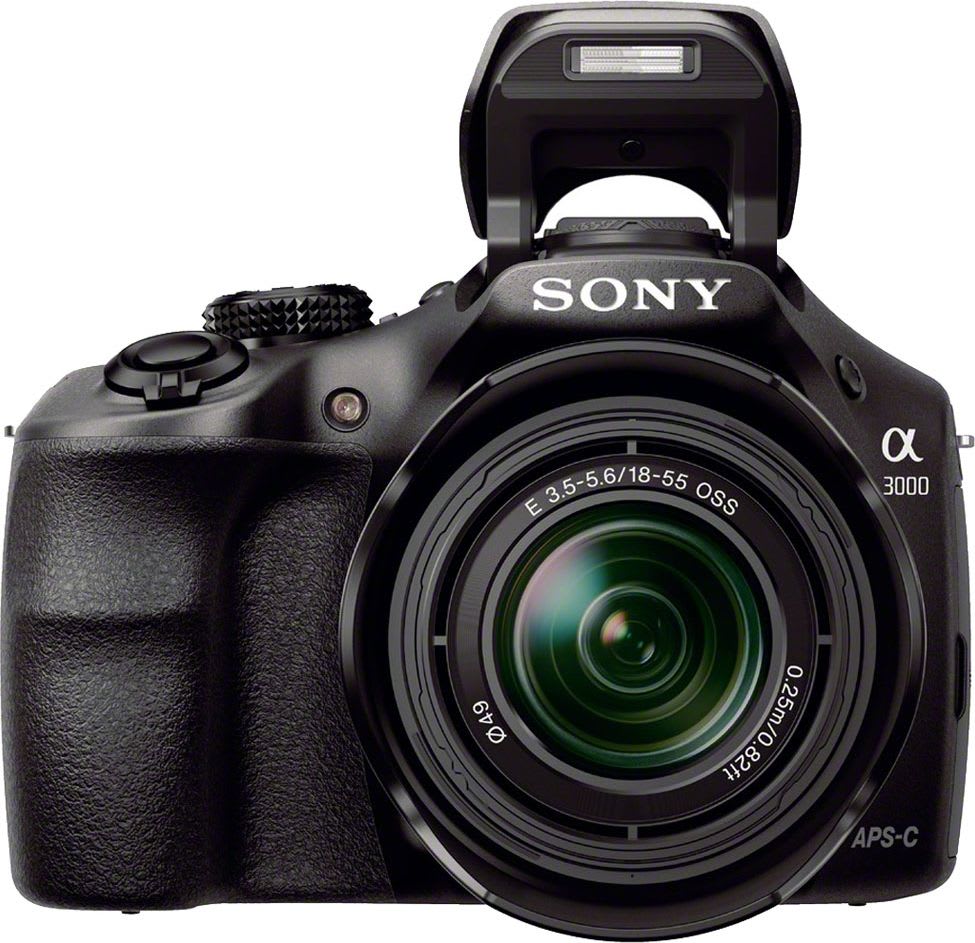
- Where the value sits: Older APS-C E-mount bodies like the Sony a3000 and Sony NEX-5 hold up for learning, travel, and second-body duty, provided you know their real limits.
- Lenses move differently: E-mount glass depreciates slower than bodies, so budget more of your total spend there and less on the sensor behind it.
- Buyer protection: Every GearFocus order carries a 48-hour verification window after delivery, with return shipping covered by the seller if the item isn’t as described.
Sony just knocked up to $900 off a stack of mirrorless cameras, lenses, and beginner bundles, according to Digital Camera World, reported September 11, 2026. That single fact is the entire reason this used sony mirrorless buying guide exists right now. New-gear discounts don’t stay in the new-gear lane. They ripple.
Here’s the mechanism. Somebody who has been eyeing a current Sony body for eight months sees the price drop, finally pulls the trigger, and suddenly has a perfectly good older camera sitting in a drawer. That camera goes up for sale. Multiply it by thousands of people. Used supply climbs, and used prices soften on the gear one or two generations back.
So this used sony mirrorless buying guide is really about timing and target selection. Which bodies get cheaper. Which lenses don’t. And how to tell a genuinely good secondhand Sony from one that’s been quietly abused.
How Do New Sony Discounts Actually Change Used Prices?
Think of the used market as a stack of shelves. The top shelf holds whatever Sony is selling new. Everything below it is priced in relation to that top shelf, not in a vacuum.
Drop the top shelf by a few hundred dollars and the shelves underneath have to move too. Nobody pays $1,400 used for a body when the newer version is $1,600 new with a warranty. The used listing has to come down or it sits. That’s the whole trick this used sony mirrorless buying guide is built around.
The softening isn’t instant. It rolls out over roughly six to twelve weeks as the upgraders receive their new bodies, shoot a couple of jobs to confirm they’re keeping them, and then finally get around to listing the old one. Late September through the holidays is a live window this year.
One wrinkle worth knowing: gifting season pulls the other direction. November and December tighten supply on beginner-friendly bodies because parents and partners are buying them as presents. So the ideal play, per this used sony mirrorless buying guide, is to buy in October or wait until January.
The Mistake I Made Reading Discount News
I’ll confess something. The first time I watched a manufacturer discount cycle play out, I assumed the used market would crater immediately and I sat on my hands for two months waiting for a bottom that never came in the shape I expected.
What actually happened was subtler. Prices on the previous generation drifted down maybe eight percent, then stabilized, while the generation below that barely moved because those buyers were never comparing against new prices anyway. I’d been watching the wrong shelf.
Second confession, and this one cost me more. Early on I bought a used body without asking a single question about how it had been stored. It looked clean. It was clean, cosmetically. The rear screen had a dead column of pixels I only noticed in bright sun three weeks later, well past the return window. Ask about storage. Ask about the screen specifically. Every used sony mirrorless buying guide should hammer that point and most don’t.
What Should You Look For in a Used Sony Mirrorless Buying Guide?
A buying guide that only lists specs isn’t a buying guide, it’s a catalog. The useful version tells you what the spec actually costs you in the field. So that’s the frame for the rest of this used sony mirrorless buying guide: specs translated into consequences.
Take autofocus. On paper, “25 contrast-detection focus points” is just a number. In practice it means the camera hunts a bit in dim rooms and will not follow a kid running toward you. That’s fine for landscapes. It’s a problem for a birthday party.
Or viewfinders. An electronic viewfinder at 201,600 dots sounds unimpressive next to a modern panel, and it is. But having a viewfinder at all, on a budget body, means you can shoot in bright daylight without guessing at a washed-out rear screen. That’s a real quality-of-life difference this used sony mirrorless buying guide weighs heavily.
Connectivity is the sleeper issue. No Wi-Fi and no Bluetooth means every image transfer goes through a card reader. If your workflow depends on pushing a JPEG to your phone at an event, an older body will frustrate you daily.
Two Older Sony Bodies Worth Understanding
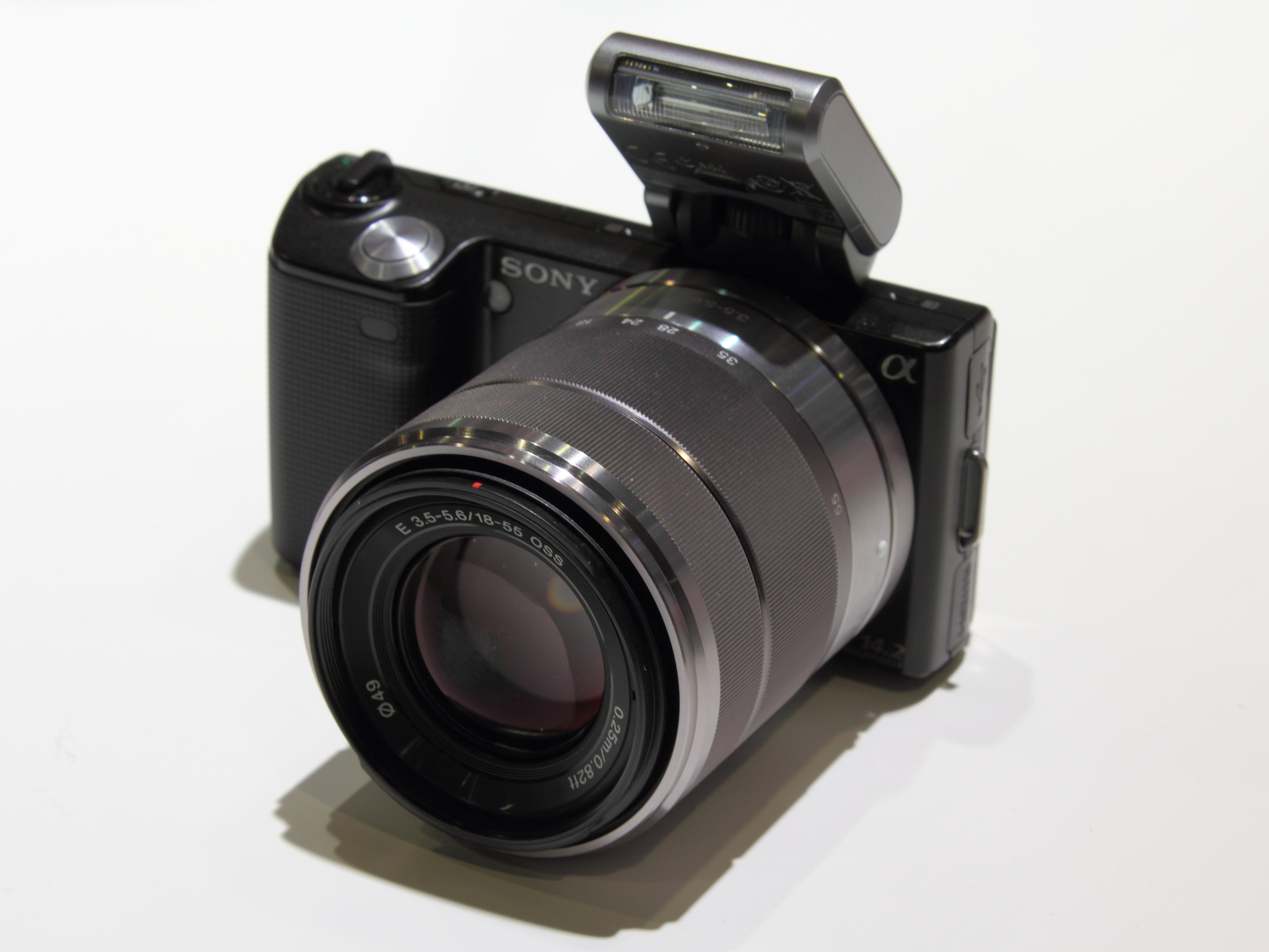
Let’s get concrete with verified numbers. The two bodies below sit at the entry end of Sony’s E-mount history, and they illustrate the tradeoffs that any used sony mirrorless buying guide has to make legible.
The Sony a3000 is built around a 20.1MP APS-C sensor with a BIONZ processor, per GearFocus GearMaster data. ISO runs 100 to 16000. Autofocus is contrast detection with 25 points, no subject or eye tracking. Video tops out at 1080p/60fps with 24, 30, and 60fps options and Standard, Vivid, and Neutral color profiles. It has optical image stabilization, a built-in flash, a Sony Multi Interface Shoe, and an electronic viewfinder at 201,600 dots with a 60Hz refresh.
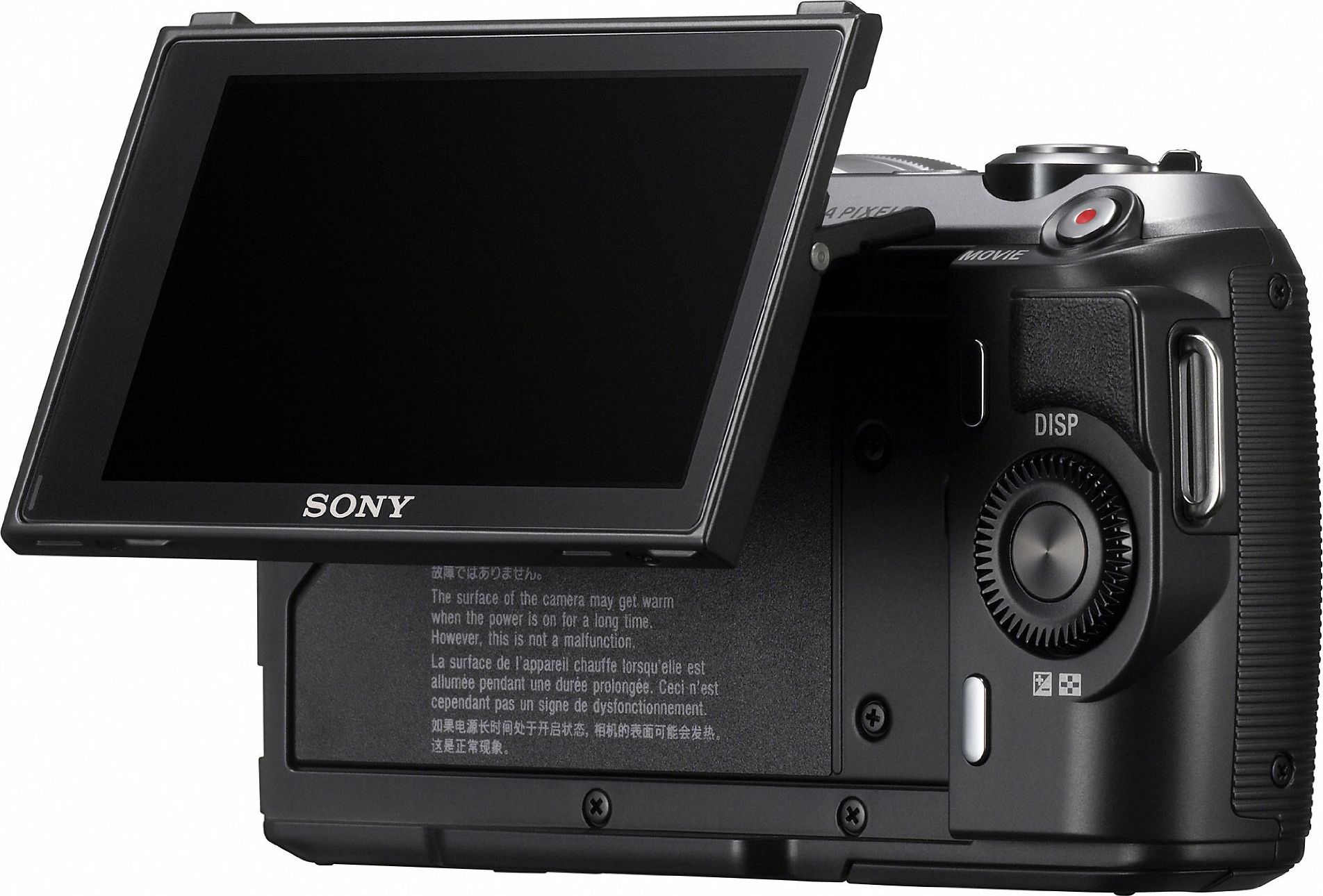
The Sony NEX-5 takes a different shape. 14MP APS-C sensor, also Bionz, max still resolution 4592×3056. ISO 200 to 12800. Burst mode reaches 7 frames per second, which is genuinely quick for a camera of its vintage. Video is 1080p at 60i and 30p in 8-bit with a Standard profile. No built-in viewfinder at all, and no in-body or digital stabilization.
| Spec | Sony a3000 | Sony NEX-5 |
|---|---|---|
| Sensor | 20.1MP APS-C | 14MP APS-C |
| Processor | BIONZ | Bionz |
| ISO range | 100 to 16000 | 200 to 12800 |
| Autofocus | Contrast detection, 25 points | Contrast detection |
| Burst | Not specified | Up to 7 fps |
| Video | 1080p/60fps (24/30/60) | 1080p 60i/30p, 8-bit |
| Stabilization | Optical | None in body |
| Viewfinder | Electronic, 201,600 dots, 60Hz | None |
| Rear LCD | 3-inch, 230,400 dots | Rear LCD only for framing |
| Wireless | None | None |
| Storage | SD/SDHC/SDXC, Memory Stick PRO Duo | SD/SDHC/SDXC, Memory Stick |
Reading that table the way this used sony mirrorless buying guide would read it: the a3000 is the better all-rounder for someone who wants a viewfinder and more resolution. The NEX-5 is the pick if compact size and that 7fps burst matter more than framing through an eyepiece.
Neither one is a sports camera. Contrast detection without tracking is contrast detection without tracking, no matter how you frame it. Both Sony bodies come up regularly on GearFocus, and if either is on your list, browsing current listings costs you nothing.
Why Lenses Break the Pattern in This Used Sony Mirrorless Buying Guide
Bodies depreciate on a sensor-generation clock. Lenses mostly don’t, because glass doesn’t get obsolete the way processors do. A sharp 35mm from 2016 is still a sharp 35mm in 2026.
That asymmetry is the single most actionable idea in this used sony mirrorless buying guide. When new-gear discounts soften body prices, they barely touch lens prices. So the savvy move is to let the discount wave buy you a cheaper body, then put the difference into better glass that will outlive three camera upgrades.
Practical split: if you have $900 total, something like $350 on a body and $550 on lenses ages better than the reverse. Our roundup of the best used Sony E-mount lenses under $1,000 is the natural next stop if that math appeals.
One caveat. Stabilization lives in the lens on bodies without it. The NEX-5 has no in-body stabilization at all, so a stabilized lens isn’t a nice-to-have there, it’s the difference between usable handheld footage and a shaky mess.
Condition Checks That Actually Matter
Cosmetic grading tells you how a camera looks. It tells you very little about how it works. So here’s the inspection list this used sony mirrorless buying guide runs on any E-mount body.
- Shutter actuations: Ask for the number. A seller who doesn’t know is a seller who hasn’t looked, which is its own signal.
- Sensor condition: Request a photo of a bright, evenly lit surface at f/16. Dust shows up immediately. Scratches show up worse.
- Rear LCD: Dead pixels and delamination. On the a3000 the screen is 230,400 dots, so it’s already low resolution; defects hurt more when there’s less to start with.
- Mount wear: Loose or wobbly lens mounts cause focus inconsistency that people blame on the lens for months.
- Battery health: Original batteries from a decade ago hold a fraction of their rated charge. Budget for a spare.
- Card slot: Both bodies here accept SD and Memory Stick formats. Bent pins are cheap to spot and expensive to fix.
None of this requires expertise. It requires asking. Sellers who answer specifically are sellers worth buying from, and that’s as true on GearFocus as anywhere else.
Buyer Protection and Fees, Plainly Stated
Buying used only feels risky when you don’t know what happens if something’s wrong. So, the mechanics.
Every GearFocus purchase includes a 48-hour verification window after delivery. If the item isn’t as described, you return it at no charge and the seller covers return shipping. Some sellers additionally offer a 14-day no-questions-asked return, but that’s seller-specific, not platform-wide, and it excludes Poor and As-Is items plus drones. Items graded Poor or As-Is are final sale.
Changed your mind on something described accurately? That’s a voluntary return: 3.5% processing plus 5% restocking, with restocking rising to 15% on items over $1,500. Most orders ship within 1 to 3 business days.
On the selling side, GearFocus takes an 8.5% total fee, so sellers keep 91.5% of the sale price. That’s meaningfully more than generalist marketplaces leave you with, which matters if the discount news is about to turn you into a seller. Our guide to selling a used Sony A7-series camera walks through the listing side.
Timing Your Purchase Through the Rest of 2026
Let’s put dates on this. Today is September 21, 2026, and the discount news broke on September 11. That means the upgrade wave is just beginning.
October is the sweet spot this used sony mirrorless buying guide points to. Upgraders have their new bodies, the old ones are hitting listings, and holiday gift demand hasn’t yet absorbed the supply. Late November through December, expect beginner-friendly bodies and bundles to tighten as gift buyers compete with you.
January flips again. Post-holiday listings from people who received new gear, plus resolution buyers unloading whatever they’ve outgrown. If you can wait, January is historically a patient buyer’s month.
The general rule, applicable in any year: used prices typically soften after a successor launches or a new-model discount lands, and tighten during gifting season. That’s seasonal logic, not a prediction about any specific price.
Matching a Body to What You Actually Shoot
Specs only mean something once they’re attached to a use case. Here’s how this used sony mirrorless buying guide sorts the two bodies above by what you’re doing with them.
Travel and street. The NEX-5’s compact body is the draw, and GearFocus GearMaster data lists travel as its primary use case. Pair it with a stabilized lens since the body offers none. The a3000 works here too and adds a viewfinder, which matters more than people expect in harsh midday light.
Portraits and landscapes. The a3000’s 20.1MP sensor and ISO ceiling of 16000 give it the edge, and GearMaster lists portrait and landscape among its use cases alongside beginner-friendly and travel. Contrast-detection AF is perfectly adequate for a subject who’s standing still.
Learning the craft. Either body teaches you exposure and composition without penalty. The a3000’s built-in flash and Multi Interface Shoe also give you a path into off-camera lighting later.
Anything fast-moving. Look higher up the range. Neither of these has eye or subject tracking, and no amount of technique fully compensates. If that’s your work, our best used mirrorless under $1,000 roundup and the Sony RX10 IV used buying guide are better starting points.
Common Traps This Used Sony Mirrorless Buying Guide Would Flag
A few patterns worth naming, because they repeat endlessly.
Buying resolution you don’t need. 20.1MP versus 14MP sounds decisive. For web delivery and prints up to roughly 11×14, both are plenty. Spend the difference on glass.
Ignoring the accessory tax. A body at a great price plus a spare battery, a card, and a stabilized lens is a different number entirely. Budget the whole kit, not the headline.
Assuming stabilization exists. It’s a per-body spec. The a3000 lists optical stabilization; the NEX-5 has none in body. Confirm before you buy a lens.
Chasing the discount instead of the need. This one’s the real killer. A cheaper price on a camera that can’t do your work isn’t savings.
BOTTOM LINE
- The trigger: Sony discounts of up to $900, reported September 11, 2026, will push older E-mount bodies onto the used market over the following weeks.
- Best window: October 2026, before gift-season demand tightens beginner-body supply. January is the backup window.
- Body picks: Sony a3000 for the viewfinder, 20.1MP sensor, and ISO 16000 ceiling. Sony NEX-5 for compact size and 7fps burst.
- Budget split: Weight your spend toward lenses. Glass holds value; sensors don’t.
- Must-ask questions: Shutter count, sensor photo at f/16, rear LCD condition, battery health, mount play.
- Protection: 48-hour verification on every GearFocus order, seller-paid return shipping if the item isn’t as described.
Where This Leaves You
Discount news is usually written for people buying new. Read it sideways and it’s a map for people buying used, which is the whole premise of this used sony mirrorless buying guide. Someone else’s upgrade is your opportunity, and right now a lot of people are upgrading.
Pick the body that matches what you actually shoot, not the one with the biggest markdown. Ask boring questions about condition. Put your money in glass. Then go shoot enough frames that the camera stops being interesting and starts being invisible, which is the point.
Sony E-mount bodies and lenses come up on GearFocus constantly, and if you’ve got older gear to move now that the new prices landed, buyers are actively searching. Either side of that trade, a used sony mirrorless buying guide is only useful once you act on it.
FAQ
Do new Sony discounts make used Sony cameras cheaper?
Usually yes, indirectly. Discounted new prices compress what the previous generation can command used, and upgraders listing old bodies add supply. Expect the effect over roughly six to twelve weeks, not overnight.
Is the Sony a3000 still worth buying used in 2026?
For learning, travel, portraits, and landscapes, yes. Its 20.1MP APS-C sensor, ISO 100 to 16000 range, and built-in electronic viewfinder still cover those jobs. Skip it for fast action; there’s no subject tracking.
What’s the biggest weakness of the Sony NEX-5?
No viewfinder of any kind and no in-body or digital stabilization. You frame entirely on the rear LCD and need a stabilized lens for steady handheld shots, especially for video.
Should I spend more on the body or the lens?
The lens. Glass holds value and stays optically relevant across camera generations, while bodies depreciate on a sensor-generation cycle. A modest body with strong lenses outperforms the reverse at the same total budget.
What return protection do I get buying used on GearFocus?
Every order includes a 48-hour verification window after delivery, with the seller covering return shipping if the item isn’t as described. Select sellers add 14-day returns; Poor and As-Is items are final sale.
Own one like this?
Make room for new gear in minutes.
