- Buyer protection on every order
Profoto L600C vs Used RGB LED Lights: Is the Discount Worth It?
Bill Pryor
Nov 11, 2026
KEY TAKEAWAYS
- The short answer: The Profoto L600C RGB Mono-LED is discounted $748.75 to $2,246.25, making it the first full-color Profoto fixture most owner-operators can actually justify. Buy it new if you need RGBWWW color at Profoto build quality. Buy used RGB fixtures instead if your work is 90% white light.
- What the discount actually buys: Per Newsshooter, the Profoto L600C RGB is Profoto’s first Mono-LED with an RGBWWW chipset, and $2,246.25 is a new-unit price with full warranty behind it.
- The used counterargument: RGB LED fixtures depreciate harder than strobes. The same budget spread across used panels can buy you three or four lights instead of one.
- The hybrid play most shooters miss: One Profoto L600C RGB as a key, used RGB panels as accents and background wash. Color consistency where it shows, savings where it doesn’t.
- Don’t ignore the ecosystem: Profoto mount modifiers you already own carry over. GearFocus GearMaster data lists the Profoto 100610 Zoom Reflector at a 35° to 105° beam angle on a Profoto mount, and that kind of shaping gear is why switching brands costs more than the light.
Here’s the decision sitting in front of a lot of people this month. The Profoto L600C RGB Mono-LED just dropped $748.75, landing at $2,246.25. That’s real money off a Profoto fixture, and Profoto doesn’t discount much. Meanwhile, the used market is thick with RGB LED lights from the last three or four product cycles, most of them perfectly functional, most of them priced like the brands behind them have already moved on.
So which one goes in the cart?
I’ll be upfront: I’ve burned money on the wrong side of this exact call before. Bought cheap color-capable lights because the spec sheet said RGB and the price said yes. Spent the next year fighting green casts in post that I couldn’t fully fix. That’s the kind of lesson that sticks.
Let’s break down what you’re actually choosing between.
What Is the Profoto L600C RGB and Why Did It Get Cheaper?
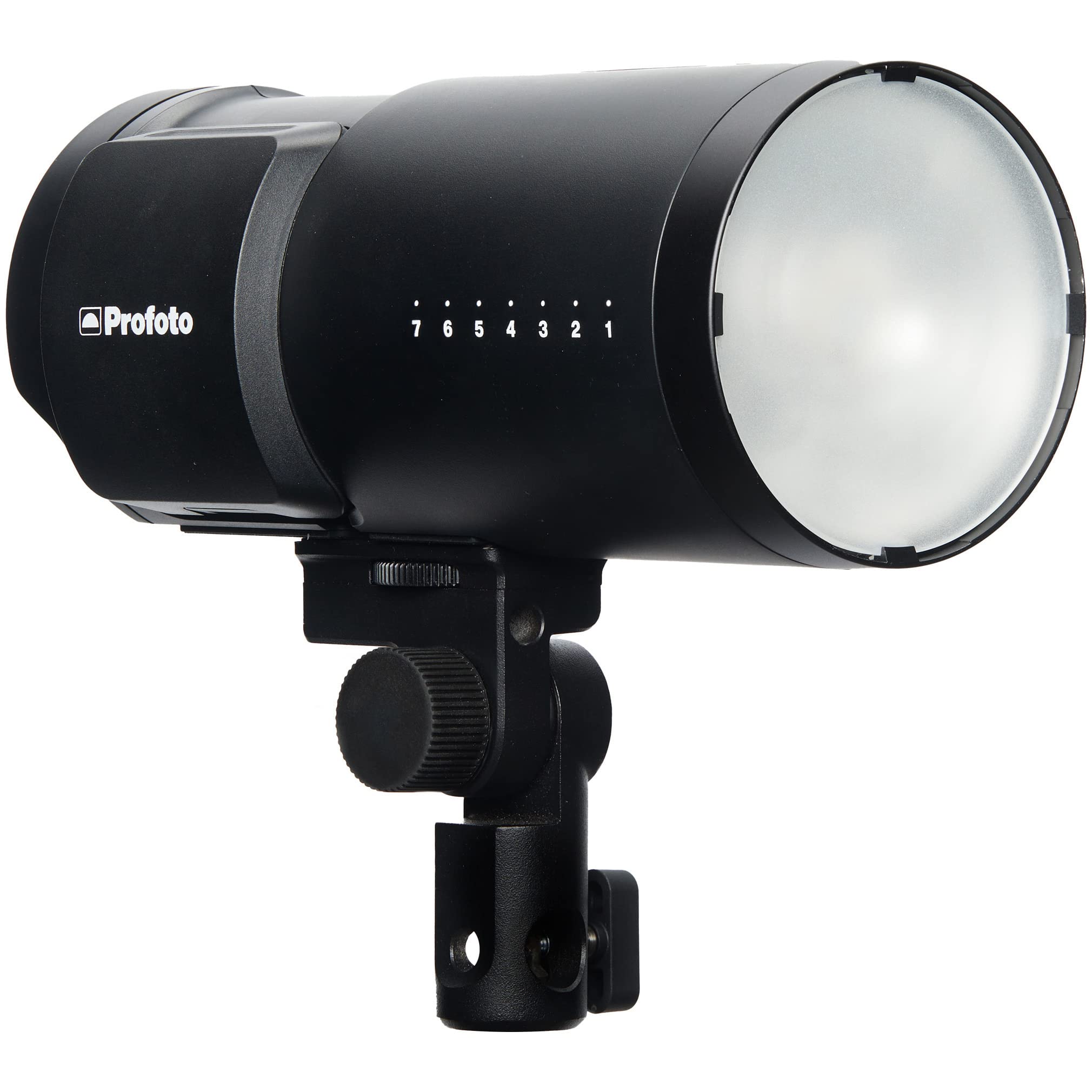
The Profoto L600C RGB is a Mono-LED fixture, meaning a single large-format LED source rather than an array of smaller emitters. The headline is the chipset: RGBWWW. Red, green, blue, plus two white channels of differing color temperature. That dual-white arrangement is what separates serious color fixtures from the ones that render skin tones like a convenience store cooler.
According to Newsshooter’s coverage of the price drop, this is Profoto’s first full-color Mono-LED, and the $748.75 reduction brings it to $2,246.25.
Why the discount? Nobody outside Profoto knows for certain. First-generation products in a new category often see price movement as the company figures out where the market sits. The practical read for buyers in November 2026 is simpler: the Profoto L600C RGB costs meaningfully less than it did, and the fixture itself hasn’t changed.
Profoto L600C RGB vs Used RGB LED Fixtures: The Comparison Table
| Factor | Profoto L600C RGB (new, discounted) | Used RGB LED fixtures |
|---|---|---|
| Price | $2,246.25 (down $748.75) | Varies by model and condition; typically well below new |
| Color engine | RGBWWW chipset, Profoto’s first full-color Mono-LED | Mixed. RGBW, RGBWW, and older RGB-only designs all circulate |
| Warranty | Full manufacturer warranty | None from manufacturer; GearFocus 48-hour verification applies |
| Quantity per budget | One fixture | Potentially three or four, depending on model |
| Modifier ecosystem | Profoto mount, shared with existing Profoto shaping gear | Brand-dependent; often requires new modifiers |
| Firmware support | Current generation, active updates | Depends on age; discontinued units may be frozen |
That table is the whole argument in miniature. One side gives you depth. The other gives you breadth. Which matters more depends entirely on what you point a camera at for a living.
If you’re deciding today, GearFocus has used lighting coming through regularly on the marketplace side, and the Profoto L600C RGB sits on the new side of the aisle. Worth comparing both before you commit.
The Case for Buying the Profoto L600C RGB New
Color accuracy is not a feature you can bolt on later. It’s baked into the chipset, the driver, and the calibration. When a fixture renders a 3200K tungsten match that’s actually 3200K, your day gets shorter. When it doesn’t, you discover the problem in the grade, which is the worst possible place to discover anything.
The RGBWWW arrangement in the Profoto L600C RGB is the technical reason to care. Two white channels let the fixture hit white points using actual white emitters rather than mixing colored LEDs to approximate white. Mixed-to-white is where cheap RGB fixtures fall apart, especially on skin.
Profoto’s reputation on color is earned across their strobe line too. GearFocus GearMaster data on the Profoto B10 Off-Camera Flash lists a CRI 90+ rating and an adjustable color temperature range of 2700K to 6500K from a 250Ws battery-powered head weighing 1.5kg. That’s the house standard the Profoto L600C RGB inherits.
Then there’s the mount. Modifiers are the hidden cost of any lighting purchase. The Profoto 100610 Zoom Reflector runs a 35° to 105° beam angle on a Profoto mount, per GearFocus GearMaster data. If your shelf already holds Profoto shaping gear, the Profoto L600C RGB slots into a system you’ve already paid for.
The Case for Used RGB LED Fixtures Instead
Now the other side, and it’s stronger than Profoto loyalists like to admit.
LED lighting depreciates fast. Faster than camera bodies, faster than lenses, considerably faster than strobes. The reason is simple: LED manufacturers push new models constantly, each one promising brighter output and better color science, which drags the previous generation’s resale down even when the previous generation still works perfectly.
That depreciation is your opportunity. A used RGB fixture from two cycles back often delivers 85% of the performance for 40% of the price. For a lot of real-world work, 85% is plenty.
Consider what three used fixtures buy you that one Profoto L600C RGB cannot: a key, a fill, and a background wash, running simultaneously. Lighting is additive. Three mediocre lights in the right positions beat one excellent light in the wrong one, every single time. I’ve watched that play out on set more often than I’d like to admit.
Our guide on what used lighting is actually worth covers how this depreciation curve works from the seller’s side, which is useful intelligence when you’re the one buying.
How Do You Decide Between the Profoto L600C RGB and a Used Setup?
Start with an honest audit of your last ten jobs. Not the jobs you want. The jobs you got.
Count how many required genuine color work. Not “we threw a blue gel on the background.” Actual hue-critical work where the client or the grade depended on precise color output. If that number is two or fewer out of ten, the Profoto L600C RGB is solving a problem you mostly don’t have.
If that number is five or more, the calculus flips hard. Color-critical work punishes imprecision, and the Profoto L600C RGB with its RGBWWW chipset is built specifically to not punish you.
Second question: do you already own Profoto modifiers? If yes, add the replacement cost of equivalent modifiers for a competing brand to the used option’s price. That number is frequently several hundred dollars and it quietly closes the gap.
Third question: how much does downtime cost you? A used fixture that fails mid-shoot costs you the shoot. A new Profoto L600C RGB under warranty costs you a support ticket.
The Hybrid Approach Most Shooters Overlook
Here’s the configuration I’d actually recommend to most people reading this, and it’s neither of the two options as stated.
Buy one Profoto L600C RGB as your key light. Buy used RGB fixtures for everything else.
The logic: your key light does the heavy lifting on skin tones and sets the color reference for the entire frame. That’s where precision pays. Background washes, hair lights, and accent pops are far more forgiving, because nobody grades a magenta background wash for accuracy.
This approach also hedges your risk. If a used accent light dies, you swap it for another used one. If your key dies, you have a warranty. The Profoto L600C RGB covers the position where failure hurts most.
Budget-wise, the discounted Profoto L600C RGB at $2,246.25 plus two or three used panels builds a genuinely capable four-point setup. That’s a working kit, not a compromise.
What to Check Before Buying Any Used RGB Fixture
If you’re going the used route, in whole or in part, there’s a checklist. I learned most of it by skipping it.
- Run every color channel: Pure red, pure green, pure blue, then full white. Dead or dim channels show up immediately and are not economically repairable.
- Check the fan: LED fixtures live or die on thermal management. A rattling or silent fan on a unit that should be cooling is a red flag.
- Ask about firmware: Discontinued fixtures sometimes sit on buggy firmware forever because the manufacturer stopped shipping updates.
- Confirm the power supply is included: Proprietary bricks are expensive to replace and surprisingly easy for a seller to forget.
- Look at the diffusion panel: Scratched or yellowed diffusion changes output color. It’s cheap to replace on some models and impossible on others.
On GearFocus, the standard policy gives you a 48-hour verification window after delivery. If the fixture isn’t as described, you return it at no charge and the seller covers return shipping. Sellers are identity-verified. Use that window and actually run the channels.
Where the Profoto L600C RGB Fits in a Broader Profoto Kit
Worth thinking about system-wide rather than fixture-by-fixture. The Profoto L600C RGB is continuous output. Profoto’s strobes are not. These solve different problems and they coexist well.
A hybrid shooter running stills and motion in the same session benefits enormously from a continuous fixture that color-matches their strobes. GearFocus GearMaster data puts the Profoto B10 at a 70° beam angle with Bluetooth and 2.4GHz radio control built in, on the Profoto mount. The Profoto L600C RGB shares that mount, which means the same modifier inventory serves both.
That shared-ecosystem logic is the quiet argument for the Profoto L600C RGB that spec sheets never capture. Our used Profoto lighting guide walks through how the systems interlock if you’re building out from scratch.
On the other hand, if you own zero Profoto gear and have no plans to, that ecosystem argument evaporates and the used route looks considerably better.
Timing: Is November 2026 a Good Moment to Buy?
Two seasonal forces are pulling in opposite directions right now.
Pushing prices up: holiday gift season. Used lighting gets scooped up by people buying for creators in their lives, and supply tightens through late November and December. If you want a specific used fixture, waiting carries real risk of it being gone.
Pushing prices down: the Black Friday window, which is days away as of this writing. The Profoto L600C RGB discount landing in early November is itself part of this pattern. New-gear deals compress through late November, and used sellers often reprice to stay competitive.
My read: if you need the Profoto L600C RGB specifically, the current $2,246.25 price is already a substantial cut and waiting for something better is a gamble. If you’re shopping used, early December after the gift rush can be quieter.
BOTTOM LINE
- Buy the Profoto L600C RGB new if: color-critical work is a regular part of your business, you own Profoto modifiers, or downtime costs you more than the price difference.
- Buy used RGB fixtures if: you need light quantity over light precision, you’re building a first setup, or your color work is occasional and forgiving.
- Buy both if you can: one Profoto L600C RGB as key, used panels for fill and background. Best value configuration for most working shooters.
- The discount is real: $748.75 off, landing at $2,246.25, per Newsshooter’s November 2026 report.
- Inspect before the clock runs out: GearFocus gives you 48 hours after delivery to verify any used fixture against its description.
There’s no universally correct answer here, which is annoying but true. The Profoto L600C RGB at $2,246.25 is a legitimately good price on a first-generation full-color Mono-LED from a company that takes color seriously. Used RGB fixtures are a legitimately good value for anyone who needs more lights rather than better ones. The mistake isn’t picking either one. The mistake is picking without auditing what your actual work demands. Do that audit first, then decide whether the Profoto L600C RGB earns its place in your kit. Used lighting comes through GearFocus regularly if you decide the other direction suits you better.
FAQ
How much does the Profoto L600C RGB cost right now?
The Profoto L600C RGB Mono-LED is discounted $748.75 to $2,246.25, according to Newsshooter’s November 2026 report. That figure reflects a current promotional price on a new unit with full manufacturer warranty included.
What makes the Profoto L600C RGB different from other RGB LED lights?
It uses an RGBWWW chipset, adding two separate white channels alongside red, green, and blue. That lets the fixture produce white light from actual white emitters rather than mixing colored LEDs, which improves skin tone rendering significantly.
Is a used RGB LED fixture worth the risk over buying new?
It depends on how color-critical your work is. Used fixtures deliver strong value for background and accent lighting. For key lights on paying portrait or commercial work, new units with warranty coverage reduce meaningful risk.
Do Profoto modifiers fit the Profoto L600C RGB?
The Profoto L600C RGB uses the Profoto mount, the same system shared across their lighting line. Existing Profoto shaping gear, including zoom reflectors and softboxes, transfers over without adapters or additional purchases.
What should I check when buying used RGB lighting on GearFocus?
Test every color channel at full output, verify fan operation, confirm the power supply is included, and inspect diffusion panels for yellowing. GearFocus provides a 48-hour verification window after delivery for exactly this purpose.
Own one like this?
Make room for new gear in minutes.
