- Buyer protection on every order
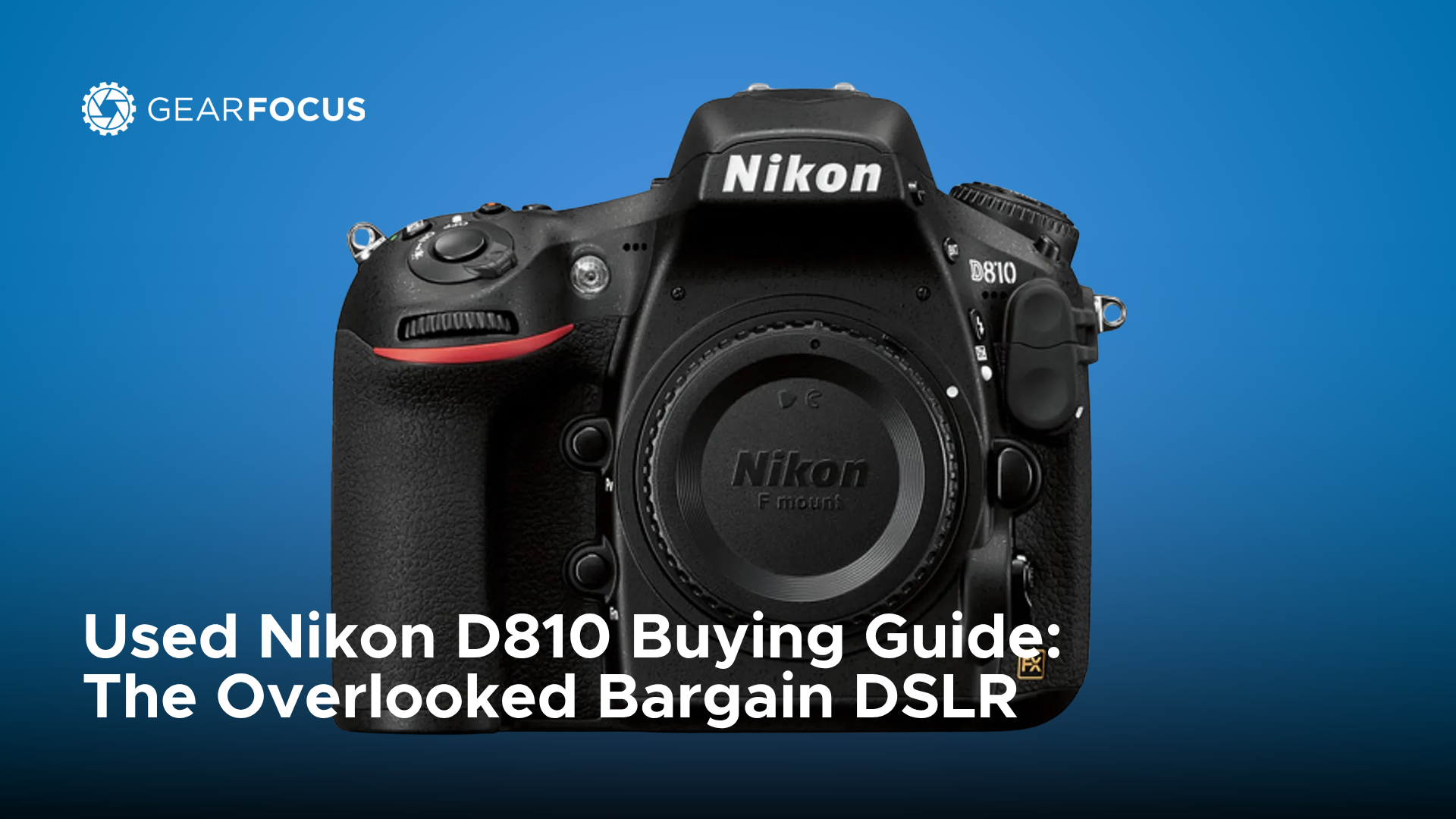
Used Nikon D810 Buying Guide: The Overlooked Bargain DSLR
Bill Pryor
Jul 23, 2026
KEY TAKEAWAYS
- The verdict: A used Nikon D810 is the smarter buy over a used D800. It refines the same 36.3MP full-frame formula with a cleaner base ISO 64, faster handling, and a quieter shutter, making it the better long-term value for landscape, portrait, and studio shooters on a budget.
- What it costs: Used D810 bodies sit in the mid-range used-DSLR bracket, well below its original launch price, and come up on GearFocus regularly.
- Inspect first: Check shutter count, sensor for dust or oil, and the rubber grips before you commit.
- Why it beats the D800: ISO 64 native, sharper output, snappier autofocus tweaks, and a better viewfinder overlay.
- Pair it right: Sharp F-mount glass unlocks the sensor. Cheap kit lenses waste it.
Here’s the decision most people are actually stuck on: you want a high-resolution full-frame Nikon on the cheap, and you’re torn between the D800 and the D810. Same sensor family. Same body shape. A few hundred dollars between them, depending on condition. So which one earns your money?
Short answer, and I’ll defend it all the way down: the used Nikon D810. Nikon didn’t just slap a new badge on the D800. They fixed the things owners quietly griped about, and the fixes matter more than the spec sheet lets on. Digital Camera World put it plainly, calling the D810 an overlooked DSLR that was objectively better than the D800. I’m inclined to agree, and the used market has quietly caught on.
Used Nikon D810 vs D800: The Comparison Table
| Spec | Nikon D810 | Nikon D800 |
|---|---|---|
| Sensor | 36.3MP full-frame, no OLPF | 36.3MP full-frame, with OLPF |
| Native base ISO | 64 | 100 |
| Max native ISO | 12,800 | 6,400 |
| Continuous shooting | 5 fps (up to 7 fps cropped) | 4 fps |
| Shutter | Quieter mechanism, electronic front-curtain | Louder, no EFCS |
| Rear LCD | 3.2-inch RGBW, 1,229k dots | 3.2-inch, 921k dots |
| Video | 1080/60p | 1080/30p |
Look at that base ISO row again. ISO 64 is not a rounding error. It gives the D810 more highlight headroom and cleaner deep shadows than the D800 can touch, and for landscape and studio work that’s real, visible, printable difference. The other rows stack up in the same direction. The D810 wins nearly every category, and it doesn’t lose a single one.
What Does a Used Nikon D810 Cost in 2026?
A used Nikon D810 lands in the mid-range of the used full-frame DSLR market as of July 2026, comfortably below where a used D850 sits and well under its original launch sticker. Condition and shutter count swing the number more than anything else, so treat any single figure as a starting point, not gospel.
The math that makes it interesting: the D810 delivers most of what the D850 does, at a meaningfully lower price. If you don’t need the D850’s higher resolution or faster burst, the used Nikon D810 is where the value curve bends hardest. It’s the sweet spot camera. Not the flagship, not the compromise.
Used D810 bodies come up on GearFocus consistently, and because sellers here keep 91.5% of the sale price rather than losing a bigger cut to a generalist marketplace, pricing tends to stay fair on both sides. If you’re weighing the step up, our used Nikon D850 buying guide lays out exactly what that extra money gets you.
What to Inspect Before You Buy a Used Nikon D810
Buying any used DSLR is 80% inspection and 20% price. I ignored shutter count on my first used body years back. Rookie move. It gave out mid-shoot eight months later, and I’ve never skipped the check since. Here’s what actually matters on a D810.
Shutter count. The D810 is rated around 200,000 actuations. A body at 40,000 has barely started its life. One at 150,000 isn’t dead, but it should be priced like the working tool it is. Pull the count from the EXIF of a recent shot, or ask the seller for a screenshot. On a used Nikon D810, this single number tells you more than the seller’s description ever will.
Sensor condition. Shoot a plain white wall at f/16 and zoom in. Dust spots clone out easily. Oil splatter near the corners is a bigger conversation, especially on early bodies. It’s usually cleanable, but factor a professional cleaning into your budget if you spot it.
Grips and rubber. The rubber thumb rest and door covers peel with age and sweat. Cosmetic, mostly, but a lifting grip hints at a hard-used body. Cheap to re-glue, worth noticing.
The screen and top LCD. Check for dead pixels and that the top info panel illuminates. Small things, but they signal how the previous owner treated it.
For a broader checklist that applies to any body, our guide to buying a used DSLR walks through the full inspection routine step by step. And GearFocus backs every purchase with a 48-hour verification window after delivery, so if a body shows up not as described, you’re not stuck with it.
Why the D810 Beats the D800 for Value
The D800 was the headline. It was the camera that dragged 36 megapixels into a body normal people could afford, and it deserved the noise it made. But the D810 is the one you actually want to own.
Start with the sensor. Nikon dropped the optical low-pass filter on the D810, which sharpens fine detail straight out of the camera. Pair that with native ISO 64, and you get files with a tonal range that still holds up against modern bodies. That’s the headline improvement, and it’s the one you’ll feel every time you recover a bright sky or pull detail from a shadow.
Then the quality-of-life stuff. The shutter is quieter and adds electronic front-curtain mode, which kills the tiny vibration that softens long-lens and macro shots. Autofocus got refined. The buffer got deeper. The viewfinder gained a cleaner overlay. None of these are headline features. All of them make the D810 more pleasant to shoot for hours.
The honest part: the D800 is still a genuinely capable camera, and if the price gap in front of you is huge, it’s not a mistake. But at typical used spreads, the extra spend on a used Nikon D810 buys real, permanent upgrades, not marketing. It’s the rare “later model” where every change was an actual improvement. I’ve steered friends toward the cheaper D800 to save money and regretted it once the ISO 64 files came up in comparison.
Which One Should You Buy?
If you shoot landscapes, architecture, studio portraits, product, or anything where resolution and dynamic range matter more than burst speed, the used Nikon D810 is the answer. If you need faster action shooting, look at a used D500 or D850 instead. And if you’re a D800 owner sitting on the fence, the ISO 64 upgrade alone justifies the swap for most detail-driven work.
Used D810 bodies come up on GearFocus regularly, so if this is the camera on your list, it’s worth setting aside a few minutes to browse what’s currently listed before you commit elsewhere.
Best Lenses to Pair With a Used Nikon D810
Here’s the deal: a 36.3MP sensor with no low-pass filter is brutally honest about glass. Soft lenses look soft. This is not the body for the cheapest zoom you can find, because you’ll never see what the used Nikon D810 is capable of. Feed it sharp F-mount primes and pro zooms and it sings.
- Nikon AF-S 50mm f/1.8G: The value king. Sharp, light, cheap, and it resolves plenty of detail for the sensor. If you buy one lens, buy this.
- Nikon AF-S 24-70mm f/2.8: The workhorse zoom. Weddings, events, travel. It earns its keep on a used Nikon D810 body.
- Nikon AF-S 85mm f/1.8G: Portrait glass that punches far above its price. The rendering flatters skin and the sharpness feeds the sensor.
- Nikon AF-S 16-35mm f/4 VR: For landscape and architecture, where that ISO 64 dynamic range does its best work.
The beauty of the F-mount is depth. Decades of Nikon and third-party glass are out there used, and the good stuff holds its value because bodies like this keep it relevant.
BOTTOM LINE
- The winner: The used Nikon D810 beats the D800 on nearly every spec and loses on none. It’s the smarter buy.
- The killer feature: Native ISO 64 plus no low-pass filter equals cleaner, sharper, more flexible files.
- Before you pay: Verify shutter count, check the sensor at f/16, inspect the rubber grips.
- Feed it well: Sharp primes and pro zooms. Skip the bargain kit glass.
- Where to look: Used D810 bodies surface on GearFocus regularly, backed by a 48-hour verification window.
Conclusion
The D800 got the fame. The D810 got the refinements that actually matter, and the used market has been slow to charge a premium for them. That gap is the opportunity. A used Nikon D810 gives you flagship-adjacent image quality, a sensor that still holds its own in 2026, and access to one of the deepest lens ecosystems in photography, all for mid-range used money. Inspect it properly, pair it with glass worthy of the sensor, and it’ll out-earn its price for years. If you’ve been circling the D800, stop. The used Nikon D810 is the one to buy.
Already own a Nikon you’re ready to move on? Our guide on getting top dollar for your used Nikon DSLR covers pricing and listing it right.
FAQ
Is the Nikon D810 still worth buying used in 2026?
Yes. A used Nikon D810 delivers 36.3MP full-frame files with native ISO 64 and no low-pass filter, so image quality holds up well. For landscape, portrait, and studio work, it remains excellent value.
Is the used Nikon D810 better than the D800?
Objectively, yes. The D810 adds native ISO 64, drops the low-pass filter for sharper detail, runs a quieter shutter with electronic front-curtain mode, and shoots faster. It improves on the D800 in nearly every category.
What is a good shutter count for a used Nikon D810?
The D810 is rated around 200,000 actuations. Under 50,000 is barely broken in. Between 50,000 and 100,000 is fine at a fair price. Above 150,000, negotiate hard and expect working-tool value.
What lenses should I use with a used Nikon D810?
Sharp glass. The Nikon AF-S 50mm f/1.8G, 85mm f/1.8G, 24-70mm f/2.8, and 16-35mm f/4 VR all resolve enough detail to justify the sensor. Cheap kit zooms waste its resolution.
Does the used Nikon D810 shoot video?
Yes, up to 1080/60p, an upgrade over the D800’s 1080/30p. It’s competent for casual and B-roll use, though it’s a stills-first camera and not built to rival dedicated video bodies.
Own one like this?
Make room for new gear in minutes.
