- Buyer protection on every order
OM System PEN E-P7 Review: Is a Used Olympus PEN Still Worth Buying?
Ysa Canlas
Sep 17, 2026
KEY TAKEAWAYS
- The short answer: the best used Olympus PEN value right now sits with the older PEN bodies, not the newest one. The OM System PEN E-P7 brings a 20MP sensor and 4K video, but E-P5, E-PL9, and E-PL10 bodies are hitting the used market as upgraders move on, and they shoot the same lenses for far less.
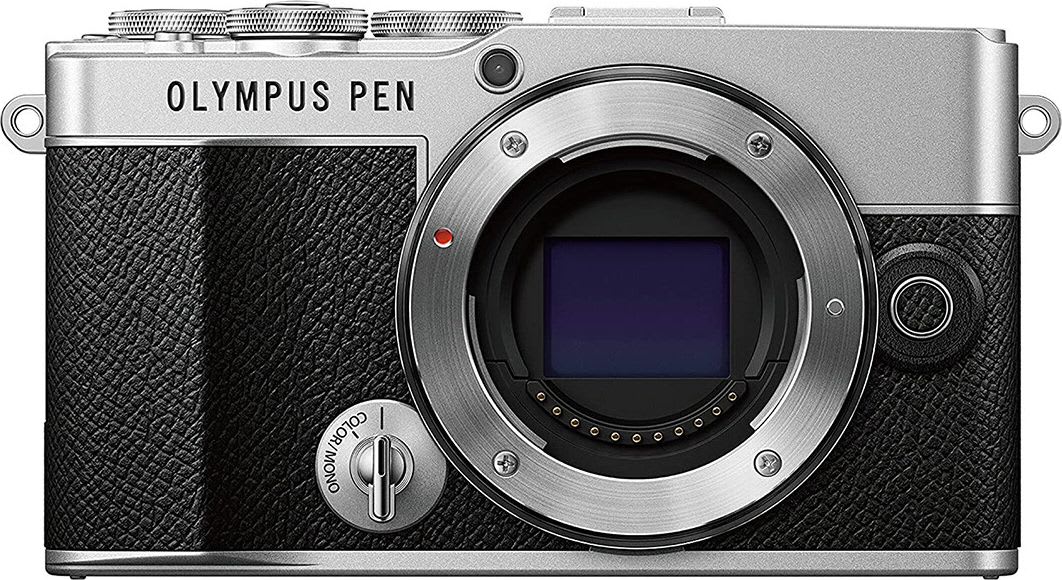
- The E-P7 spec line matters: per GearFocus GearMaster data, it pairs a 20MP Micro Four Thirds sensor with the TruePic VIII processor, ISO 200 to 25600, 121-point contrast-detect autofocus with Eye Detection, 8.7fps burst, and 5-axis in-body stabilization.
- What you give up either way: no weather sealing and no electronic viewfinder on the E-P7. That rear screen is your only window. Older PEN bodies share the same limitation, which is why the used Olympus PEN value gap is narrower than the spec sheets suggest.
- The budget floor: the Olympus PEN E-PM2, with a 16.1MP sensor, TruePic VI processor, sensor-shift IBIS, and 8fps burst in a 280g body, is where the used Olympus PEN value curve bottoms out for a first Micro Four Thirds camera.
- Who should buy new: if you need 4K with a Log profile and modern face and eye tracking in one body, the E-P7 earns it. Everyone else should shop the used Olympus PEN value that supply is about to create.
Here’s the thing nobody says out loud about the PEN line: these cameras have always been bought with the heart first and the spec sheet second. Small. Metal. Flat-topped. They look like something you’d carry, not something you’d store.
Which makes the used Olympus PEN value question genuinely tricky in September 2026. The OM System PEN E-P7 is the current halo body. But Gordon Laing’s recent look at it flagged something the spec charts miss entirely: as buyers upgrade to the E-P7, older PEN bodies like the E-P5, E-PL9, and E-PL10 are expected to flow onto the used market in greater numbers. More supply means the used Olympus PEN value proposition shifts, and it shifts in the buyer’s favor.
So the real question isn’t which PEN is best. It’s where your money buys the most camera.
What Does the E-P7 Actually Change About Used Olympus PEN Value?
Start with what’s verifiable. GearFocus GearMaster data on the Olympus PEN E-P7 lists a 20MP Micro Four Thirds sensor paired with the TruePic VIII image processor, an ISO range of 200 to 25600, and a contrast-detection autofocus system running 121 focus points with Face Detection AF, Eye Detection AF, and subject tracking layered on top.
Burst runs to 8.7fps. Video reaches 4K at 30fps, with a Log color profile available for grading. Five-axis in-body image stabilization covers both stills and video. Storage is SD/SDHC/SDXC, and there’s a built-in flash.
That’s a real camera. Not a toy version of one.
But look at the limitations, because they’re what set the used Olympus PEN value equation. No weather sealing. No electronic viewfinder at all, meaning the tilting touchscreen LCD is your only way to compose. And the ISO floor of 200 is relatively high, which can bite you in bright midday light when you want a wide aperture.
Those three constraints are not new to the PEN family. They’re structural. Which means the E-P7 doesn’t solve the PEN’s historical weak points, it just modernizes the sensor and the processing behind them. And that is precisely why used Olympus PEN value stays strong: you can buy into the same design philosophy for less and lose less than the spec gap implies.
Where the Used Olympus PEN Value Sits Across the Lineup
Let’s lay the family out honestly. The PEN line splits roughly three ways, and each tier has a different used Olympus PEN value story.
| Tier | Representative bodies | What you’re buying | Used Olympus PEN value verdict |
|---|---|---|---|
| Current flagship | OM System PEN E-P7 | 20MP sensor, TruePic VIII, 4K30 with Log, 121-point AF, 8.7fps, 5-axis IBIS | Strongest feature set, weakest price advantage |
| Recent enthusiast and entry | E-P5, E-PL9, E-PL10 | Mature PEN handling, supply expected to rise as owners upgrade | The sweet spot as availability grows |
| Budget entry | Olympus PEN E-PM2, PEN E-P2 | 16.1MP sensor, TruePic VI, sensor-shift IBIS, 8fps, 280g body | Cheapest route into Micro Four Thirds glass |
Notice what carries across every row: the lens mount. Every PEN in that table takes the same Micro Four Thirds lenses. That is the single biggest driver of used Olympus PEN value, and it’s the one most buyers underweight.
Bodies depreciate. Glass mostly doesn’t. If you’re spending $900 on a system, the split between body and lens matters more than which body you pick.
The E-PM2 and the Bottom of the Used Olympus PEN Value Curve
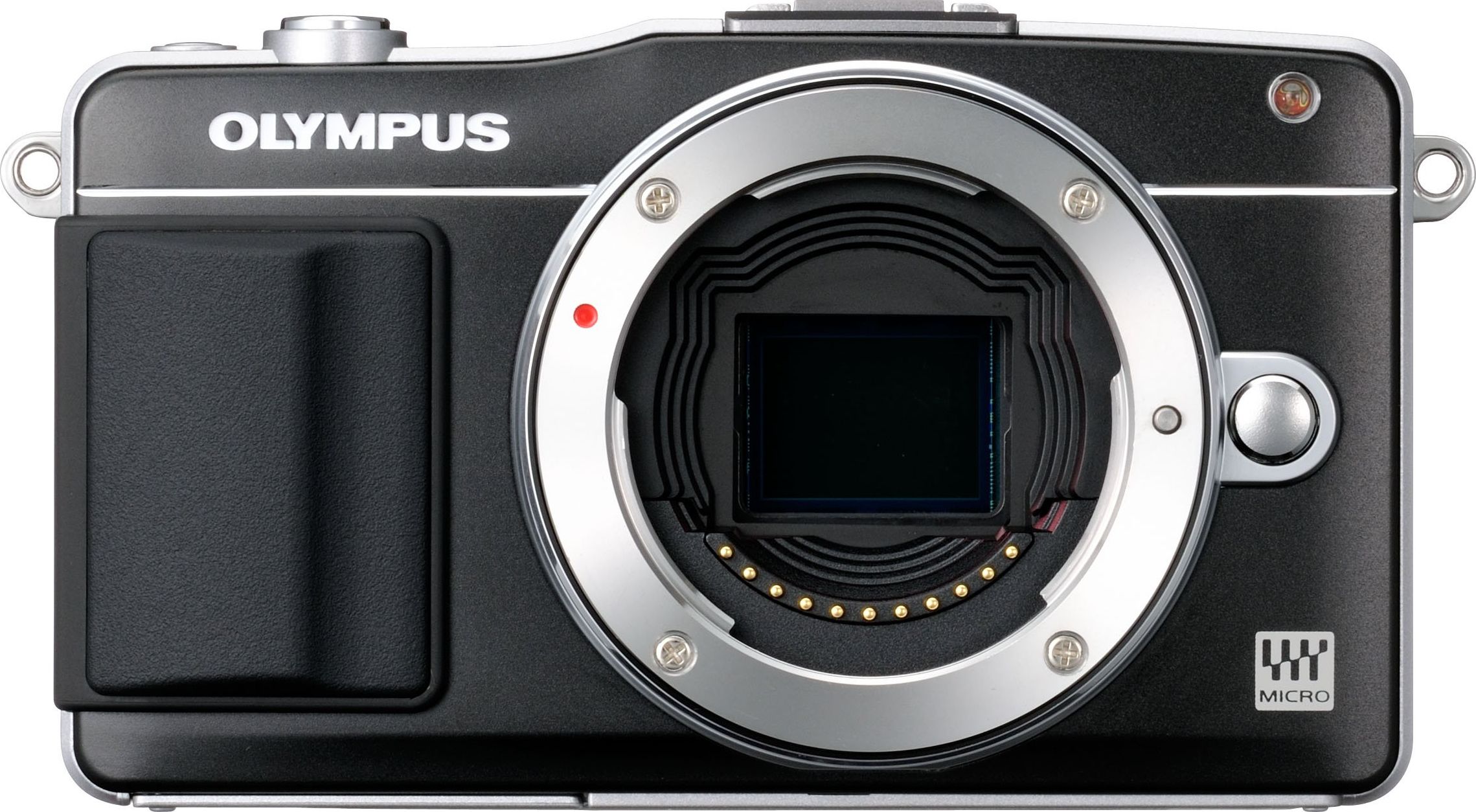
The Olympus PEN E-PM2 is where a lot of people should start and don’t, because the model name sounds unglamorous.
GearFocus GearMaster data puts it at a 16.1MP sensor driven by the TruePic VI processor, maximum output of 4608 x 3456 pixels, ISO 200 to 25600, and burst shooting to 8fps. The standout is sensor-shift in-body image stabilization, which works independently of whatever lens you mount. That’s stabilization across the entire Micro Four Thirds lineup, including vintage manual glass on an adapter.
The body is metal and plastic, weighs 280g, and ships with an external FL-LM1 flash rather than a built-in unit.
The compromises are blunt. No built-in viewfinder, so the rear LCD is it. No WiFi or Bluetooth, which means no wireless transfer and no phone remote. No weather sealing.
But here’s the used Olympus PEN value math that matters: the E-PM2’s IBIS and the E-P7’s IBIS are both fighting the same enemy, handshake at slow shutter speeds. The E-P7’s is better. It isn’t four-times-the-price better. For a street or travel kit, the older body plus a genuinely good prime beats the newer body plus a kit zoom nearly every time.
I learned that the slow way. My first Micro Four Thirds setup was an all-body, no-glass decision, and I spent a year blaming the sensor for images that were really just soft-lens images. Nobody tells you that. You have to waste the money yourself.
The E-P5, E-PL9, and E-PL10 Supply Wave
This is the part that’s actually timely. In his review of the OM System PEN E-P7, Gordon Laing noted that older PEN bodies including the E-P5, E-PL9, and E-PL10 are likely to see increased used-market availability as owners trade up.
Used markets behave predictably when a successor lands. Supply rises first, then prices soften, then the soft prices attract buyers who weren’t previously shopping the model at all. The used Olympus PEN value window is widest in the middle of that sequence, not at the start.
We’re early in it as of September 2026. That means two different plays depending on who you are.
If you’re buying, patience pays. More listings mean more condition options, more kits that include a lens, and more room to be picky about shutter count and cosmetic wear. The used Olympus PEN value you get in November is likely better than what you get today, simply because there will be more of it to choose from.
If you’re selling a PEN body, the calculus flips. Listing before the wave crests generally means competing against fewer identical listings. That’s not a prediction about any specific price, just how used supply tends to work. Have a PEN sitting in a drawer? Buyers are actively searching, and sellers keep 91.5% of the sale price on GearFocus, which is meaningfully more than generalist marketplaces hand back.
What Actually Drives Used Olympus PEN Value on a Listing
Four things move the number on a PEN listing more than the model badge does.
Shutter count. These are compact bodies, often bought as second cameras, so counts run lower than on comparable DSLRs. A low count is a real used Olympus PEN value signal and worth paying a premium for.
Included glass. A body-only listing and a body-with-17mm listing are different products. The lens frequently represents most of the used Olympus PEN value in the bundle, so price the kit, not the body.
Battery and charger. Sounds trivial. Isn’t. Sourcing a correct original battery afterward eats into whatever you saved, and third-party cells vary wildly.
Cosmetic wear on the top plate. PEN bodies are carried, not cased. Brassing and dings on the metal are common and largely harmless, and they’re the single easiest way to find used Olympus PEN value below market, because cosmetic condition drives asking prices harder than function does.
Used PEN bodies come up on GearFocus regularly; if one of these is on your list, it’s worth watching the E-P7 GearMaster page alongside the older bodies to see how the tiers compare.
Who Should Actually Buy the E-P7 New
Not everyone should chase the used Olympus PEN value discount. Three groups genuinely benefit from the current body.
Video-first shooters. The 4K30 capture with a Log profile is not something the older bodies match, and if you grade your footage, that’s the entire argument.
Anyone shooting people. The 121-point system with Face Detection AF, Eye Detection AF, and subject tracking is a real generational jump over older contrast-detect implementations. Portraits and family work are where you feel it.
Buyers who want warranty coverage and zero condition risk. Some people don’t want to evaluate shutter counts. That’s a legitimate preference, and it’s worth money.
Everyone else, and I’d guess that’s most readers, is better served letting someone else absorb the depreciation. That’s what used Olympus PEN value fundamentally is: a transfer from the person who needed it first to the person who’s willing to wait.
Buyer Protection When You Shop Used
Buying used is only stressful when you have no recourse. The GearFocus standard policy gives every buyer 48 hours after delivery to verify the item, and if it isn’t as described, you return it at no charge with the seller covering return shipping.
Some sellers offer a 14-day no-questions-asked window on top of that, though it excludes Poor and As-Is items. Anything listed Poor or As-Is is final sale, no returns, which is exactly why those listings sit cheaper. Most orders ship within 1 to 3 business days.
Read the condition tier before the price. It tells you more about the used Olympus PEN value of a listing than the headline number does.
BOTTOM LINE
- Best overall used Olympus PEN value: an E-P5, E-PL9, or E-PL10 as supply increases through late 2026, paired with a good prime rather than a kit zoom.
- Best budget entry: the Olympus PEN E-PM2, 16.1MP with sensor-shift IBIS, 8fps burst, 280g, no WiFi. The cheapest credible way into Micro Four Thirds glass.
- Buy the E-P7 new if: you need 4K30 with Log, or Eye Detection AF and subject tracking are central to your work.
- Skip the E-P7 if: you mainly shoot stills and you’d rather put the difference into lenses. That trade improves your photos more than 4MP will.
- Every PEN shares: no weather sealing, no built-in EVF. Those aren’t new-model problems, so they shouldn’t scare you off older bodies.
- Selling one? Listing ahead of the upgrade wave means fewer competing listings, and GearFocus sellers keep 91.5% of the sale price.
The PEN line has never been about winning spec comparisons. It’s about a camera small enough that you actually bring it, attractive enough that you want to, and part of a lens system deep enough that you never outgrow the mount. All of that is true of the E-P7, and all of it was true of the E-P5 and the E-PM2 before it. That’s the honest case for used Olympus PEN value in 2026: the thing that makes a PEN worth owning hasn’t changed in a decade, so paying full price for the newest one is a choice, not a requirement. Watch the listings, buy the condition rather than the model year, and put what you save into glass.
FAQ
Is the OM System PEN E-P7 worth buying new in 2026?
It’s worth it for video shooters and portrait work. The 4K30 Log recording and 121-point Eye Detection AF genuinely outclass older PEN bodies. Stills-only shooters usually get better used Olympus PEN value from an earlier body plus a sharper lens.
Which used Olympus PEN offers the best value right now?
The E-P5, E-PL9, and E-PL10 are the ones to watch, since availability is expected to rise as owners upgrade to the E-P7. Increased supply typically means better condition options and stronger used Olympus PEN value for patient buyers.
Does the Olympus PEN E-PM2 still make sense as a first camera?
Yes, for budget buyers. GearFocus GearMaster data lists a 16.1MP sensor, sensor-shift IBIS, 8fps burst, and a 280g body. No WiFi and no viewfinder are the tradeoffs, but it accepts every Micro Four Thirds lens.
Do any Olympus PEN bodies have a built-in viewfinder?
The E-P7 and E-PM2 do not, per GearFocus GearMaster data. Both rely entirely on the rear LCD for composition. If eye-level shooting matters to you, budget for an accessory EVF or look at a different Olympus line.
Own one like this?
Make room for new gear in minutes.
