- Buyer protection on every order
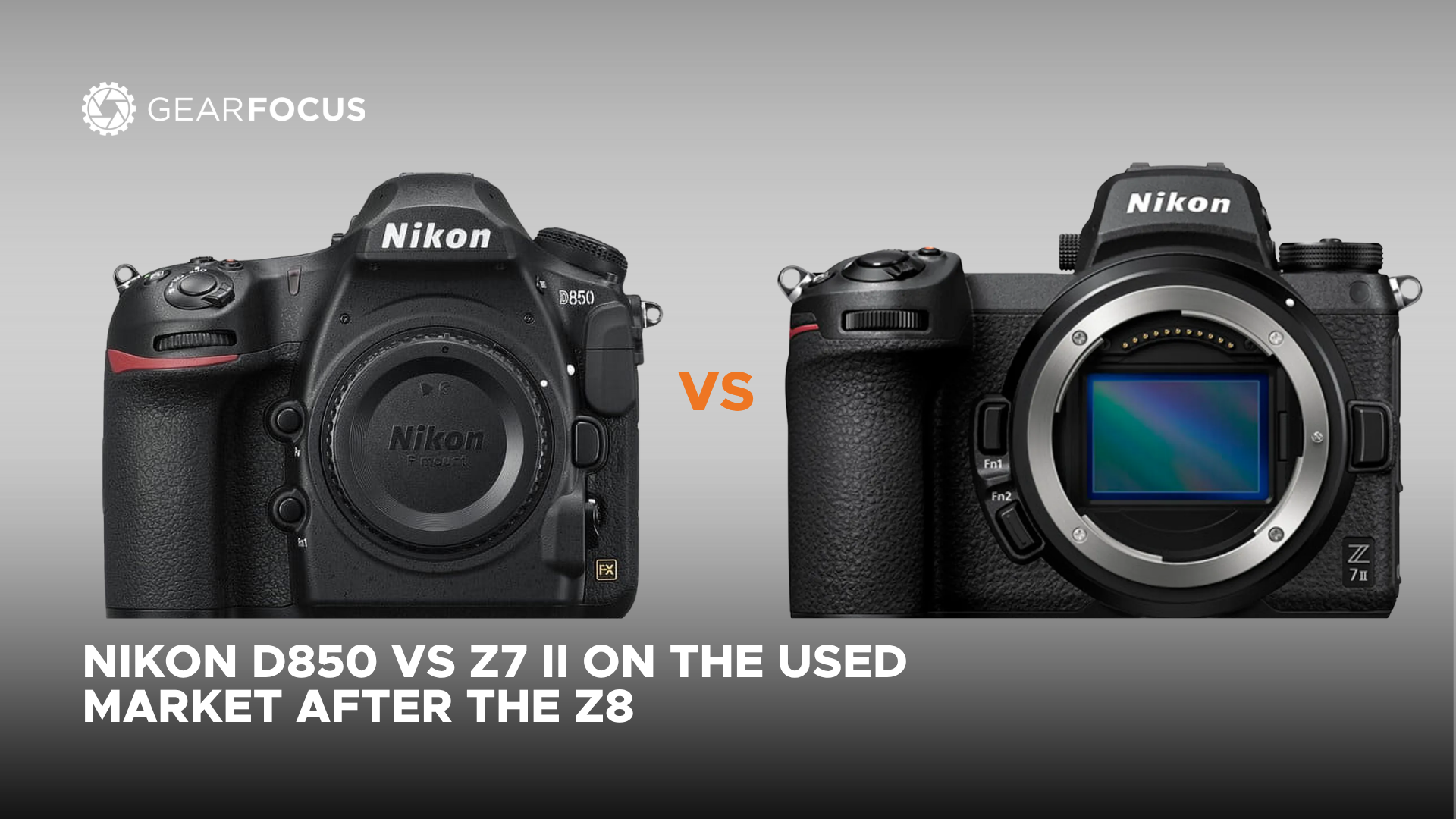
Nikon D850 vs Z7 II on the Used Market After the Z8
Bill Pryor
Jul 29, 2026
KEY TAKEAWAYS
- The verdict: In the Nikon D850 vs Z7 II used debate, the D850 wins on value and battery life, the Z7 II wins on autofocus, IBIS, and future-proofing. Buy the D850 if you want a proven workhorse for less; buy the Z7 II if you want the mirrorless path forward.
- Why supply is up: The Nikon Z8 launch is pushing owners of both bodies to sell and upgrade, which means more used inventory and softer prices right now.
- Same sensor DNA: Both use a 45.7-megapixel full-frame sensor, so raw image quality is nearly a wash. The differences live everywhere else.
- Lens reality: The D850 uses the massive F-mount lineup; the Z7 II uses the newer, sharper (and pricier) Z-mount. That choice matters more than the body.
- Resale angle: Mirrorless holds value better long-term, but the D850 has already taken most of its depreciation hit, so downside risk is lower.
I still remember unboxing my first serious Nikon body, the shutter count reading a number that made me sweat before I even fired a frame. That memory is exactly why the Nikon D850 vs Z7 II used comparison feels so alive right now. Two 45.7-megapixel Nikons, both landing on the secondhand market in bigger numbers, both begging the same question: which one is the smarter buy in 2026?
Here’s the deal. The Nikon Z8 arrived and did what every flagship does. It made a lot of very happy D850 and Z7 II owners suddenly restless. They’re selling to fund the upgrade, and that wave of listings is softening prices on both bodies. Good news for you. Confusing news for you, too, because now you have to actually choose.
This isn’t a spec sheet with a bow on it. This is the real decision: a legendary DSLR versus a mature mirrorless body, same resolution, wildly different personalities. Let’s sort the Nikon D850 vs Z7 II used question out properly.
Nikon D850 vs Z7 II Used: The Head-to-Head Table
Before the arguing starts, look at the bones. These are the specs that actually change a buying decision, not the ones that fill a marketing slide. Everything below reflects the published specifications for each body.
| Spec | Nikon D850 | Nikon Z7 II |
|---|---|---|
| Type | DSLR (F-mount) | Mirrorless (Z-mount) |
| Resolution | 45.7 MP full-frame | 45.7 MP full-frame |
| In-body stabilization | None | 5-axis IBIS |
| Autofocus | 153-point phase detect | 493-point hybrid, eye/animal detect |
| Continuous shooting | 7 fps (9 with grip) | 10 fps |
| Card slots | XQD + SD | Dual CFexpress/XQD + SD |
| Viewfinder | Optical | 3.69M-dot electronic |
| Battery life (CIPA) | ~1,840 shots | ~420 shots |
| Video | 4K UHD | 4K UHD 60p |
| Weight (body) | ~1,005 g | ~705 g |
Read that battery line again. The D850’s optical viewfinder sips power, and 1,840 shots per charge is a genuine advantage for anyone shooting weddings, wildlife, or all-day events without swapping batteries. The Z7 II’s electronic viewfinder is always drawing power, and 420 shots reflects that. That single row settles more Nikon D850 vs Z7 II used arguments than any other.
The Nikon D850: The DSLR That Refuses to Retire
The D850 is one of those cameras people talk about in reverent tones, and mostly it earns it. That 45.7-megapixel sensor delivers stunning dynamic range, and the files hold up to aggressive editing in a way that still embarrasses cameras twice the price. It’s built like a brick outhouse, weather-sealed, and the grip fits a human hand the way DSLRs always did better than the early mirrorless bodies.
Where it shines: landscapes, studio portraits, commercial work, anything shot on a tripod where you want maximum resolution and don’t need to chase eyes around the frame. The 153-point autofocus is excellent for a DSLR of its era, and it tracks moving subjects reliably in good light. In a low-light gym at a school event, it works harder than you’d like.
The honest limitation: no in-body stabilization. You lean on stabilized lenses or a tripod. And the optical viewfinder, glorious as it is, can’t show you exposure before you press the shutter. I ignored that reality early on and blew a whole bracket of interiors because I trusted my eye over the histogram. Rookie move.
For the Nikon D850 vs Z7 II used shopper, the D850’s biggest strength is boring and beautiful: it already took its depreciation hit. This camera launched years ago. Most of its value loss is behind it, which means less downside risk sitting on your shelf. If you want the full picture, our Nikon D850 used buying guide digs into shutter-count thresholds and what to check before buying.
The Nikon Z7 II: Same Sensor, Modern Brain
Now the mirrorless side of the Nikon D850 vs Z7 II used question. The Z7 II takes that same 45.7-megapixel resolution and wraps it in a body that solves nearly every complaint people had about the D850, then introduces a couple of new ones.
In-body stabilization is the headline. Five-axis IBIS means handheld shots at shutter speeds that would’ve been unthinkable on the D850 without a tripod. The autofocus is genuinely a generation ahead: 493 points, eye detection for people and animals, and an electronic viewfinder that previews your exposure so you stop guessing. For portrait shooters who live and die by tack-sharp eyes, that’s the whole ballgame.
Dual processors gave the Z7 II a real speed bump over the original Z7, pushing it to 10 fps and improving buffer depth. It’s lighter, too, around 705 grams versus the D850’s 1,005. Your neck notices that after a ten-hour wedding day.
The catch: battery life, as the table shows, is a fraction of the D850’s. And the electronic viewfinder, while sharp, isn’t the same as glass for some shooters. I fought the EVF for a solid month before it clicked, and now I can’t imagine shooting blind again. Our Nikon Z7 II used buying guide covers the firmware quirks worth knowing before you commit.
Which Nikon D850 vs Z7 II Used Body Should You Actually Buy?
Here’s where the Nikon D850 vs Z7 II used decision gets personal, because the “right” answer depends entirely on what you shoot and where you see yourself in five years.
Buy the D850 if: you already own F-mount glass, you shoot long days where battery life is non-negotiable, you love an optical viewfinder, and you want to spend as little as possible for medium-format-adjacent resolution. It’s a finished, mature product with no surprises left.
Buy the Z7 II if: you’re building a kit from scratch, you shoot portraits or events where eye-detect autofocus saves keepers, you want IBIS for handheld work, and you want to be on the mount Nikon is actively developing. The Z-mount is Nikon’s future, full stop.
There’s a third truth nobody likes to say out loud: the lenses decide this more than the bodies. F-mount glass is everywhere on the used market, often cheaper, and the lineup is enormous. Z-mount lenses are optically superior in many cases but cost more and there are fewer used bargains so far. Factor the whole system cost, not just the body price, into your Nikon D850 vs Z7 II used math.
If your Nikon D850 vs Z7 II used decision is really about resale, remember the Z8 wave cuts both ways. More sellers means better buying prices today, and the softer used market is exactly the moment to pounce. On GearFocus, both bodies come up regularly as owners upgrade, and sellers keep 91.5% of the sale price thanks to the flat 8.5% fee, which is meaningfully more than generalist marketplaces leave in your pocket. Worth a look if either body is on your list. Browse what’s live at gearfocus.com/products.
How the Nikon Z8 Changed the Used Market
The Nikon Z8 is the reason this Nikon D850 vs Z7 II used comparison even matters right now. It landed with 8K video and flagship-grade high-resolution capture, and it gave both D850 and Z7 II owners a compelling reason to sell and move up. That’s textbook used-market behavior: a successor launches, supply of the older bodies swells, and prices soften for a stretch.
Used prices typically drift lower after a successor arrives and inventory climbs, then stabilize once the early upgraders have cashed out. As of July 2026, we’re in that sweet spot where sellers are motivated and buyers have leverage. If you’ve been circling either body, this softer stretch is the buying window, not next year.
Worth noting for the resale-minded: this same dynamic will eventually hit the Z8 too. If you’re curious how the current flagship battle is shaking out on the secondhand side, our Nikon Z8 vs Canon EOS R5 Mark II used comparison maps that terrain. For the broader upgrade-culture context driving all this churn, this original discussion is worth a read.
Buyer Protection on Either Body
Buying used means checking two things above all: shutter count and honest condition photos. A high-res sensor is only as good as the shutter mechanism behind it, and both these bodies are rated for well over 200,000 actuations, so a body at 40,000 has plenty of life left.
On GearFocus, the standard policy gives you a 48-hour verification window after delivery. If the camera isn’t as described, you return it at no charge and the seller covers return shipping. Some sellers also offer a 14-day no-questions-asked return, though that’s seller-specific and excludes Poor and As-Is listings. Most orders ship within 1 to 3 business days, so you’re not waiting weeks to inspect what you bought.
BOTTOM LINE
- Same image quality: Both deliver 45.7 MP full-frame files, so raw resolution isn’t the deciding factor in the Nikon D850 vs Z7 II used matchup.
- D850 wins: Battery life, optical viewfinder, F-mount lens bargains, lower downside risk, best-value pick.
- Z7 II wins: IBIS, far better autofocus with eye/animal detect, lighter body, and the future-proof Z-mount.
- Timing: The Z8 launch softened used prices on both. Right now is the buying window.
- Think in systems: Your lens ecosystem, not the body, is the real long-term commitment.
Conclusion
So where does the Nikon D850 vs Z7 II used question land? On a fork in the road, honestly. The D850 is the smarter play if you’re value-driven, already own F-mount glass, and want a proven body that’s done depreciating. The Z7 II is the smarter play if you’re building for the next decade and want IBIS, modern autofocus, and Nikon’s active mount. Neither choice is wrong; they just serve different photographers.
The Nikon Z8 upgrade wave gave you leverage, so use it. Both bodies come up steadily on GearFocus as owners trade up, and with sellers keeping 91.5% of every sale, listings stay healthy. Whichever side of the Nikon D850 vs Z7 II used divide you pick, this softer-price stretch is the time to buy. Have a Nikon to sell instead? Buyers are actively searching, and you can list at gearfocus.com/sell.
FAQ
Is the Nikon D850 still worth buying used in 2026?
Yes. The D850’s 45.7 MP sensor and class-leading battery life still outperform many newer bodies. With most depreciation already behind it and prices softened by the Z8 launch, it’s arguably the best value in high-resolution full-frame right now.
Is the Nikon Z7 II worth the extra cost over the D850 used?
It depends on your priorities. The Z7 II adds IBIS, far better autofocus, and the future-proof Z-mount. If you shoot handheld portraits or events, that’s worth paying for. If you own F-mount glass, the D850 stretches further.
Do the Nikon D850 and Z7 II use the same sensor?
Both use a 45.7-megapixel full-frame sensor with nearly identical resolution and image quality. The meaningful differences are autofocus, stabilization, viewfinder type, and battery life, not raw file quality, which is why the Nikon D850 vs Z7 II used choice hinges on features.
Why are so many D850 and Z7 II bodies on the used market now?
The Nikon Z8 launch, with 8K video and flagship high-resolution capture, prompted many owners to sell and upgrade. That increased supply and softened used prices on both bodies, creating a buyer-friendly window in 2026.
Which holds resale value better, the D850 or Z7 II?
Mirrorless bodies like the Z7 II tend to hold value better long-term. But the D850 has already absorbed most of its depreciation, so its downside risk is lower for a used buyer worried about further price drops.
Own one like this?
Make room for new gear in minutes.
