- Buyer protection on every order
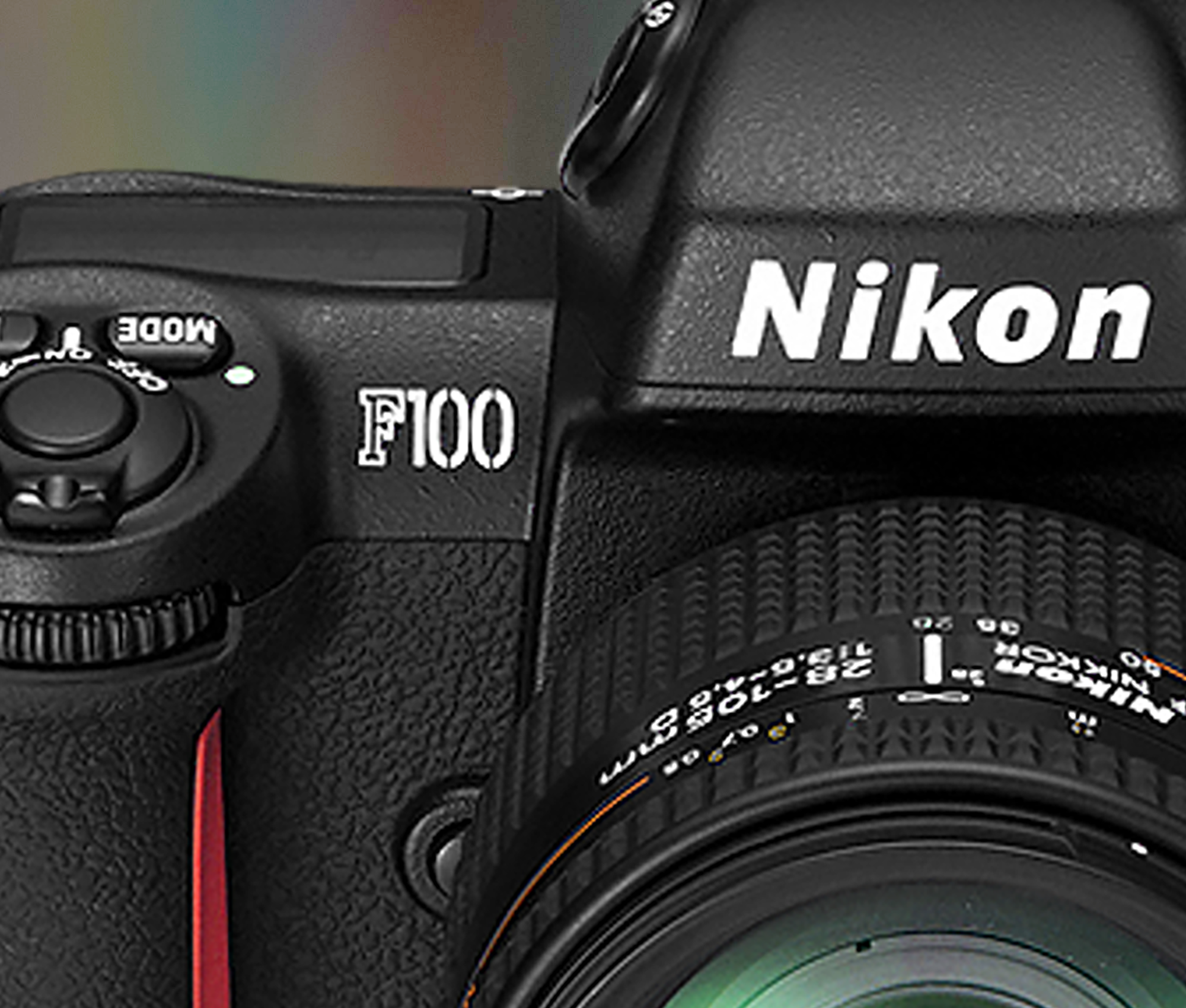
Nikon F100 Used Buying Guide: The Budget Route to F6 Performance
Jake Bennett
Aug 11, 2026
KEY TAKEAWAYS
- The short answer: A Nikon F100 used is the closest thing to a Nikon F6 that most film shooters will ever justify buying. It carries pro-grade autofocus, matrix metering, and a magnesium chassis in a body that trades for a fraction of what an F6 commands.
- Inspect four things: light seals, LCD segment bleed, the rubber grip covering, and the film advance under load. Everything else on this camera tends to age well.
- Lens compatibility is the real superpower: AF-D, AF-S, and G-series glass all work, and the body meters with AI/AI-S manual focus lenses too.
- Condition tiers matter more than cosmetics. A scuffed body with fresh seals beats a mint one with sticky foam every single time.
- Watch the listings this fall. Renewed F6 attention tends to shake loose bodies from collectors, and that has a downstream effect on what a Nikon F100 used sells for.
The box smelled like an attic. Cardboard gone soft at the corners, a strip of packing tape that had turned amber, and inside, wrapped in a hand towel that clearly used to live in someone’s kitchen, a Nikon F100 used hard enough that the grip had worn shiny where a thumb had rested for twenty years.
I remember flipping the switch. That reassuring little clunk as the meter woke up. The LCD lit clean, no bleeding segments, no ghosting. And I thought: how is this thing not worth three times what I paid?
That question is getting louder in 2026. Digital Camera World recently made the case that the F100 is as close as you’ll get to an F6 without the mammoth price tag, and that framing has legs. It reframes the camera from “cheap old autofocus body” to “the sensible way into pro Nikon film.” Which is exactly what it is.
Why a Nikon F100 Used Is the Smart F6 Alternative
Here’s the deal. The F6 is a genuinely magnificent object. It was the last professional film SLR Nikon ever built, it stayed in production long after the market for it had evaporated, and collectors treat it accordingly. Prices reflect scarcity and legend more than they reflect what the camera does on a Sunday afternoon.
The F100 does most of what the F6 does. Same lineage, same design philosophy, released in 1999 as the compact professional body that sat just under the flagship F5. Five-area autofocus, 3D Color Matrix metering, 1/8000s top shutter speed, 1/250s flash sync, five frames per second. Those are not consolation-prize numbers.
What you give up: the F6’s slightly more refined autofocus module, its ability to record shooting data, and a build that goes a notch further on weather sealing. What you gain is the ability to buy a Nikon F100 used, plus a good lens, plus a year of film and developing, for what an F6 body alone would cost.
I’ve watched people agonize over this decision for months. Then they buy the F100 and never mention the F6 again. There’s a lesson in that.
What to Inspect Before You Buy a Nikon F100 Used

This is the section that saves you money. Film bodies fail in predictable ways, and the F100 has a short, well-documented list of weak points. Learn them and you can evaluate a listing in about ninety seconds.
Light Seals: The Number One Issue
The foam seals around the film door degrade with age. Every camera from this era has the problem eventually. On a Nikon F100 used body that has sat unused in a closet, the foam often turns to black tar that smears on contact.
Ask the seller for a photo of the film door channel, hinge side included. Clean, matte black foam that holds its shape is good. Shiny, gummy, or crumbling foam means you’re doing a reseal. That’s a modest job with a kit and a wooden skewer, an hour of patient work, and it should be reflected in what you pay.
Bad seals cause light leaks that show up as orange or magenta streaks along the frame edge. Not fatal, but nobody wants to burn three rolls discovering it.
LCD Bleed on the Top Panel
The top-plate LCD on the F100 can develop segment bleed as the polarizer layer ages: dark blotches, ghost segments, or a display that reads correctly only at certain angles. Some bodies are pristine. Some look like a calculator left on a dashboard.
It’s cosmetic in the sense that the camera still functions. It is absolutely not cosmetic when you’re trying to confirm your frame counter or exposure compensation in bad light. Request a straight-on photo of the top LCD with the meter active, and one from a slight angle. Any Nikon F100 used listing without a clear top-panel shot deserves a question before it deserves a bid.
I ignored bleed once on a different body. Told myself I’d learn to read around it. Eight months later I was guessing at my frame count on a shoot that mattered. Rookie move.
Shutter Count and Mechanical Wear
Film bodies don’t display a shutter count the way a DSLR does, and that trips up buyers coming over from digital. There’s no menu screen to check. What you have instead are proxies.
Look at the rubber grip and the back thumb rest. Heavy wear there means heavy use. Look at the tripod socket and baseplate for the polished ring that comes from constant mounting. Look at the mode dial legends for rub-through. A Nikon F100 used by a working pro will show it on the surfaces the hands touched.
Then ask the seller to fire the camera at 1/8000s and at 1s with the back open, and describe what they see and hear. Even shutter travel, no hesitation, no dragging on the slow speeds. The F100 shutter is rated to 150,000 cycles, and most consumer-owned bodies never came close.
The Rubber Grip Problem
The grip covering on the F100 can shrink, lift at the edges, or go sticky depending on storage conditions. It’s the single most common cosmetic complaint, and it’s one of the more visible ways a Nikon F100 used body announces its age.
Replacement coverings exist and installation is straightforward. Budget for it if the listing photos show lifting at the corners. Don’t let a seller price a peeling grip as “excellent condition.”
Battery Door and Contacts
Four AA cells in the door, or an MB-15 grip if you want vertical controls and faster frame rates. Check the battery contacts for corrosion, which is the fastest way to turn a working camera into a paperweight. Green crust on the springs is a walk-away signal unless the price accounts for it.
Also confirm the door latch holds firmly. A loose latch means intermittent power, which will convince you the camera is dying when it’s actually just a hinge.
Lens Compatibility: The Real Reason to Buy
This is where the F100 gets genuinely exciting, and it’s underrated in most buying advice.
The F100 has a built-in autofocus motor, which means screw-drive AF and AF-D lenses autofocus perfectly. That entire generation of Nikkor glass, the 50mm f/1.8D, the 85mm f/1.8D, the 35-70mm f/2.8D, is abundant on the used market and optically excellent.
AF-S lenses with their own motors work too. G-series lenses without aperture rings work, because the F100 controls aperture from the command dial. And AI/AI-S manual focus lenses mount and meter, giving you access to decades of Nikkor glass with a real aperture ring and a focus throw worth using.
What doesn’t work: E-type electromagnetic diaphragm lenses, and the newer AF-P lenses. Also anything pre-AI that hasn’t been converted, which can foul the meter coupling.
So the practical answer is that a Nikon F100 used pairs happily with almost any Nikon F-mount lens you already own or are likely to find cheaply. If you’re already shooting Nikon DSLRs, your glass drawer just became a film kit. Anyone who has read our Nikon D500 used buying guide will recognize a lot of the same lenses in play.
| Lens Type | Autofocus on F100 | Metering |
|---|---|---|
| AF / AF-D (screw drive) | Yes, body motor | Full matrix |
| AF-S (in-lens motor) | Yes | Full matrix |
| G-type (no aperture ring) | Yes | Full matrix |
| AI / AI-S manual focus | Manual only | Center-weighted / spot |
| E-type (electromagnetic) | No | No |
| AF-P | No | No |
Realistic Condition Tiers for a Nikon F100 Used
Marketplace condition labels are only as honest as the seller writing them. Here’s how to translate them for this specific camera.
Excellent: Clean seals or recently replaced ones, no LCD bleed, grip intact and not tacky, minimal brassing. Fires accurately across the shutter range. This is the tier most buyers should target, because the premium over “good” is usually smaller than the cost of fixing a “good” body.
Good: Honest use marks, maybe some grip lift or a small LCD blemish, seals that will need attention within a year. Fully functional. This is the value sweet spot if you’re comfortable with a reseal kit.
Fair: Visible wear everywhere, sticky grip, noticeable LCD bleed, seals definitely gone. Works, but you’re buying a project. Price it like one.
Poor / As-Is: Untested, non-functional, or sold for parts. On GearFocus, Poor and As-Is items are final sale with no returns, so only go here if you genuinely want a donor body.
One more note on marketplace protection. The standard GearFocus policy gives you a 48-hour verification window after delivery, and if the camera isn’t as described, you return it at no charge with the seller covering return shipping. For a film body where you can’t fully verify condition from photos, that window is the whole ballgame. Load a roll immediately, shoot it fast, and check the frame edges for leaks.
Used Nikon film bodies come up on GearFocus regularly, and it’s worth having a saved search running if you’re picky about condition.
Why F6 Owners Might Be Listing Right Now
Here’s the market dynamic worth understanding in August 2026. When a camera gets reframed publicly as “the affordable alternative to X,” two things happen at once. Demand for the affordable option rises. And owners of X start doing arithmetic.
An F6 sitting in a cabinet, shot twice a year, suddenly looks like a lot of dormant value to someone who could shoot the same film with an F100 and pocket the difference. That logic moves bodies onto the market. It also means a Nikon F100 used listing gets more eyes on it than it did a year ago.
Practically, that cuts both ways. More attention on the F100 tightens supply of clean examples. More F6 owners cashing out means a few unusually good flagship deals appear for anyone who genuinely wants the halo camera.
Timing note: film gear tends to move in autumn, as people plan holiday shooting and gift buying starts warming up in October and November. If you want a clean Nikon F100 used body before that pressure arrives, the next several weeks are a reasonable window. Used prices generally soften when supply loosens and tighten through gifting season. That’s seasonal logic, not a prediction about any specific number.
Sellers, the other side of this: GearFocus takes an 8.5% total fee, which means you keep 91.5% of the sale price. On a niche film body where buyers are actively hunting, that spread is meaningful. Have an F6 or a second Nikon F100 used body gathering dust? Buyers are searching.
Who Should Actually Buy a Nikon F100 Used
Best suited to Nikon shooters who already own F-mount glass and want to shoot film without relearning a system. The controls will feel familiar within one roll.
Also strong for anyone moving from digital to film who wants autofocus and reliable metering rather than a fully manual experience. Plenty of people romanticize match-needle metering right up until they miss a shot.
Consider something else if you want a small, quiet camera for street work. The F100 is a chunky, motorized SLR and it sounds like one. And if you’re shopping digital rather than film, our roundup of the best used full-frame cameras under $1500 covers that ground, while the Nikon Z5 used buying guide is the mirrorless equivalent of this same value argument.
BOTTOM LINE
- Buy it if: You own F-mount glass, want pro-grade film handling, and don’t need collector-grade provenance.
- Inspect first: Light seals, top LCD segments, grip condition, battery contacts, shutter travel at both speed extremes.
- Target tier: Excellent or well-described Good. Fair is a project, As-Is is final sale.
- Lens rule: AF-D through G-type all work fully. E-type and AF-P do not.
- Timing: Renewed F6 attention is loosening supply now; gifting season tends to tighten it later.
Film shooting rewards cameras that get out of your way, and that is the entire argument for a Nikon F100 used over almost anything else in the F-mount film lineup. It meters accurately, focuses fast, takes the glass you already have, and asks very little in return beyond fresh seals every decade or so. Check the LCD, check the foam, check the grip, and then go shoot. If a clean Nikon F100 used body comes up on GearFocus at a price that makes sense, it’s worth a look before autumn demand catches up.
FAQ
Is the Nikon F100 still worth buying in 2026?
Yes. It offers professional autofocus, 3D matrix metering, and a 1/8000s shutter in a body that costs far less than a Nikon F6, and F-mount lenses remain plentiful on the used market.
How do you check shutter count on a Nikon F100?
You can’t read it directly, as film bodies have no counter display. Judge wear instead by grip condition, baseplate polish, and dial rub-through, then test shutter travel at 1/8000s and one second.
What lenses work on a Nikon F100 used body?
AF, AF-D, AF-S, and G-type lenses all autofocus and meter fully. AI and AI-S manual lenses mount and meter in center-weighted or spot mode. E-type and AF-P lenses are not compatible.
Do Nikon F100 light seals always need replacing?
Not always, but usually on unserviced bodies. Original foam degrades over decades into a sticky residue. A reseal kit and about an hour of careful work resolves it inexpensively.
Is the F100 better than the Nikon F6?
The F6 has a more refined autofocus system, data recording, and stronger sealing. The F100 delivers most of the same shooting experience for dramatically less money, which is why it stands out on value.
Own one like this?
Make room for new gear in minutes.
