- Buyer protection on every order
Sony FX5 Launch: What It Means for Used FX3 and FX6 Prices
Jake Bennett
Jul 21, 2026
KEY TAKEAWAYS
- The short version: With the Sony FX5 launching this month, some FX3 and FX6 owners will list their bodies to fund the upgrade. That extra supply is your opening. A used Sony FX3 FX6 body still shoots pro-grade footage, and buying during a launch-driven supply bump is the smart play as of July 2026.
- The FX3 is the run-and-gun pick: full-frame, tiny, gimbal-friendly, and still a legitimate cinema tool for solo shooters.
- The FX6 is the built-for-the-set pick: variable ND, more ports, longer runs, better for crewed jobs.
- Inspect three things: sensor hours (record time), overheating history, and port wear. These decide whether a used body is a bargain or a headache.
- Timing matters: supply loosens right after a successor lands, then tightens again once early adopters settle. Watch listings now.
The email lands in a filmmaker’s inbox and the calculation starts immediately. New body announced. Do I sell the old one now, or wait? Every time a manufacturer ships a successor, a small wave of working shooters does the math and decides to trade up. And that wave is about to hit for a whole class of used Sony FX3 FX6 cameras.
Digital Camera World reports the Sony FX5 launches this month with 5K open gate, triple-base ISO, and AI autofocus. Impressive spec sheet. But here’s the deal: the moment that camera ships, a chunk of FX3 and FX6 owners will list their current bodies to bankroll the jump. More listings, softer prices, more choice. If you’ve been circling a used cinema body, the window is opening.
I sat on the fence too long the last time a successor dropped and watched the good listings get picked clean by people who moved faster. Rookie patience is a nice idea. In a supply bump, it costs you the best bodies.
Why the FX5 Launch Creates a Buying Window for a used Sony FX3 FX6
The economics are predictable. A working shooter who wants the newest AI autofocus and 5K open gate needs cash, and the fastest cash is the body sitting on the shelf. So they list it.
That’s not a knock on the FX3 or FX6. It’s just how the upgrade treadmill works. When the successor arrives, the outgoing bodies don’t suddenly shoot worse footage. They shoot exactly the same footage they shot last week. What changes is the price tag, because more of them hit the market at once.
Used prices typically soften after a successor launches, then firm back up once the early adopters have flipped their gear and supply thins out again. The lesson: the deepest discounts on a used Sony FX3 FX6 tend to cluster in the weeks right after a launch, not months later. Right now, in the back half of 2026, we’re heading into exactly that window.
One more angle for the sellers reading this. If you own an FX3 or FX6 and you’re not chasing the FX5, the launch bump can work against you, because a flood of competing listings drags average prices down. Selling early, before the pile grows, usually nets more. If that’s you, our guide to selling a used Sony cinema camera walks through pricing it to move.
What the Used Sony FX3 Offers Working Shooters
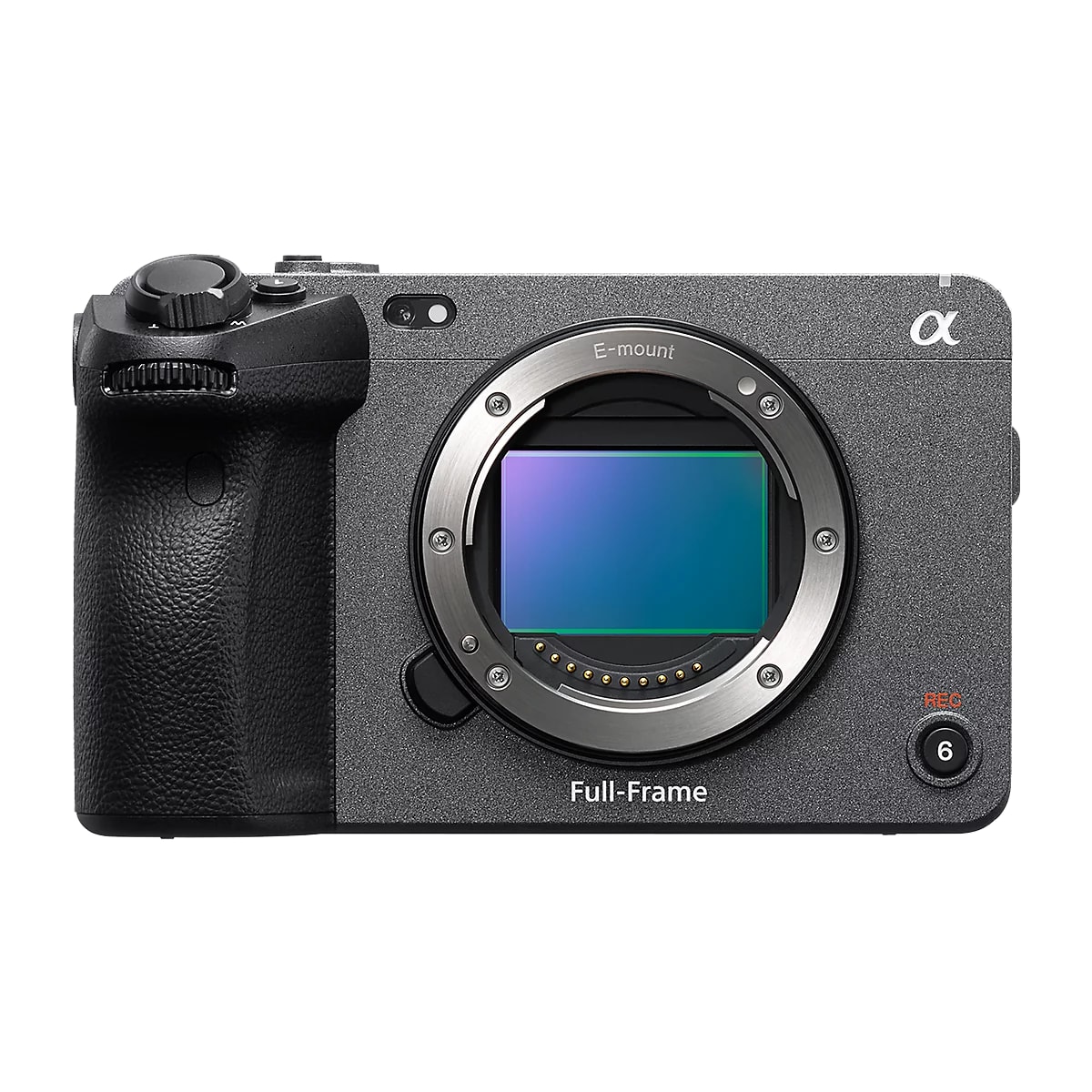
The FX3 is the camera you throw on a gimbal at a wedding, hand to a second shooter, or rig up for a solo documentary run. Full-frame sensor. Roughly the size of a chunky mirrorless body. It disappears into a run-and-gun setup in a way the bigger cinema bodies never will.
It records 4K up to 120p, carries dual base ISO for clean low-light work, and outputs 16-bit RAW over HDMI to an external recorder. The active cooling fan lets it run longer than a stills-first hybrid before it taps out. For solo operators and small crews, that combination is the whole appeal.
Where it shows its limits: no built-in variable ND, which means you’re screwing filters on and off or running a matte box, and a leaner port selection than its bigger sibling. For a one-person operation, those tradeoffs rarely bite. For a set with a crew, they add up.
Buying one used makes even more sense than it did at launch. A used Sony FX3 FX6 purchase at the FX3 end of the range gets you genuine full-frame cinema output at a price that undercuts anything new in the category. If you want the deeper head-to-head, our breakdown of the best used Sony cinema cameras compared puts the FX3 next to the FX30 and FX6.
What the Used Sony FX6 Offers Working Shooters
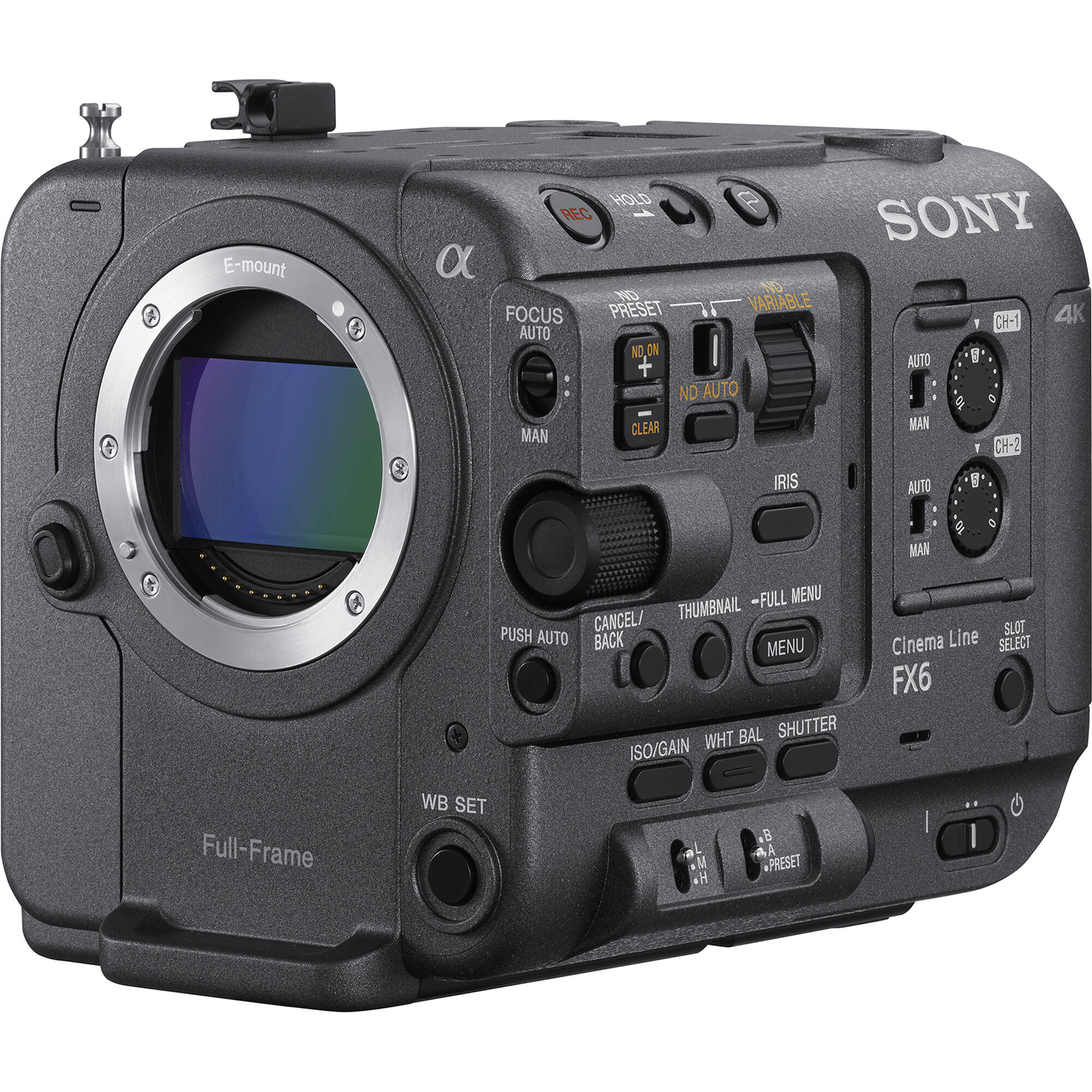
The FX6 is the one you build a day around. Built-in electronic variable ND is the headline feature, and once you’ve pulled exposure with a dial instead of swapping filters between setups, going back feels like a downgrade. It’s a genuine time-saver on paid work.
It shares the full-frame, dual-base-ISO sensor philosophy and adds a proper cinema-body layout: more physical controls, XLR audio inputs on the handle, and the port count a crewed shoot actually needs. It’s heavier and bulkier than the FX3, which is exactly the point. This body is designed to live on a rig, a tripod, or a shoulder mount for long takes.
The tradeoff is portability and price. You won’t sneak an FX6 into a discreet documentary setup the way you would an FX3, and the used premium over the FX3 is real. But for narrative work, commercial jobs, and anything with a crew, the workflow gains justify it.
Across the used Sony FX3 FX6 spectrum, think of it this way: the FX3 optimizes for mobility, the FX6 optimizes for the set. Neither is obsolete because a new body exists. Both are strong picks if the price is right and the body checks out. And that last part is where most buyers get lazy.
How Do You Inspect a Used Cinema Body Before Buying?
Cinema bodies get worked harder than stills cameras. They run hot, they run long, and they get plugged and unplugged all day. When you shop a used Sony FX3 FX6, three checks matter more than anything else.
| What to check | Why it matters | How to verify |
|---|---|---|
| Sensor / record hours | Total recording time is the truest wear metric on a cinema body, more telling than any stills shutter count | Ask the seller for total record hours and screenshots of the menu info; request sample footage |
| Overheating history | Repeated thermal shutdowns can point to a clogged fan, degraded thermal paste, or heavy prior abuse | Ask directly whether it has ever thermal-shut mid-record; ask about firmware and cooling behavior |
| Port wear | HDMI, SDI, and audio ports loosen with constant plugging; a wobbly port kills a shot mid-take | Request close-up photos of every port; ask the seller to test each output |
Sensor hours first. A stills shooter obsesses over shutter count, but a cinema body barely uses its mechanical shutter. What wears is the sensor and processor from hours of recording. Ask for total record time. A body that’s logged light use is worth more than one that’s been running eight-hour interview days for two years.
Overheating history second. Both the FX3 and FX6 use active cooling, which is a strength, until the fan gets clogged or the shooter ran it hard in hot conditions without maintenance. Ask the seller straight up whether it’s ever shut down mid-record. An honest “once, on a hot day, then it was fine” is different from a pattern.
Port wear third, and it’s the one people skip. Cinema shooters live in the ports. HDMI or SDI out to a monitor, audio in, power. Ask for close-up photos and ask the seller to confirm every output works. A loose HDMI that drops signal at the worst moment is a real risk on a heavily used body.
Here’s where buying through a marketplace built for this helps. On GearFocus, seller identities are verified, and the standard 48-hour verification window means you can inspect a used Sony FX3 FX6 after delivery and return it at no charge if it isn’t as described, with the seller covering return shipping. That’s your safety net against a listing that oversold its condition.
Timing Your Buy or Sell Around the Launch
The FX5 shipping this month is the pivot point. If you’re buying, the supply bump is your friend. More bodies listed means more choice and softer average prices, so this is the stretch to be actively watching listings rather than waiting for “later.”
If you’re selling, the same bump is a warning. The longer you wait, the more competing FX3 and FX6 listings you’re up against, and competition pulls prices down. Sellers who list early, before the pile grows, tend to keep more. On GearFocus, sellers keep 91.5% of the sale price, which meaningfully outpaces the generalist marketplaces once their cuts stack up.
Full-frame cinema bodies like these come up on GearFocus regularly, and launch weeks tend to bring more of them. Worth a look if a used Sony FX3 FX6 is on your shortlist.
BOTTOM LINE
- Buyers: The FX5 launch is loosening supply now. Move while listings are deep and prices are soft.
- FX3: Best for solo shooters, gimbals, and discreet documentary work. Full-frame in a tiny body.
- FX6: Best for crewed sets and long takes. Built-in variable ND is the workflow winner.
- Inspect: record hours, overheating history, port wear. In that order.
- Sellers: List early before competing listings pile up, and keep 91.5% on GearFocus.
Once you’ve decided between the two, a quick sanity check against the wider field helps. Our roundup of the best used cinema cameras under $3,000 shows where these Sony bodies land against the rest of the market, so you’re not buying in a vacuum. If your budget or size needs point smaller, the crop-sensor Sony FX30 is worth a look too. Whichever way you lean, the FX5 launch has cracked open a real window on a used Sony FX3 FX6, and that window won’t stay this wide for long.
FAQ
Is a used Sony FX3 FX6 still worth buying after the FX5 launch?
Yes. Both bodies shoot the same pro-grade full-frame footage they always have. The FX5’s arrival mainly increases used supply and softens prices, which makes a used Sony FX3 FX6 a stronger value right now, not a weaker one.
What’s the biggest difference between the FX3 and FX6?
Built-in variable ND and a fuller port and audio setup. The FX6 is built for crewed sets and long takes, while the smaller FX3 is built for solo, run-and-gun, and gimbal work. Both share full-frame, dual-base-ISO sensors.
How do I check the condition of a used cinema camera?
Prioritize total record hours over shutter count, ask about any overheating shutdowns, and request close-up photos of every port. Ports and thermal wear matter far more on a hard-worked cinema body than on a stills camera.
When is the best time to buy or sell around a launch?
Buyers win in the weeks right after a successor ships, when supply is deepest and prices dip. Sellers usually net more by listing early, before competing listings flood in and push averages down.
Am I protected if a used body isn’t as described?
On GearFocus, the standard policy gives you a 48-hour verification window after delivery. If the camera isn’t as described, you return it at no charge and the seller covers return shipping. Seller identities are verified too.
Own one like this?
Make room for new gear in minutes.
